Psychology Classics On Amazon
Great Psychology Books

Welcome to The All About Psychology Book page. Only the best, most insightful, and downright fascinating books are featured here. Anybody looking for recommended psychology textbooks within specific fields of psychology should visit the appropriate branch of psychology listed on the types of psychology section of the website.
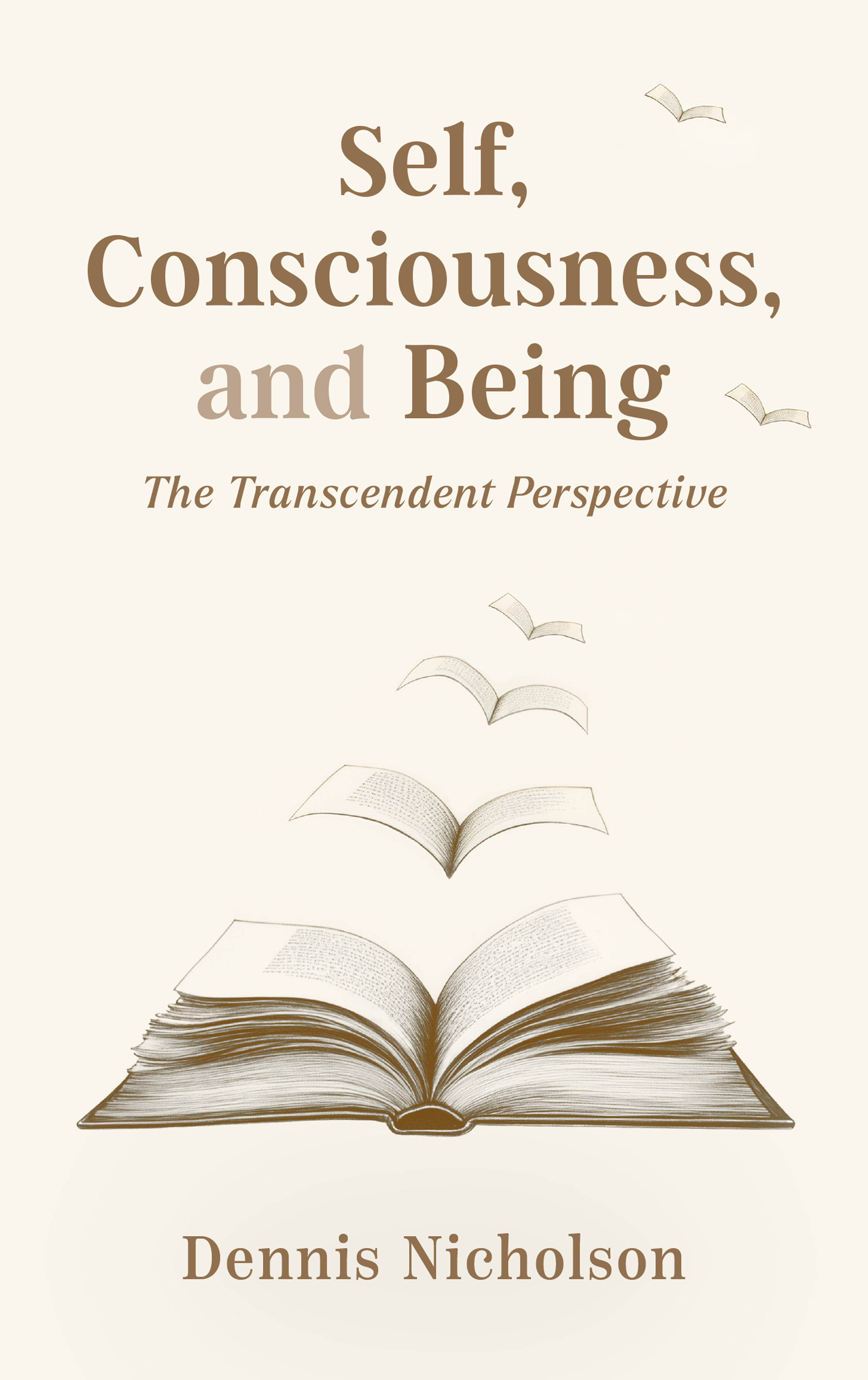
🧠 Is there a best design for the human self? What if our true nature isn't just shaped by ideas, but by empty consciousness—the essence of awareness itself?
🔎 In Self, Consciousness, and Being: The Transcendent Perspective, Dennis Nicholson explores a groundbreaking self-view that transcends fixed mental structures. Learn how shifting your self-world perspective can lead to deeper understanding, personal transformation, and even a new foundation for the science of human experience.
✨ Thought-provoking, deeply researched, and intellectually liberating—this book is a must-read for anyone fascinated by consciousness, self-awareness, and human potential.
Click Here To Buy Self, Consciousness, and Being: The Transcendent Perspective on Amazon
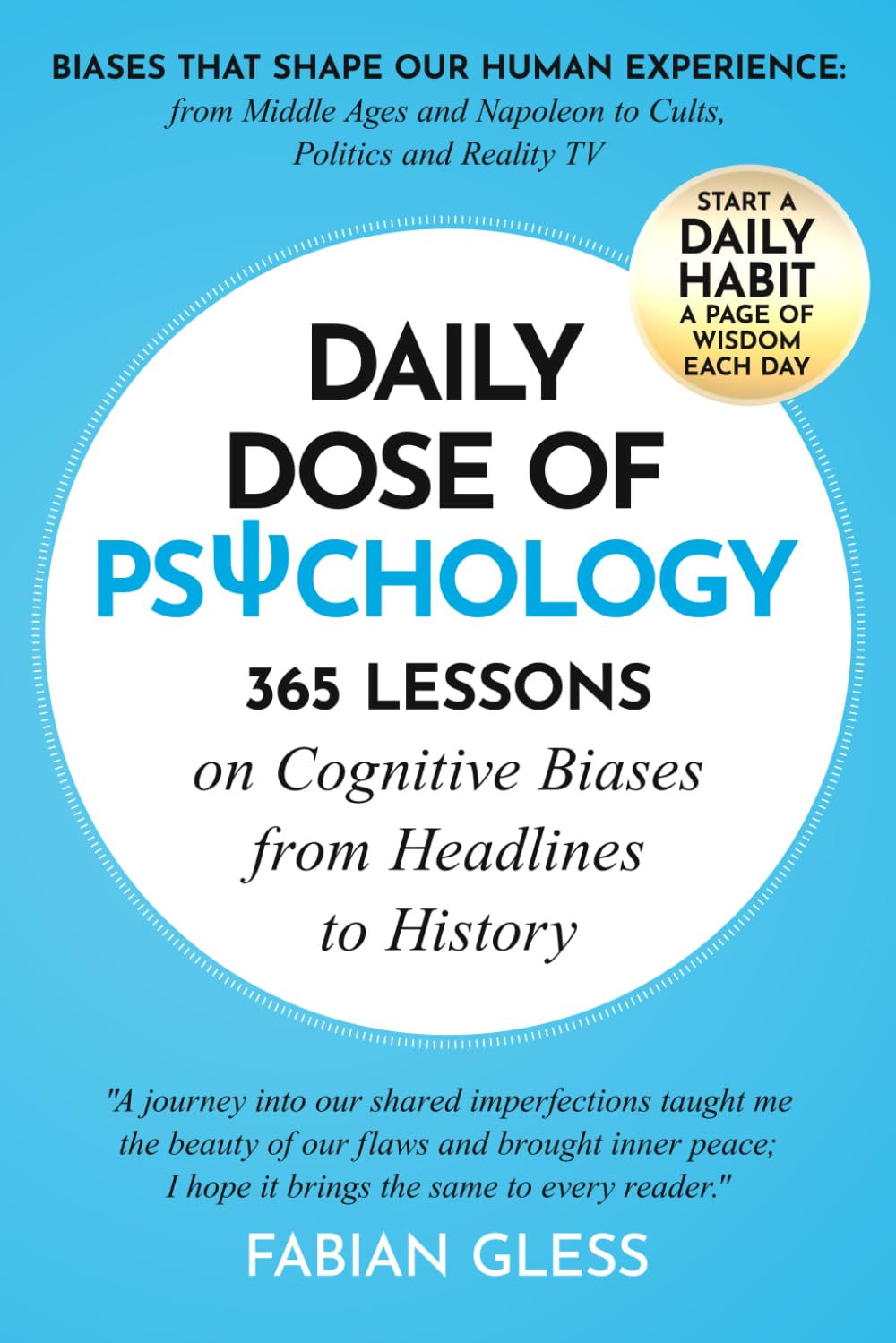
What if you could understand why we see patterns where none exist, why brilliant minds make irrational decisions, or how cognitive biases have shaped some of history’s biggest blunders? Daily Dose of Psychology: 365 Lessons on Cognitive Biases from Headlines to History by Fabian Gless is your gateway to unlocking the mysteries of the human mind—one fascinating day at a time.
📚 What makes this book unmissable?
- Real-World Insights: Explore 61 cognitive biases through captivating stories that bring psychology to life.
- Interactive Learning: Scan QR codes to access videos and resources that deepen your understanding.
- Daily, Bite-Sized Lessons: Perfectly tailored for busy schedules, making psychology accessible and exciting.
From the hilarious to the profound, each page delivers unexpected revelations:
- How a marketing campaign boosted Denmark’s birth rate
- Why scientists joined a doomsday cult to uncover the psychology of belief
- What the Children’s Crusades teach us about group dynamics
💡 Whether you’re a psychology enthusiast, a professional, or simply curious about what makes people tick, Daily Dose of Psychology will leave you with actionable insights and endless "aha!" moments.
🔥 Ready to transform the way you think and understand the world? Don’t wait—click below to grab your copy today and dive into the most intriguing psychology journey you’ll take all year!
Click Here To Buy Daily Dose of Psychology on Amazon
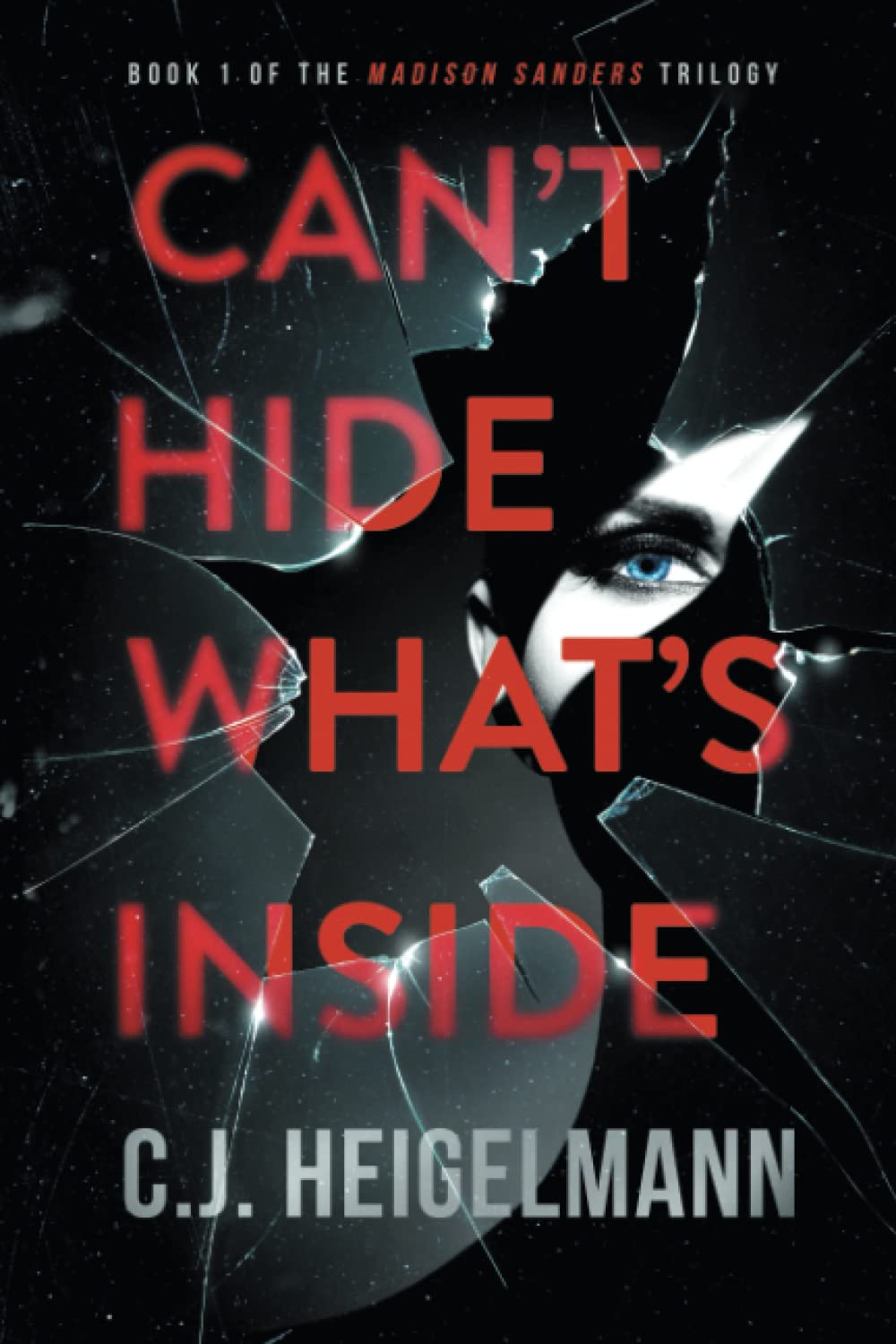
Perfect for fans of psychological thrillers! this gripping novel by C.J. Heigelmann follows Madison Sanders, a single mother haunted by the loss of her child and driven to seek the truth behind a tragic accident. Her quest spirals into a dark path of revenge, exploring the depths of grief, guilt, and hidden secrets. If you love emotional thrillers and suspenseful narratives, this book is a must-read!
Click Here to Buy Can't Hide What's Inside on Amazon
Bright Mind, Happy Heart, Best Life, is a game-changer! It uses simple, proven techniques grounded in mindfulness, neuroscience, and positive psychology to rapidly move you beyond limiting thoughts, fears, negative emotions, and destructive behaviors.
- It raises the bar on what it means to be fully empowered, resilient and happy, no longer defined by your past; lifelong optimism, love and joy is well within your reach.
- Discover 5 paradigm-shifting facts in the first four chapters that will forever alter the way you see yourself, your potential, and your world.
- Learn how to use Emotional Inventories - a unique resource included in these chapters: Reclaim Your Identity, No More Secrets: Surviving the Aftermath of Abuse, De-Mystifying Eating Disorders & Weight Loss.
- Read inspirational stories and case notes of amazing transformations to newfound self-assurance, health and happiness.
- Access powerful, but unbelievably easy exercises to help you explore your innate creative intelligence and expand your consciousness.
Set aside all preconceived notions that solutions need be complex, hard-learned and rigid. Those don't apply here. The key to rapid, radical, and lasting transformation is simplicity!
With subconscious thoughts and emotions accounting for over ninety percent of our interactions with the external world, it is essential we learn how to use our creative, intuitive intelligence to access the inspired solutions we need to feed our best life.
Click Here To Buy This Life-Changing Book on Amazon
The Global Origins of Psychology: Neurology, Language and Culture in the Ancient World offers a historical introduction to the remote origins of psychology, and is the first book in a series on the history of the subject. Combining a deep history approach with the study of ancient civilisations, it places psychology in a historical and global context using rigorous academic research.
This book begins by separating the Greek components of psychology – psyche and logos – in order to trace their histories, separate and together, through the global Neolithic and Bronze Ages. The author develops a toolkit by deconstructing the writing of history, modern psychology, and analysis of culture, and by introducing theories from neuroscience and cultural psychology that can be tested against the data. He then takes readers on a journey back in time, from the borders of our current climatic envelope (the Holocene) towards the present, through Ancient Iraq, Egypt, Israel, and China. Each chapter deepens the reader’s understanding of psychology in its global context outside the boundaries of Western culture. In so doing, the book initiates a post-colonial re-narration showing that the story of psychology is wider and deeper than many contemporary origin stories suggest.
Presented in an accessible manner, this is an excellent resource for students of psychology, philosophy, history, linguistics, archaeology, and anthropology, as well as general readers who want to learn more about the origins of this fascinating subject.
Get This Excellent Book on Amazon Now!
Heal Trauma: How to Feel It, Unlock Patterns and Release It, is a powerful companion for anyone wanting to work through past trauma. Trauma, when activated, can produce a wide range of symptoms including increased anxiety and depression, body pain, loss of memory and concentration, difficulties sleeping, flashbacks, nightmares, the desire to isolate socially and a wide range of intense feelings to name a few.It can also trigger a wide range of behaviours that are often bewildering to comprehend and to allay. Heal Trauma will serve as a guiding light in these dark times helping readers to understand the intense feelings they experience, and help them process and release emotion that has been triggered. The book will also help illuminate patterns of behaviour for instance, procrastination, perfectionism and obsessive rituals and link the pattern to past trauma.The vignettes on patterns will also guide the reader into taking action to undermine the pattern and find alternative ways to respond. The section on releasing trauma engages the reader through a process of creating a visual drawing that reflects their present experience of trauma activation and will help guide a process to release traumatic memory and associated embodied emotion.
This book is intended to be medicine in the moment and a trusted resource throughout ones life, it is a book to pick up repeatedly when another layer of trauma surfaces and the desire to heal is strong.
Get This Critically Acclaimed Book on Amazon Now!
Picture the scene:
You’re having a run-of-the-mill day, doing your grocery shopping, when someone says something directed toward you and your children who are whining about something or another for the hundredth time that day. You’re overwhelmed, but those words catch your attention immediately. You’re triggered – fuming on the inside like a boiling cauldron waiting to explode. This isn’t uncommon for you as you regularly find yourself in a reactive state. Whether it’s past trauma or an unpleasant experience that makes you revisit this triggered frame of mind, you often find yourself feeling powerless. You’re angry, annoyed, afraid, sad, or just downright overwhelmed with all the mental chatter that you deal with on a regular basis. You’re living in the glitch.
The truth of the matter is that we all have a glitch that we contend with. These patterns of reactivity that then lead to certain behaviors keep us stuck in a circle instead of allowing us to move through a natural spiral. One where we can revisit past pain without getting sucked back in. One where we can see our past experiences through a different lens. In JAMP© & The Resolution of The Glitch, we’ll be walking you through the steps to:
- Identify the glitch;
- Acknowledge what it’s tied to;
- Work through it using the principles of JAMP©.
You don’t have to sit in neutral for the rest of your life. You can unlearn certain ways of dealing with trauma – both the original trauma and the self-induced trauma that occurs when you relive the past. Many people will spend their entire lives living in a memory of what was and trying to make sense of it. They essentially miss out on their present and their entire future by weighing themselves down with this mental baggage. Here’s the reality:
- You didn’t deserve what happened to you that made you this way;
- You probably had no control over what happened in your past;
- You DO have control over what you do next.
Come with us and let’s take your power back. The future is yours to create without the immense weight of The Glitch.
Get This Transformational Book on Amazon Now!
An evidence-based, practical guide to reflection on the most important goals in life, this book provides a unique framework and thought-provoking exercises to modify personal and professional goals to increase happiness.
Why we pursue our most important goals in life is an important question, and the answer we give ourselves greatly influences our happiness. This book presents the goal-striving reasons framework to illustrate the essential positive and negative ingredients: pleasure, altruism, self-esteem, and necessity. This new framework and the practical exercises throughout the book will enable readers to change their reasons for pursuing goals and achieve the ultimate aim of becoming happier in life.
There are many books on happiness – no other discusses happiness specifically from a goal-setting perspective. Human resources and mental health professionals, mindfulness practitioners, coaches, mentors, higher education staff, postgraduate students, and others will benefit from the hands-on guidance in this book.
Click Here To Buy This Life-Transforming Book on Amazon
In providing the first extensive coverage of vice epistemology, an exciting new area of philosophical research, Vices of the Mind uses real examples drawn primarily from the world of politics to develop a compelling theory of epistemic vice.
Key events such as the 2003 Iraq War and the 2016 Brexit vote, and notable figures including Donald Trump and Boris Johnson are analysed in detail to illustrate what epistemic vice looks like in the modern world. The traits covered in this landmark work include a hitherto unrecognised epistemic vice called 'epistemic insouciance'. Cassam examines both the extent to which we are responsible for our failings and the factors that make it difficult to know our own vices. If we are able to overcome self-ignorance and recognise our epistemic vices, then is there is anything we can do about them? Vices of the Mind picks up on this concern in its conclusion by detailing possible self-improvement strategies and closing with a discussion of what makes some epistemic vices resistant to change.
Get This Critically Acclaimed Book on Amazon Now!
This book provides an introductory and self-contained description of some of the exciting answers to these questions that modern theories of mind and brain have recently proposed. Stephen Grossberg is broadly acknowledged to be the most important pioneer and current research leader who has, for the past 50 years, modelled how brains give rise to minds, notably how neural circuits in multiple brain regions interact together to generate psychological functions. This research has led to a unified understanding of how, where, and why our brains can consciously see, hear, feel, and know about the world, and effectively plan and act within it.
The work embodies revolutionary Principia of Mind that clarify how autonomous adaptive intelligence is achieved. It provides mechanistic explanations of multiple mental disorders, including symptoms of Alzheimer's disease, autism, amnesia, and sleep disorders; biological bases of morality and religion, including why our brains are biased towards the good so that values are not purely relative; perplexing aspects of the human condition, including why many decisions are irrational and self-defeating despite evolution's selection of adaptive behaviors; and solutions to large-scale problems in machine learning, technology, and Artificial Intelligence that provide a blueprint for autonomously intelligent algorithms and robots.
Because brains embody a universal developmental code, unifying insights also emerge about shared laws that are found in all living cellular tissues, from the most primitive to the most advanced, notably how the laws governing networks of interacting cells support developmental and learning processes in all species.
The fundamental brain design principles of complementarity, uncertainty, and resonance that Grossberg has discovered also reflect laws of the physical world with which our brains ceaselessly interact, and which enable our brains to incrementally learn to understand those laws, thereby enabling humans to understand the world scientifically.
Accessibly written, and lavishly illustrated, Conscious Mind/Resonant Brain is the magnum opus of one of the most influential scientists of the past 50 years, and will appeal to a broad readership across the sciences and humanities.
Get This Remarkable Book on Amazon Now!
UK Visitors Click Here
Through a Screen Darkly provides intimate reflections on Dr. Ahron Friedberg's patients as they deal with the mental health consequences of the pandemic. The book identifies the psychological distress caused by the pandemic, examining how the elements of COVID-19--its ability to be spread by those who seem not to have it, its intractability, the long-term uncertainty it engenders--leave relatively stable people shaken and unsure of the future. At
The title is taken from the Biblical phrase "through a glass darkly," 1 Corinthians 13:12, where Saint Paul suggests that our vision of reality is clouded. It applies because during the period covered in the book, Dr. Friedberg practiced remotely, via literal screens. Such screens had a dual function: on the one hand, they made possible whatever vision we had but, on the other, served as a barrier that kept people apart.
A Screen offers a series of intense, immediate encounters with worried, traumatized people. It shows them learning to navigate their uncertain circumstances, a process that will continue beyond the timeframe of the book but that begins to signify how larger scale adaptations will ultimately take place. About sixty essays record the anxiety, fear, and modalities of coping that characterized how we lived these phenomena in real time.
The book demonstrates that, of necessity, we learn to adapt. Even though we can only see "darkly," we can call on resources we do have, as well as those we can acquire, to retain our sense of dignity and purpose. A Screen makes no predictions as to how this will all play out; rather, it is a time capsule of how we struggled through a disease that we still do not fully understand.
Through a Screen Darkly: Psychoanalytic Reflections During the Pandemic is invaluable for anyone who lived through this moment. It points to the several possible directions for our national, psychological recovery, in a format rich with first-hand stories that are highly relatable.
Get This Insightful, Timely and Critically Acclaimed Book on Amazon Now!
UK Visitors Click Here
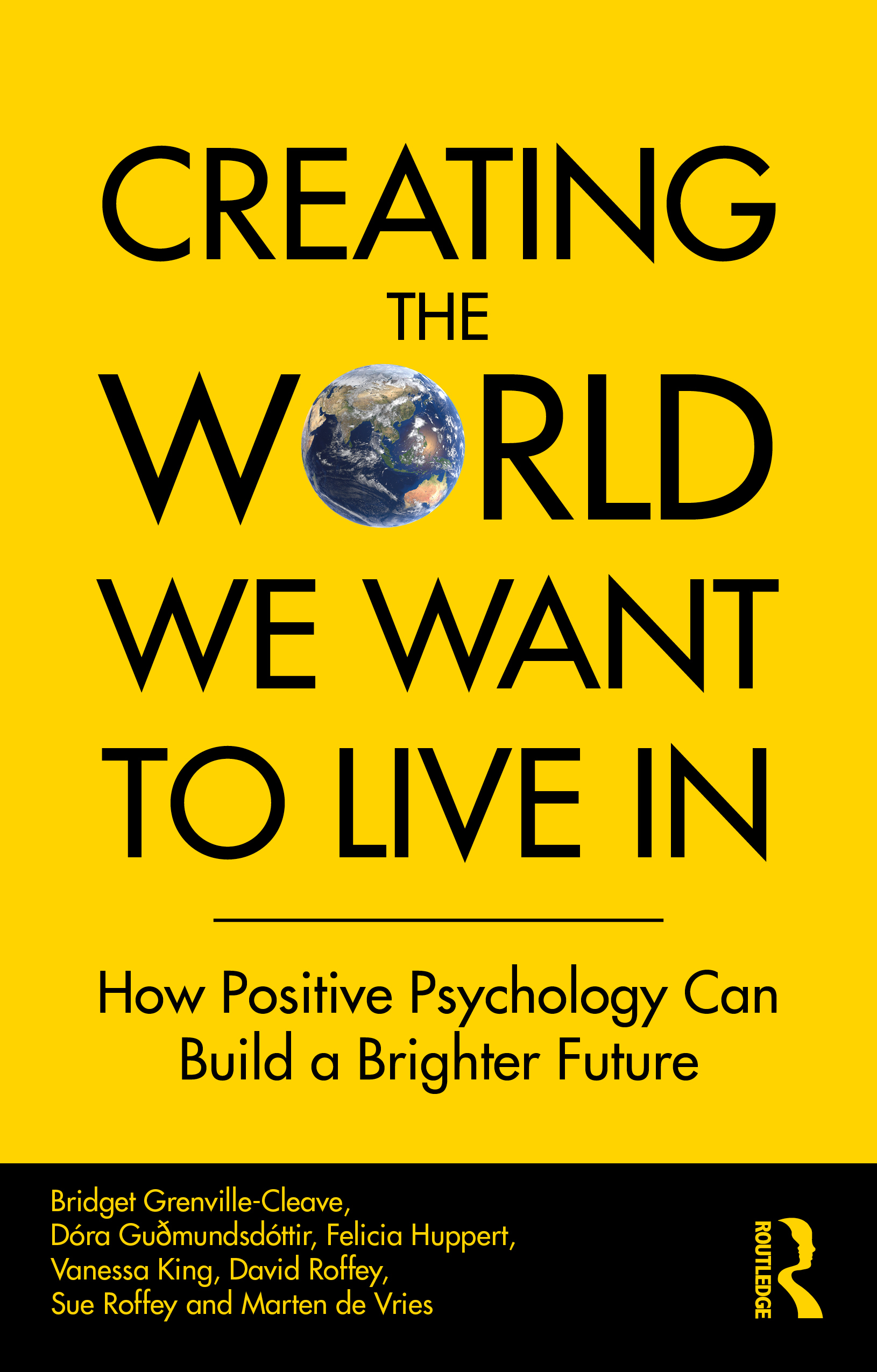
This book is about hope and a call to action to make the world the kind of place we want to live in. The authors hope is to provoke conversation, and gently challenge possibly long-held views, beliefs, and ideologies about the way the world works and the people in that world.
Written by eminent researchers and experienced practitioners, the book explores the principles that underpin living well, and gives examples of how this can be achieved not just in our own lives, but across communities and the planet we share. Chapters cover the stages of life from childhood to ageing, the foundations of everyday flourishing, including health and relationships, and finally wellbeing in the wider world, addressing issues such as economics, politics and the environment. Based in the scientific evidence of what works and supported by illustrations of good practice, this book is both ambitious and aspirational.
Creating The World We Want To Live In is designed for a wide audience – anyone seeking to create positive change in the world, their institutions or communities.
Get This Critically Acclaimed Book on Amazon Now!
UK Visitors CLICK HERE
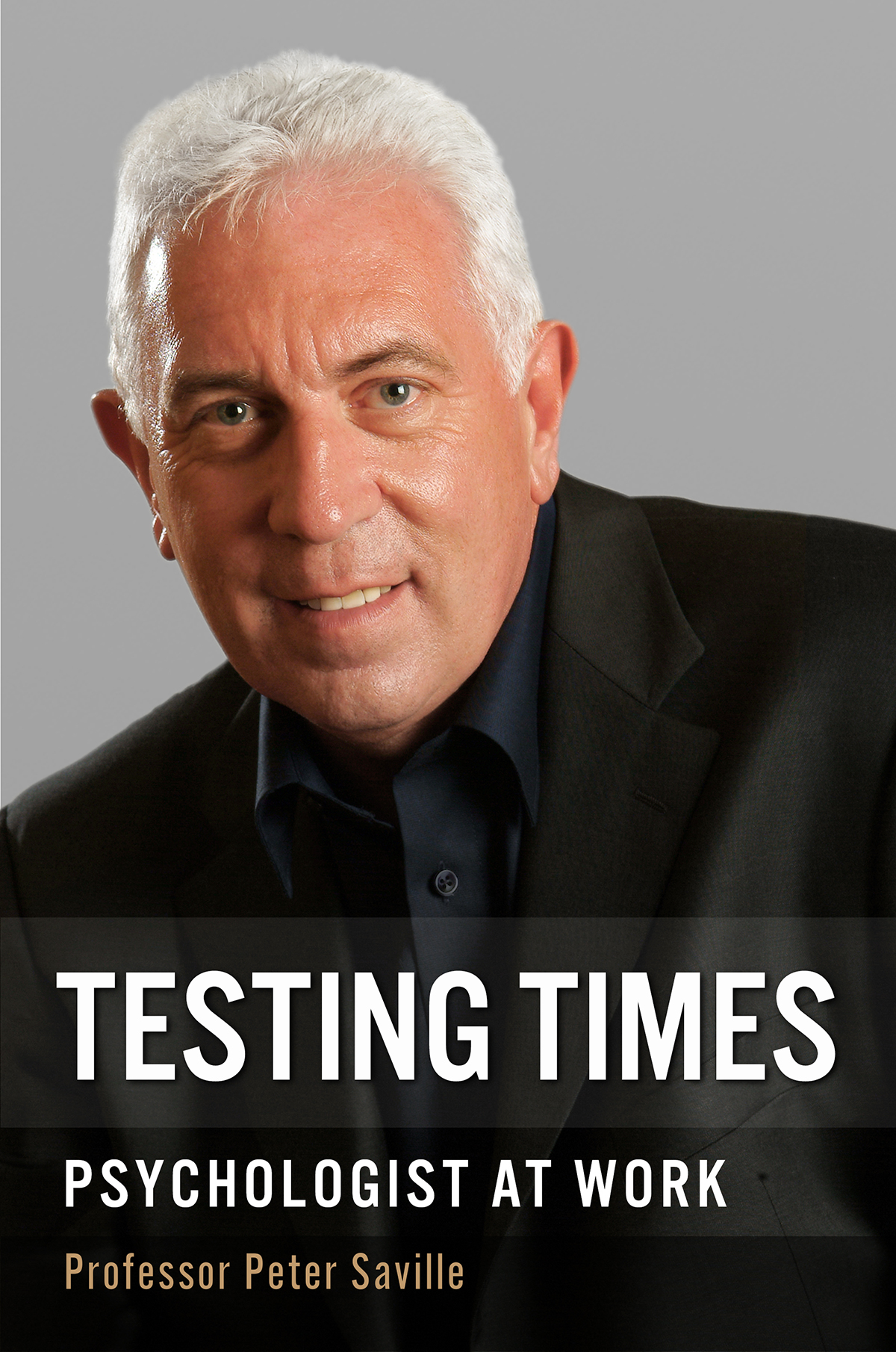
'Testing Times: Psychologist at Work' by Professor Peter Saville. Essential reading for anyone with an interest in Occupational Psychology, Entrepreneurship and Leadership; ‘Testing Times’ charts the remarkable career and life, of one of the most influential psychologists of our time.
"This book is not only moving but also a fantastic read about the career & life of stellar psychologist Peter Saville, who has made an outstanding contribution to the field of occupational psychology and to business." (Professor Sir Cary Cooper, Alliance Manchester Business School, University of Manchester).
Get this brilliant book on Amazon now.
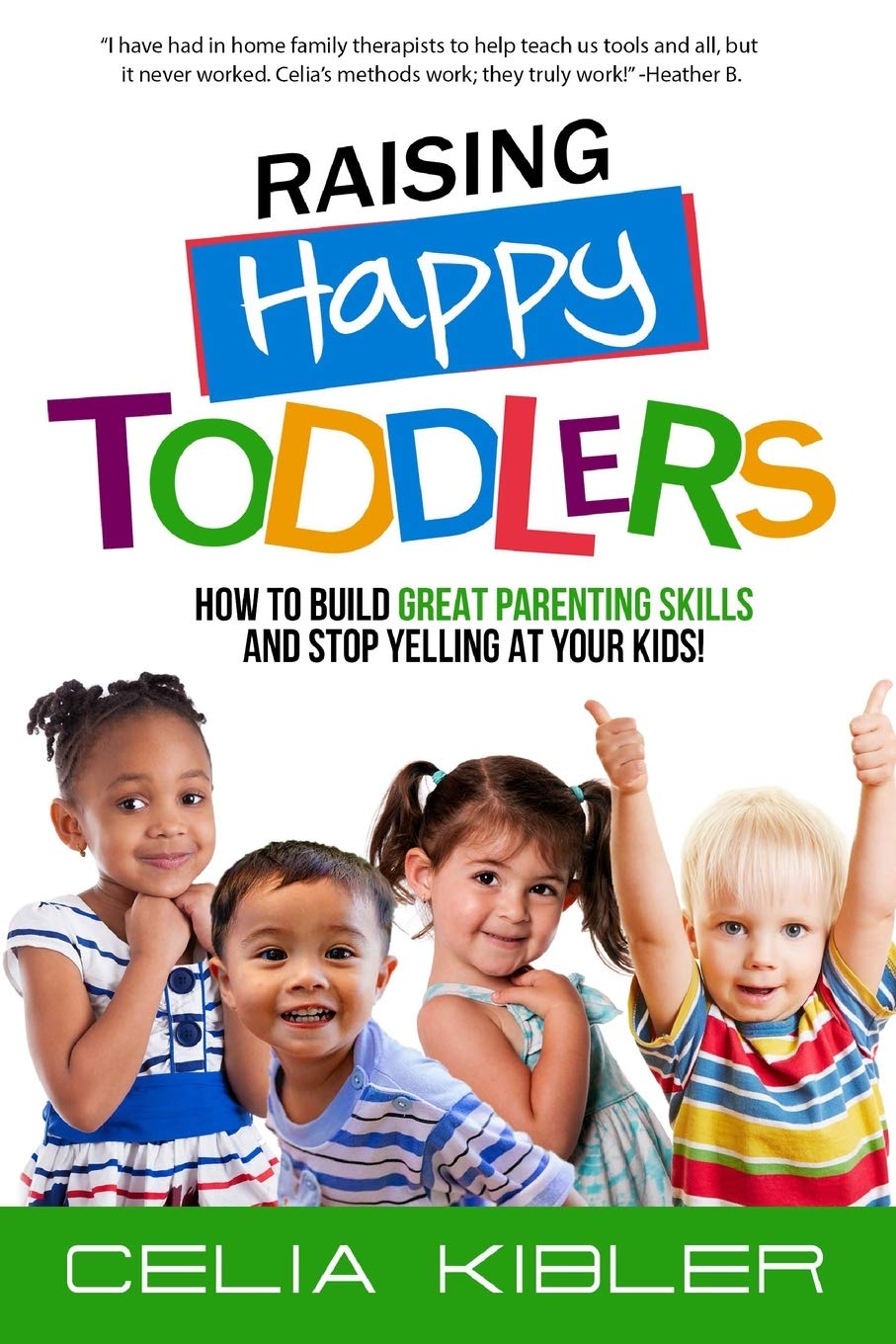
This book covers everything you need to Raise Happy Toddlers!
Raising Happy Toddlers: How to Build Great Parenting Skills and Stop Yelling at your Kids was created from experience, deep knowledge, and proven success from someone who knows kids. It’s written in Celia Kibler’s real voice and language, one that comes from active involvement in coaching parents and teaching the youngest children of all different and unique abilities. It is based on more than thirty years of real-life parenting, first-hand contact and successes of thousands of happy, focused, and empathetic children.
Trendy parenting philosophies and helicopter-parenting are on the wane. Parents need practical advice on raising compassionate, stable, kind and empowered kids without losing their own parental control. Celia Kibler provides the manageable tactics that all families can implement to reduce the chaos in their household and ultimately raise future adults who are grateful, patient, confident and self-secure.
If you have a toddler, you need this book. See following link to grab your copy today!
Raising Happy Toddlers: How to Build Great Parenting Skills and Stop Yelling at your Kids
Visitors From Canada Click Here
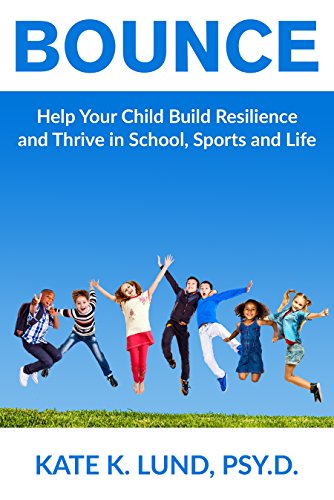
Bounce: Help Your Child Build Resilience and Thrive in School, Sports and Life is for parents, educators, community leaders and anyone who has an active interest in helping children to become resilient and realize their potential. The book presents the author's vision of the seven pillars of the resilient child during the elementary school years, along with specific strategies for bolstering the resilience of your own child or the children you work with.
The Pillars of the Resilient child presented in this book include: Tolerating frustration and managing emotions; Navigating friendships and social pressures; sustaining focus on a single task and a larger goal; developing courage; Building motivation; Building confidence; and Creating optimism.
You can buy this much needed book on Amazon via the following link:
Bounce: Help Your Child Build Resilience
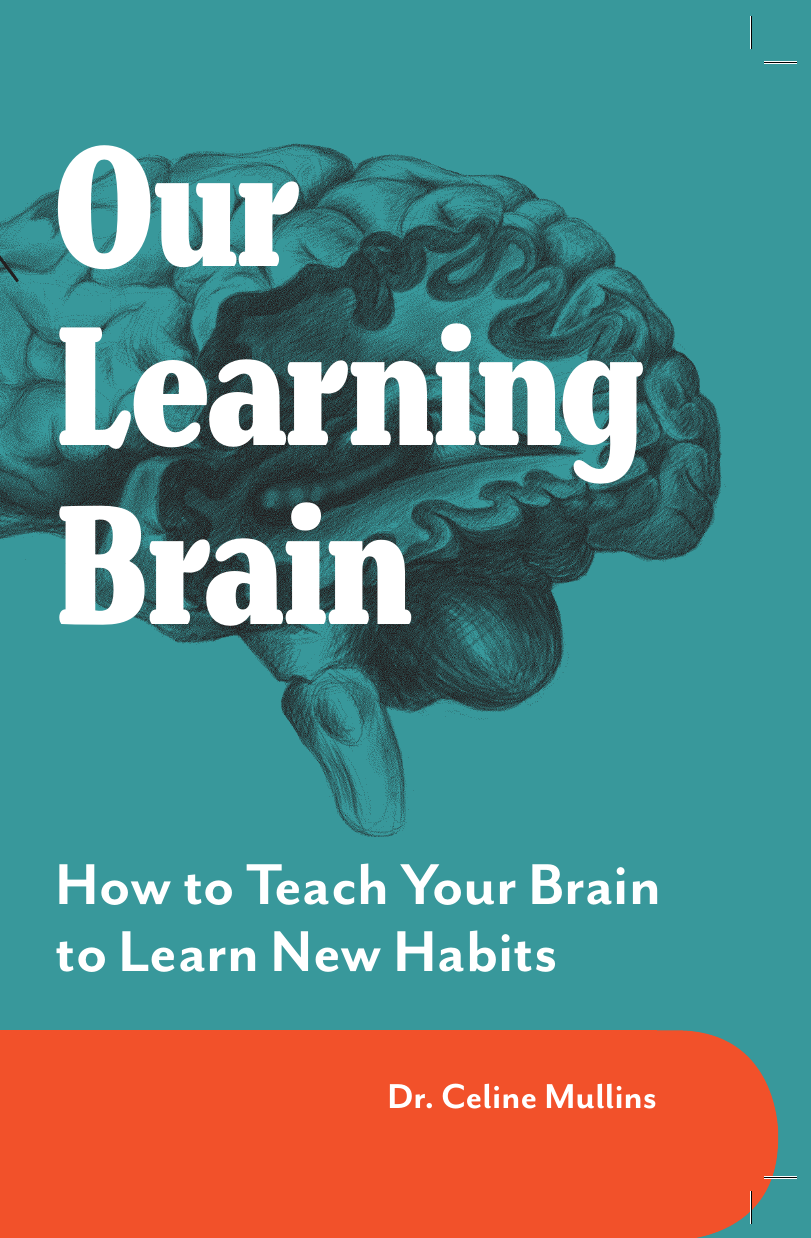
Our Learning Brain is the first in the MAXIMISING BRAIN POTENTIAL series. The MAXIMISING BRAIN POTENTIAL series is based on the most up-to-date scientific research of how our brain potential can be maximised for habit change, learning, productivity and health.
As a psychologist and coach working in organisations worldwide and with individuals, groups and teams, Dr. Celine Mullins – founder of Adaptas – noticed over the past 10 years that very few new discoveries from neuroscience are being integrated into education, learning and development or soft skills programmes. Scientists have made many exciting and ground-breaking discoveries on how the brain learns and changes throughout adulthood. However, much of this recent research from neuroscience, physiology, psychology and more is not being implemented into how we learn as adults. This ebook seeks to change that. It will:
- Help you to use your brain more effectively when learning new skills, by offering simple and practical tips.
- Support you in breaking old habits and creating new ones.
- Give you great insights into organisational learning and development-related topics that you can use in your organisation.
You can buy this excellent book on Amazon via the following link:
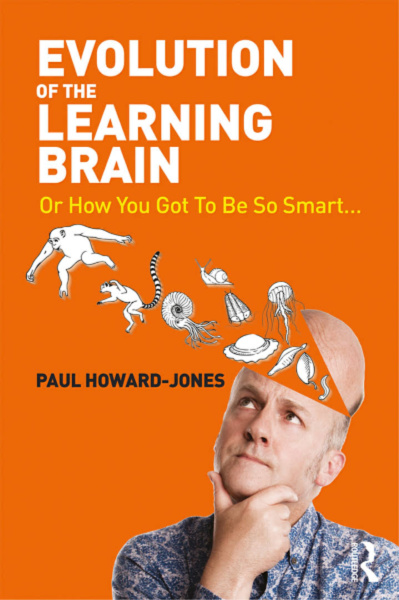
How does learning transform us biologically?
What learning processes do we share with bacteria, jellyfish and monkeys?
Is technology impacting on our evolution and what might the future hold for the learning brain?
These are just some of the questions Paul Howard-Jones explores on a fascinating journey through 3.5 billion years of brain evolution, and discovers what it all means for how we learn today. Along the way, we discover:
- how the E. coli in our stomachs learn to find food
- why a little nap can help bees find their way home
- the many ways that action, emotion and social interaction have shaped our ability to learn
- the central role of learning in our rise to top predator.
An accessible writing style and numerous illustrations make Evolution of the Learning Brain an enthralling combination of biology, neuroscience and educational insight. Howard-Jones provides a fresh perspective on the nature of human learning that is exhaustively researched, exploring the implications of our most distant past for twenty-first-century education.
You can buy 'Evolution of the Learning Brain: Or How You Got To Be So Smart' on Amazon via the following link.
Evolution of the Learning Brain: Or How You Got To Be So Smart
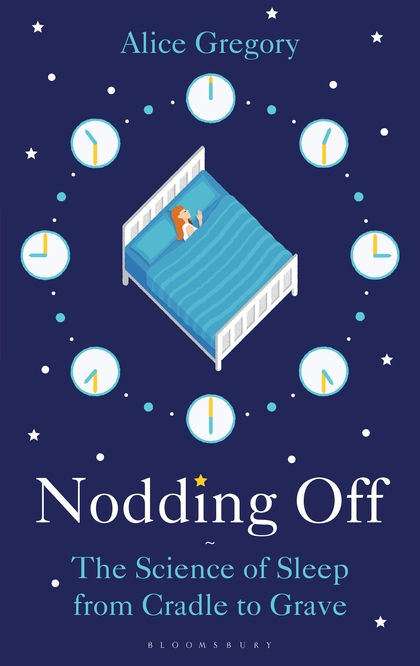
Sleep plays a crucial role in our waking lives, and we need to start paying it more attention. The latest research tells us that it's essential for learning and memory, for mental health and physical well-being, and yet we tend to only think about it when it's proving a struggle.
Nodding Off leads you on a fascinating journey through the science of sleep as it evolves throughout our lives; from babies to teenagers, from middle age to the later years of our life, there are constantly new challenges to our sleep. Based on knowledge accumulated over almost two decades as a sleep researcher, Professor Alice Gregory shares real-life stories and interviews with other sleep experts to find the answers to questions, such as:
- Why do so many adolescents enjoy lying in at the weekends?
- Why do children experiencing anxiety, behavioural problems or attention deficit hyperactivity disorder so often have co-occurring sleep problems?
- Why are scientists turning to sleep disorders such as sleep paralysis to try to understand paranormal experiences?
With important tips on improving your sleep, Nodding Off is an essential read for anyone who sleeps, and more important still for those who don't get enough. Fans of Matthew Walker's Why We Sleep will love this book!
You can buy 'Nodding Off: The Science of Sleep from Cradle to Grave' on Amazon via the following links.
Nodding Off: The Science of Sleep from Cradle to Grave
Who believes in conspiracy theories, and why are some people more susceptible to them than others?
What are the consequences of such beliefs?
Has a conspiracy theory ever turned out to be true?
The Psychology of Conspiracy Theories debunks the myth that conspiracy theories are a modern phenomenon, exploring their broad social contexts, from politics to the workplace. The book explains why some people are more susceptible to these beliefs than others and how they are produced by recognizable and predictable psychological processes.
Featuring examples such as the 9/11 terrorist attacks and climate change, The Psychology of Conspiracy Theories shows us that while such beliefs are not always irrational and are not a pathological trait, they can be harmful to individuals and society.
You can buy 'The Psychology of Conspiracy Theories' on Amazon via the following links.
The Psychology of Conspiracy Theories by Jan-Willem van Prooijen
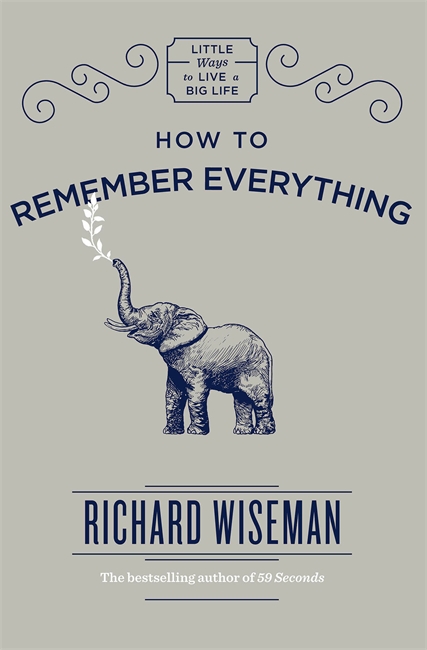
'Richard Wiseman is arguably the most interesting experimental psychologist working today' Scientific American
Super-power your memory thanks to proven strategies and methods by bestselling psychologist Richard Wiseman in this fascinating, accessible and necessary little book.
Try to remember these letters: R A I O L T A L G. Struggling? Let's rearrange them and try again: A L L I G A T O R.
Having a great memory is easy when you know how your mind works. Packed with powerful tricks of the memory trade and the science behind them, psychologist and bestselling writer Professor Richard Wiseman helps you to remember names and faces, birthdays and meetings, telephone numbers and shopping lists, exam answers and pub trivia, and where you left your keys (they are on the small table behind your sofa). Impress your friends, sharpen your mind and change your life with this unforgettable little gem of a book.
You can buy How To Remember Everything on Amazon via the following links.
How To Remember Everything by Richard Wiseman
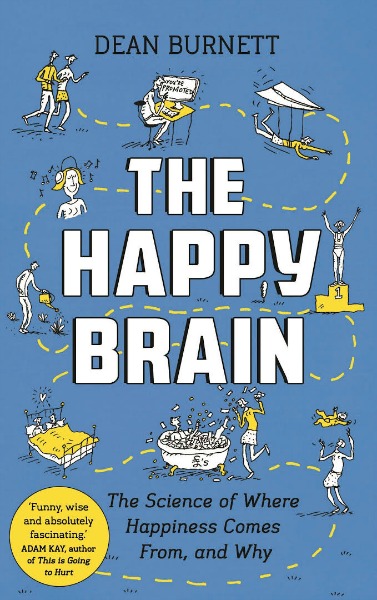
In The Happy Brain, neuroscientist Dean Burnett delves deep into the inner workings of our minds to explore some fundamental questions about happiness. For starters: what does it actually mean to be happy? Where does it come from? And is there a secret to making it last forever?
In his research into these questions – and many more besides – Burnett unravels our complex internal lives to reveal the often surprising truth behind what makes us tick. From whether happiness really begins at home (spoiler alert: yes - sort of) to what love, sex, friendship, wealth, laughter and success actually do to our brains, this book offers a uniquely entertaining insight into what it means to be human.
You can buy The Happy Brain on Amazon via the following link.
The Happy Brain by Dean Burnett
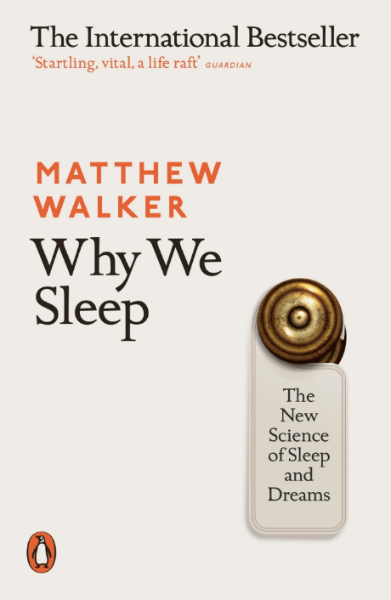
Sleep is one of the most important aspects of our life, health and longevity and yet it is increasingly neglected in twenty-first-century society, with devastating consequences: every major disease in the developed world - Alzheimer's, cancer, obesity, diabetes - has very strong causal links to deficient sleep.
In this book, the first of its kind written by a scientific expert, Professor Matthew Walker explores twenty years of cutting-edge research to solve the mystery of why sleep matters. Looking at creatures from across the animal kingdom as well as major human studies, Why We Sleep delves into everything from what really happens during REM sleep to how caffeine and alcohol affect sleep and why our sleep patterns change across a lifetime, transforming our appreciation of the extraordinary phenomenon that safeguards our existence.
You can buy this excellent book on Amazon via the following link.
Why We Sleep: The New Science of Sleep and Dreams
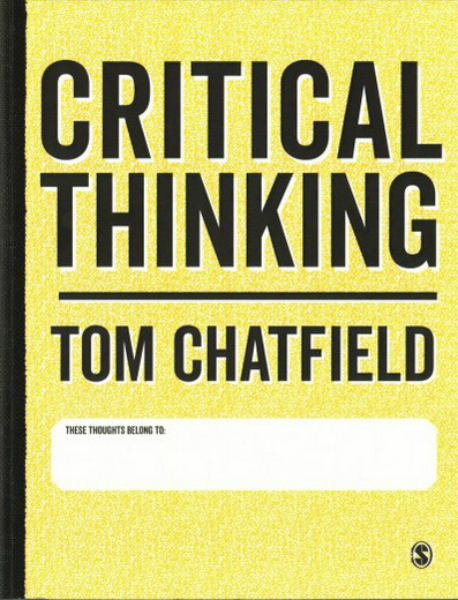
Do you need to demonstrate a good argument or find more evidence?
Are you mystified by the comment "critical analysis needed?"
What does it really mean to think well—and how do you learn to do it?
This helpful book is your personal toolkit for critical thinking. Author Tom Chatfield will show you how to sharpen your critical thinking by developing and practicing this specific set of skills, so you can:
Spot an argument and understand why reasoning matters.
Discover errors and evaluate evidence.
Understand and account for bias.
Become a savvy user of technology.
Develop clear, confident critical writing.
Designed to work seamlessly with a power pack of digital resources and exercises, this book will provide you with practical and effective tools to think and write critically in an information-saturated age.
You can buy this excellent book on Amazon via the following link.
Critical Thinking: Your Guide to Effective Argument, Successful Analysis and Independent Study
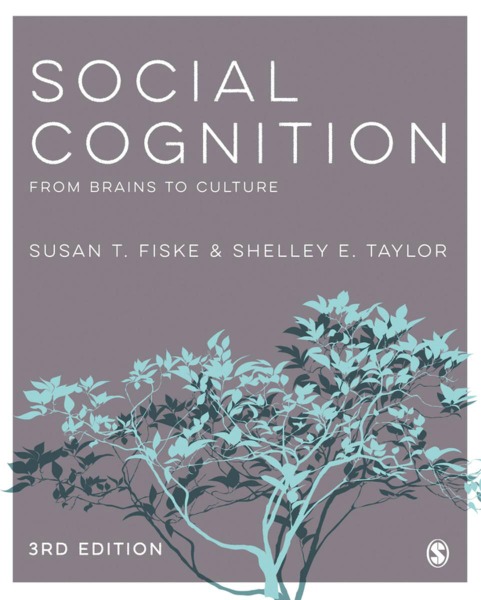
How do people make sense of each other? How do people make sense of themselves?
Social cognition attempts to explain the most fundamental of questions. It looks at why other people are not simply 'objects' to be perceived and how the social world provides dramatic and complex perspectives on the Self and Others.
The subtitle of this book 'From Brains to Culture' reflects the journey that Social Cognition has been on since it first emerged as a dynamic and forward-looking field of research within social psychology. Structured in four clear parts, Social Cognition: From Brains to Culture begins with a clear outline of the basic concepts before moving into more topical sections: understanding individual selves and others, followed by making sense of society. The authors finish by looking beyond cognition to affect and behavior.
Challenging and rigorous, yet strikingly accessible, this book is essential reading for all students of social psychology from undergraduate to post-graduate and beyond.
You can buy this excellent book on Amazon via the following link.
Social Cognition: From Brains to Culture
How much sex are people really having?
How many Americans are actually racist?
Is America experiencing a hidden back-alley abortion crisis?
Can you game the stock market?
Does violent entertainment increase the rate of violent crime?
Do parents treat sons differently from daughters?
How many people actually read the books they buy?
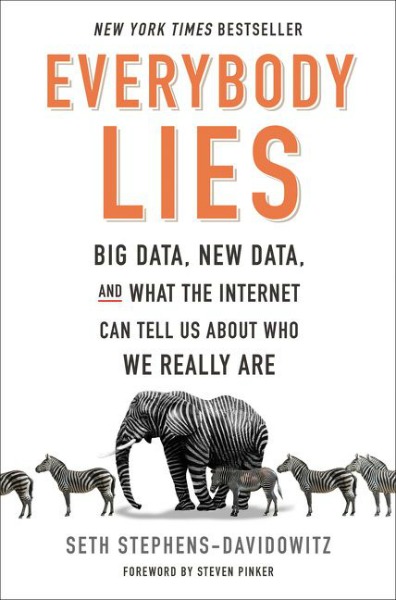
In this groundbreaking work, Seth Stephens-Davidowitz, a Harvard-trained economist, former Google data scientist, and New York Times writer, argues that much of what we thought about people has been dead wrong. The reason? People lie, to friends, lovers, doctors, surveys - and themselves.
However, we no longer need to rely on what people tell us. New data from the internet - the traces of information that billions of people leave on Google, social media, dating, and even pornography sites - finally reveals the truth. By analyzing this digital goldmine, we can now learn what people really think, what they really want, and what they really do. Sometimes the new data will make you laugh out loud. Sometimes the new data will shock you. Sometimes the new data will deeply disturb you. But, always, this new data will make you think.
Everybody Lies combines the informed analysis of Nate Silver’s The Signal and the Noise, the storytelling of Malcolm Gladwell’s Outliers, and the wit and fun of Steven Levitt and Stephen Dubner’s Freakonomics in a book that will change the way you view the world. There is almost no limit to what can be learned about human nature from Big Data - provided, that is, you ask the right questions.
You can buy this excellent book on Amazon via the following link.
Everybody Lies: Big Data, New Data, and What the Internet Can Tell Us About Who We Really Are
Previously Featured Books
December 2017
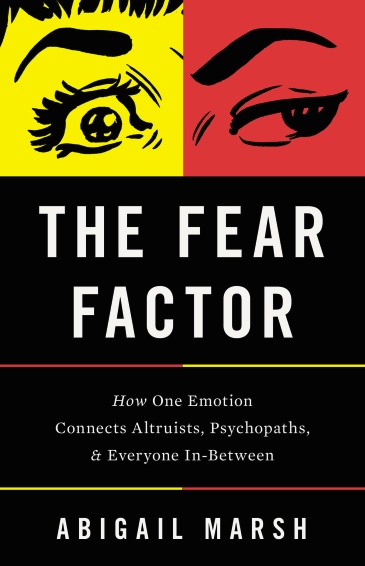
At fourteen, Amber could boast of killing her guinea pig, threatening to burn down her home, and seducing men in exchange for gifts. She used the tools she had available to get what she wanted, like all children. But unlike other children, she didn't care about the damage she inflicted. A few miles away, Lenny Skutnik cared so much about others that he jumped into an ice-cold river to save a drowning woman.
What is responsible for the extremes of generosity and cruelty humans are capable of? By putting psychopathic children and extreme altruists in an fMRI, acclaimed psychologist Abigail Marsh found that the answer lies in how our brain responds to others' fear. While the brain's amygdala makes most of us hardwired for good, its variations can explain heroic and psychopathic behavior.
A path-breaking read, The Fear Factor is essential for anyone seeking to understand the heights and depths of human nature.
You can buy this fascinating book on Amazon via the following link.
The Fear Factor: How One Emotion Connects Altruists, Psychopaths, and Everyone In-Between
November 2017
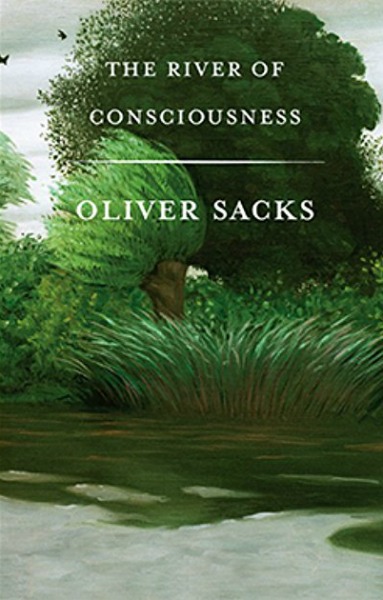
From the best-selling author of Gratitude, On the Move, and Musicophilia, a collection of essays that displays Oliver Sacks's passionate engagement with the most compelling and seminal ideas of human endeavor: evolution, creativity, memory, time, consciousness, and experience.
Oliver Sacks, a scientist and a storyteller, is beloved by readers for the extraordinary neurological case histories (Awakenings, An Anthropologist on Mars) in which he introduced and explored many now familiar disorders--autism, Tourette's syndrome, face blindness, savant syndrome. He was also a memoirist who wrote with honesty and humor about the remarkable and strange encounters and experiences that shaped him (Uncle Tungsten, On the Move, Gratitude). Sacks, an Oxford-educated polymath, had a deep familiarity not only with literature and medicine but with botany, animal anatomy, chemistry, the history of science, philosophy, and psychology. The River of Consciousness is one of two books Sacks was working on up to his death, and it reveals his ability to make unexpected connections, his sheer joy in knowledge, and his unceasing, timeless project to understand what makes us human.
You can buy this thoroughly engaging book on Amazon via the following link.
October 2017
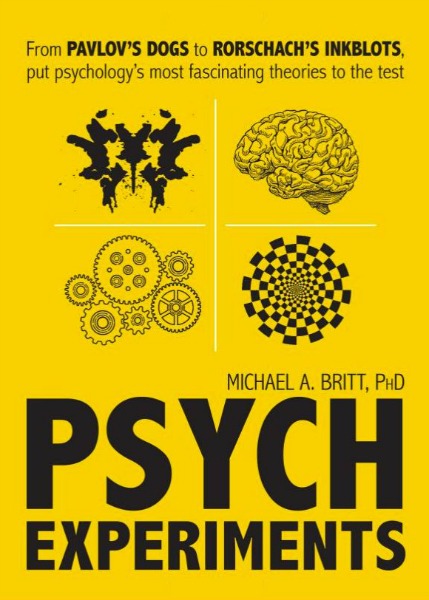
Psychology's most famous theories - played out in real life!
Forget the labs and lecture halls. You can conduct your very own psych experiments at home! Famous psychological experiments - from Freud's ego to the Skinner box--have changed the way science views human behavior. But how do these tests really work? In Psych Experiments, you'll learn how to test out these theories and experiments for yourself...no psychology degree required!
Guided by Michael A. Britt, creator of popular podcast The Psych Files, you can conduct your own experiments when browsing your favorite websites (to test the "curiosity effect"), in restaurants (learning how to increase your tips), when presented with advertisements (you'd be surprised how much you're influenced by the color red), and even right on your smartphone (and why you panic when you can't find it). You'll even figure out how contagious yawning works! With this compulsively readable little book, you won't just read about the history of psychology - you'll live it!
You can buy this great book on Amazon via the following link.
Psych Experiments: From Pavlov's Dogs to Rorschach's Inkblots
September 2017
This fun, smart read for anyone eager to better understand (and improve) themselves argues that personality is driven not by nature nor nurture - but instead by the projects we pursue, which ultimately shape the people we become.
Traditionally, scientists have emphasized what they call the first and second natures of personality - genes and culture, respectively. But today the field of personality science has moved well beyond the nature vs. nurture debate. In Who Are You, Really? Dr. Brian Little presents a distinctive view of how personality shapes our lives - and why this matters. Little makes the case for a third nature to the human condition - the pursuit of personal projects, idealistic dreams, and creative ventures that shape both people’s lives and their personalities. Little uncovers what personality science has been discovering about the role of personal projects, revealing how this new concept can help people better understand themselves and shape their lives.
In this important work, Little argues that it is essential to devote energy and resources to creative endeavors in a highly focused fashion, even if it takes away from other components of our well-being. This does not mean that we cannot shift from one core project to another in the days of our lives. In fact, it is precisely that ability to flexibly craft projects that is the greatest source of sustainability. Like learning to walk, forcing ourselves out of balance as we step is the only way in which we can move forward. And it is the only way that human flourishing can be enhanced.
The well-lived life is based on the sustainable pursuit of core projects in our lives. Ultimately, Who Are You, Really? provides a deeply personal itinerary for exploring our personalities, our lives, and the human condition.
You can buy this fascinating book on Amazon via the following link.
Who Are You, Really? The Surprising Puzzle of Personality
From the UK? Click on image below!
August 2017
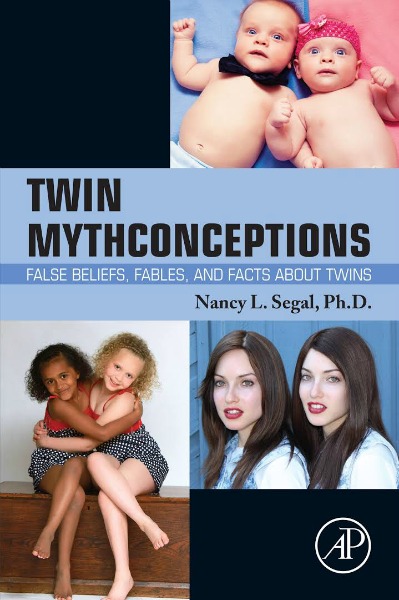
Twin Mythconceptions: False Beliefs, Fables, and Facts about Twins sheds new light on over 70 commonly held ideas and beliefs about the origins and development of identical and fraternal twins. Using the latest scientific findings from psychology, psychiatry, biology, and education, the book separates fact from fiction. Each idea about twins is described, followed by both a short answer about the truth, and then a longer, more detailed explanation.
Coverage includes embryology of twins, twin types, intellectual growth, personality traits, sexual orientation of twins, marital relationships, epigenetic analyses, and more. Five appendices cover selected topics in greater depth, such as the frequency of different twin types and the varieties of polar body twin pairs. This book will inform and entertain behavioral and life science researchers, health professionals, twins, parents of twins, and anyone interested in the fascinating topic of twins.
- Identifies common misunderstandings about twins.
- Provides scientific answers to questions about twins.
- Encompasses the biology, psychology, genetics, and personality of twins.
- Includes discussion of identical, fraternal same-sex, and fraternal opposite-sex twins.
- Allows for quick answers to common questions and more detailed explanations.
You can buy this excellent book on Amazon via the following link.
Twin Mythconceptions: False Beliefs, Fables, and Facts about Twins
July 2017
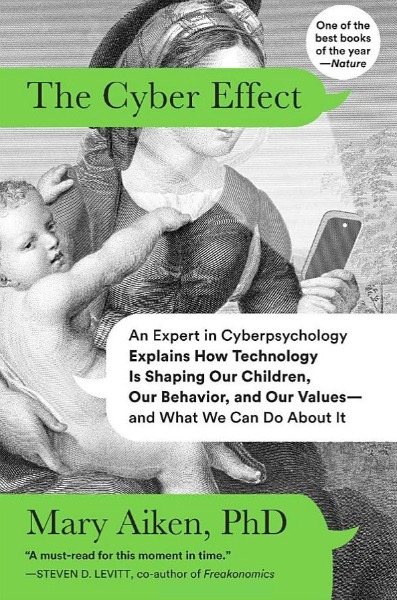
Mary Aiken, the world’s leading expert in forensic cyberpsychology, offers a starting point for all future conversations about how the Internet is shaping development and behavior, societal norms and values, children, safety, privacy, and our perception of the world.
Drawing on her own research and extensive experience with law enforcement, Aiken covers a wide range of subjects, from the impact of screens on the developing child to the explosion of teen sexting and the acceleration of compulsive and addictive behaviors online. Aiken provides surprising statistics and incredible-but-true case studies of hidden trends that are shaping our culture and raising troubling questions about where the digital revolution is taking us.
You can buy this excellent book on Amazon via the following link.
June 2017
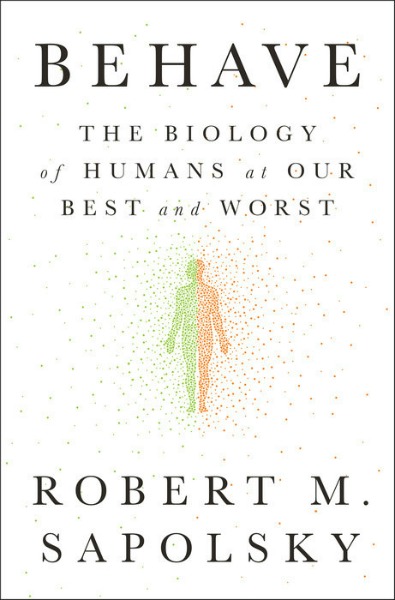
From the celebrated neurobiologist and primatologist, a landmark, genre-defining examination of human behavior, both good and bad, and an answer to the question: Why do we do the things we do?
Sapolsky's storytelling concept is delightful but it also has a powerful intrinsic logic: he starts by looking at the factors that bear on a person's reaction in the precise moment a behavior occurs, and then hops back in time from there, in stages, ultimately ending up at the deep history of our species and its evolutionary legacy.
And so the first category of explanation is the neurobiological one. A behavior occurs--whether an example of humans at our best, worst, or somewhere in between. What went on in a person's brain a second before the behavior happened? Then Sapolsky pulls out to a slightly larger field of vision, a little earlier in time: What sight, sound, or smell caused the nervous system to produce that behavior? And then, what hormones acted hours to days earlier to change how responsive that individual is to the stimuli that triggered the nervous system? By now he has increased our field of vision so that we are thinking about neurobiology and the sensory world of our environment and endocrinology in trying to explain what happened.
Sapolsky keeps going: How was that behavior influenced by structural changes in the nervous system over the preceding months, by that person's adolescence, childhood, fetal life, and then back to his or her genetic makeup? Finally, he expands the view to encompass factors larger than one individual. How did culture shape that individual's group, what ecological factors millennia old formed that culture? And on and on, back to evolutionary factors millions of years old.
The result is one of the most dazzling tours d'horizon of the science of human behavior ever attempted, a majestic synthesis that harvests cutting-edge research across a range of disciplines to provide a subtle and nuanced perspective on why we ultimately do the things we do...for good and for ill. Sapolsky builds on this understanding to wrestle with some of our deepest and thorniest questions relating to tribalism and xenophobia, hierarchy and competition, morality and free will, and war and peace. Wise, humane, often very funny, Behave is a towering achievement, powerfully humanizing, and downright heroic in its own right.
You can buy this brilliant book on Amazon via the following link.
Behave: The Biology of Humans at Our Best and Worst
May 2017
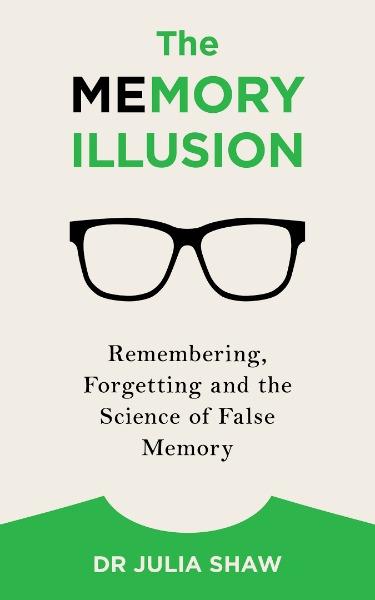
Think you have a good memory? Think again. Memories are our most cherished possessions. We rely on them every day of our lives. They make us who we are. And yet the truth is they are far from being the accurate record of the past we like to think they are. True, we can all admit to having suffered occasional memory lapses, such as entering a room and immediately forgetting why, or suddenly being unable to recall the name of someone we've met dozens of times. But what if we have the potential for more profound errors of memory, even verging on outright fabrication and self-deception?
In The Memory Illusion, forensic psychologist and memory expert Dr. Julia Shaw uses the latest research to show the astonishing variety of ways in which our brains can indeed be led astray. She shows why we can sometimes misappropriate other people's memories, subsequently believing them to be our own. She explains how police officers can imprison an innocent man for life on the basis of 300 denials and just one confession. She demonstrates the way radically false memories can be deliberately implanted, leading people to believe that they brutally murdered a loved one, or were abducted by aliens. And she reveals how, in spite of all this, we can improve our memory through simple awareness of its fallibility.
Fascinating and unnerving in equal measure, The Memory Illusion offers a unique insight into the human brain, challenging you to question how much you can ever truly know about yourself.
You can buy this great book on Amazon via the following link.
The Memory Illusion: Why You Might Not Be Who You Think You
April 2017
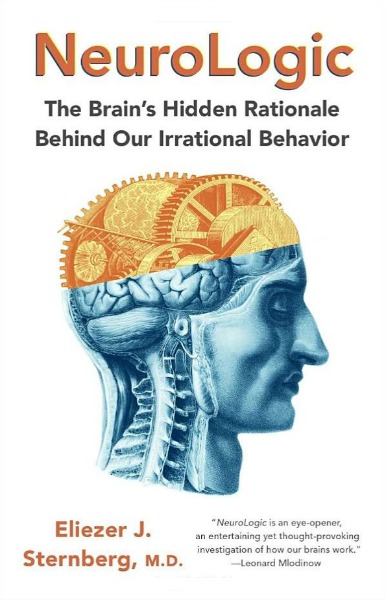
A groundbreaking investigation of the brain’s hidden logic behind our strangest behaviors, and of how conscious and unconscious systems interact in order to create our experience and preserve our sense of self.
From bizarre dreams and hallucinations to schizophrenia and multiple personalities, the human brain is responsible for a diverse spectrum of strange thoughts and behaviors. When observed from the outside, these phenomena are often written off as being just “crazy,” but what if they were actually planned and logical?
NeuroLogic explores the brain’s internal system of reasoning, from its unconscious depths to conscious decision making, and illuminates how it explains our most outlandish as well as our most stereotyped behaviors. From sleepwalking murderers, contagious yawning, and the brains of sports fans to false memories, subliminal messages, and the secret of ticklishness, Dr. Eliezer Sternberg shows that there are patterns to the way the brain interprets the world—patterns that fit the brain’s unique logic. Unraveling these patterns and the various ways they can be disturbed will not only alter our view of mental illness and supernatural experience, but will also shed light on the hidden parts of ourselves.
You can buy this great book on Amazon via the following link.
NeuroLogic: The Brain's Hidden Rationale Behind Our Irrational Behavior
March 2017
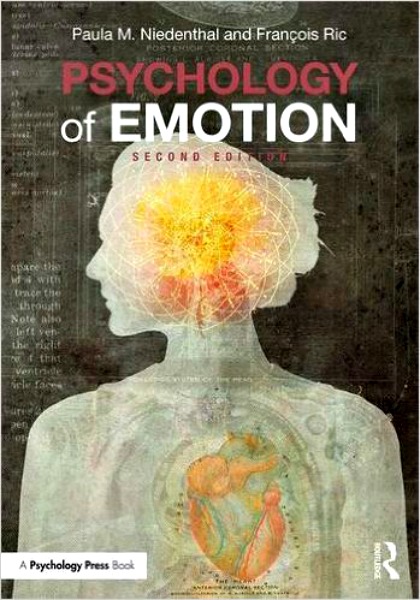
Since the turn of the twenty-first century, the psychology of emotion has grown to become its own field of study. Because the study of emotion draws inspiration from areas of science outside of psychology, including neuroscience, psychiatry, biology, genetics, computer science, zoology, and behavioral economics, the field is now often called emotion science or affective science. A subfield of affective science is affective neuroscience, the study of the emotional brain.
This thoroughly revised second edition of Psychology of Emotion reviews both theory and methods in emotion science, discussing findings about the brain; the function, expression, and regulation of emotion; similarities and differences due to gender and culture; the relationship between emotion and cognition; and emotion processes in groups.
Comprehensive in its scope yet eminently readable, Psychology of Emotion serves as an ideal introduction for undergraduate students to the scientific study of emotion. It features effective learning devices such as bolded key terms, developmental details boxes, learning links, tables, graphs, and illustrations. In addition, a robust companion website offers instructor resources.
You can buy this great book on Amazon via the following link.
February 2017
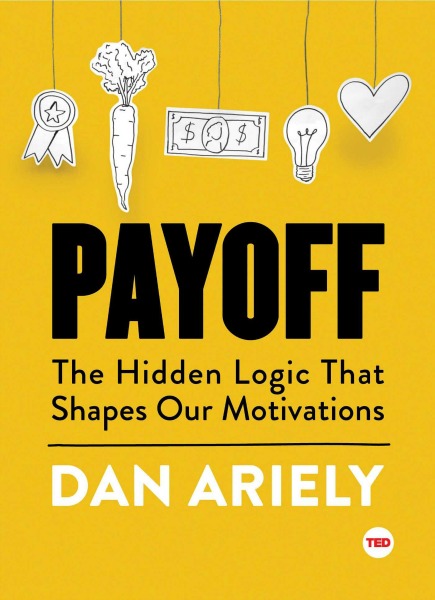
Bestselling author Dan Ariely reveals fascinating new insights into motivation - showing that the subject is far more complex than we ever imagined.
Every day we work hard to motivate ourselves, the people we live with, the people who work for and do business with us. In this way, much of what we do can be defined as being 'motivators.' From the boardroom to the living room, our role as motivators is complex, and the more we try to motivate partners and children, friends and coworkers, the clearer it becomes that the story of motivation is far more intricate and fascinating than we’ve assumed.
Payoff investigates the true nature of motivation, our partial blindness to the way it works, and how we can bridge this gap. With studies that range from Intel to a kindergarten classroom, Ariely digs deep to find the root of motivation - how it works and how we can use this knowledge to approach important choices in our own lives. Along the way, he explores intriguing questions such as: Can giving employees bonuses harm productivity? Why is trust so crucial for successful motivation? What are our misconceptions about how to value our work? How does your sense of your mortality impact your motivation?
You can buy this great book on Amazon via the following link.
Payoff: The Hidden Logic That Shapes Our Motivations
January 2017
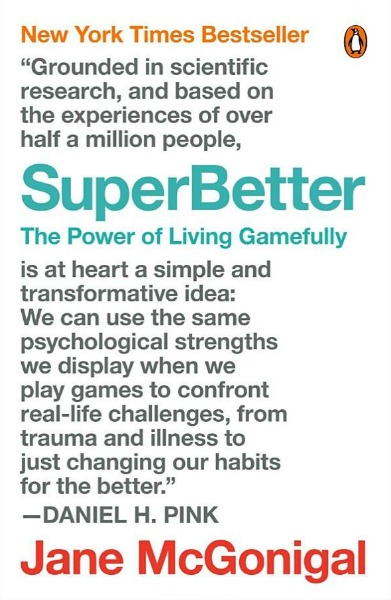
In 2009, internationally renowned game designer Jane McGonigal suffered a severe concussion. Unable to think clearly or work or even get out of bed, she became anxious and depressed, even suicidal. But rather than let herself sink further, she decided to get better by doing what she does best: she turned her recovery process into a resilience-building game. What started as a simple motivational exercise quickly became a set of rules for "post-traumatic growth" that she shared on her blog. These rules led to a digital game and a major research study with the National Institutes of Health. Today nearly half a million people have played SuperBetter to get stronger, happier, and healthier.
But the life-changing ideas behind SuperBetter are much bigger than just one game. In this book, McGonigal reveals a decade’s worth of scientific research into the ways all games—including videogames, sports, and puzzles—change how we respond to stress, challenge, and pain. She explains how we can cultivate new powers of recovery and resilience in everyday life simply by adopting a more "gameful" mind-set. Being gameful means bringing the same psychological strengths we naturally display when we play games—such as optimism, creativity, courage, and determination—to real-world goals.
Drawing on hundreds of studies, McGonigal shows that getting superbetter is as simple as tapping into the three core psychological strengths that games help you build:
- Your ability to control your attention, and therefore your thoughts and feelings.
- Your power to turn anyone into a potential ally, and to strengthen your existing relationships.
- Your natural capacity to motivate yourself and super-charge your heroic qualities, like willpower, compassion, and determination.
SuperBetter contains nearly 100 playful challenges anyone can undertake in order to build these gameful strengths. It includes stories and data from people who have used the SuperBetter method to get stronger in the face of illness, injury, and other major setbacks, as well as to achieve goals like losing weight, running a marathon, and finding a new job. As inspiring as it is down to earth, and grounded in rigorous research, SuperBetter is a proven game plan for a better life. You’ll never say that something is "just a game" again.
You can buy this great book on Amazon via the following link.
December 2016
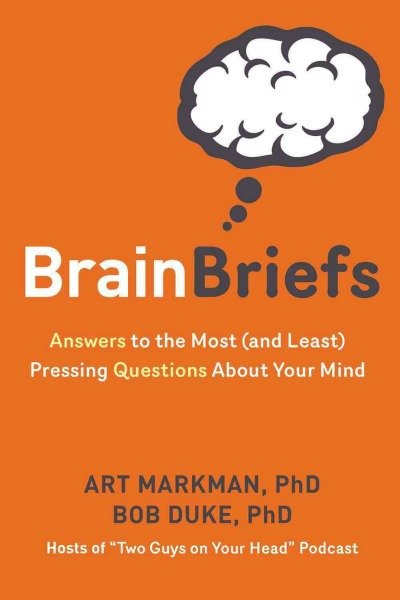
Why do we love kitten videos so much? Does time speed up as we get older? Should we play brain games? Can we make ourselves happy? Art Markman and Bob Duke, hosts of the popular Austin-based KUT radio show and podcast Two Guys on Your Head, are here to answer all your questions about how the brain works and why we behave the way we do. Featuring the latest empirical findings, this is science served up in fun and revelatory bite-size bits, along with a complete set of references for further study.
You can buy this great book on Amazon via the following link.
Brain Briefs: Answers to the Most (and Least) Pressing Questions about Your Mind
November 2016
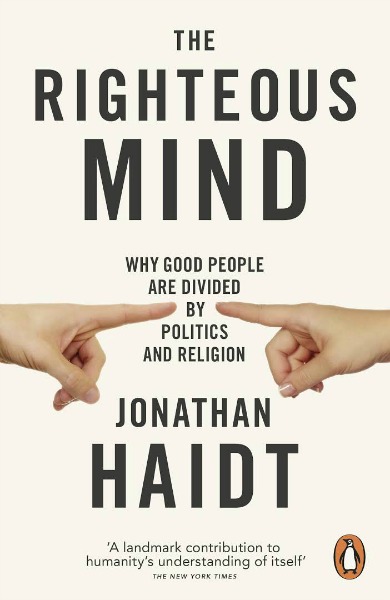
As America descends deeper into polarization and paralysis, social psychologist Jonathan Haidt has done the seemingly impossible - challenged conventional thinking about morality, politics, and religion in a way that speaks to everyone on the political spectrum. Drawing on his twenty five years of groundbreaking research on moral psychology, he shows how moral judgments arise not from reason but from gut feelings. He shows why liberals, conservatives, and libertarians have such different intuitions about right and wrong, and he shows why each side is actually right about many of its central concerns.
In this subtle yet accessible book, Haidt gives you the key to understanding the miracle of human cooperation, as well as the curse of our eternal divisions and conflicts. If you’re ready to trade in anger for understanding, read The Righteous Mind.
You can buy this great book on Amazon via the following link.
The Righteous Mind: Why Good People Are Divided by Politics and Religion
October 2016
Everyone says they want to be happy. But that's much more easily said than done. What does being happy actually mean? And how do you even know when you feel it?
Across the millennia, philosophers have thought long and hard about happiness. They have defined it in many different ways and come up with myriad strategies for living the good life. Drawing on this vast body of work, in Happy Derren Brown explores changing concepts of happiness - from the surprisingly modern wisdom of the Stoics and Epicureans in classical times right up until today, when the self-help industry has attempted to claim happiness as its own. He shows how many of self-help’s suggested routes to happiness and success – such as positive thinking, self-belief and setting goals – can be disastrous to follow and, indeed, actually cause anxiety. This brilliant, candid and deeply entertaining book exposes the flaws in these ways of thinking, and in return poses challenging but stimulating questions about how we choose to live and the way we think about death.
Happy aims to reclaim happiness and to enable us to appreciate the good things in life, in all their transient glory. By taking control of the stories we tell ourselves, by remembering that 'everything’s fine' even when it might not feel that way, we can allow ourselves to flourish and to live more happily.
You can buy this great book on Amazon via the following link.
Happy: Why More or Less Everything is Absolutely Fine
September 2016
Our success as a species is built on sociability, so shyness in humans should be an anomaly. But it's actually remarkably common - we all know what it's like to cringe in embarrassment, stand tongue-tied at the fringe of an unfamiliar group, or flush with humiliation if we suddenly become the unwelcome center of attention.
In Shrinking Violets, Joe Moran explores the hidden world of shyness, providing insights on everything from timidity in lemon sharks to the role of texting in Finnish love affairs. As he seeks answers to the questions that shyness poses - Why are we shy? Can we overcome it? Does it define us? - he uncovers the fascinating stories of the men and women who were 'of the violet persuasion', from Charles Darwin to Agatha Christie, and from Tove Jansson to Nick Drake. In their stories - often both heart-breaking and inspiring - and through the myriad ways scientists and thinkers have tried to explain and cure shyness, Moran finds a hopeful conclusion. To be shy, he decides, is not simply a burden - it is also a gift, a different way of seeing the world that can be both enriching and inspiring.
You can buy this great book on Amazon via the following link.
Shrinking Violets: A Field Guide to Shyness
August 2016
Cognitive Illusions explores a wide range of fascinating psychological effects in the way we think, judge and remember in our everyday lives. Featuring contributions from leading researchers, the book defines what cognitive illusions are and discusses their theoretical status: are such illusions proof for a faulty human information-processing system, or do they only represent by-products of otherwise adaptive cognitive mechanisms?
Throughout the book, background to phenomena such as illusions of control, overconfidence and hindsight bias are discussed, before considering the respective empirical research, potential explanations of the phenomenon, and relevant applied perspectives.
You can buy this great book on Amazon via the following link.
Cognitive Illusions: Intriguing Phenomena in Judgement, Thinking and Memory
July 2016
The Psychology of Prejudice and Discrimination provides a comprehensive and compelling overview of what psychological theory and research have to say about the nature, causes, and reduction of prejudice and discrimination. It balances a detailed discussion of theories and selected research with applied examples that ensure the material is relevant to students.
Newly revised and updated, this edition addresses several interlocking themes, such as research methods, the development of prejudice in children, the relationship between prejudice and discrimination, and discrimination in the workplace, which are developed in greater detail than in other textbooks.
An ideal core text for junior and senior college students who have had a course in introductory psychology, it is written in a style that is accessible to students in other fields including education, social work, business, communication studies, ethnic studies, and other disciplines. In addition to courses on prejudice and discrimination, this book is also adapted for courses that cover topics in racism and diversity.
You can buy this great book on Amazon via the following link.
Psychology of Prejudice and Discrimination
June 2016
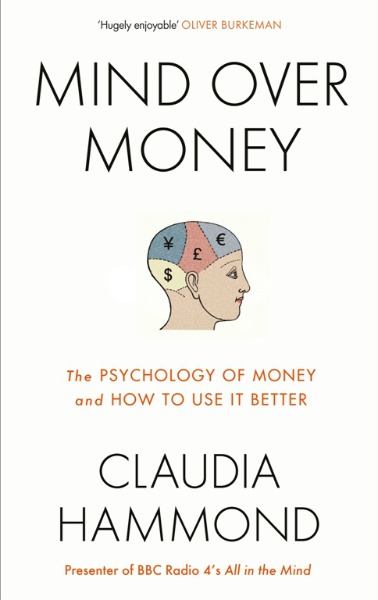
A day doesn't go by without money coming in to our interactions. But how much do we really understand it? We know we need money. We tend to want more of it. But why do we behave so strangely with it? And why does it have such a hold on us?
Award-winning BBC Radio 4 presenter Claudia Hammond delves into the surprising psychology of money to show us that our relationship with the stuff is more complex than we might think. Exploring the latest research in psychology, neuroscience and behavioural economics, she also reveals some simple and effective tricks that will help you think, use and save money better - from how being grumpy can stop you getting ripped off to why you should opt for the more expensive pain relief and why you should never offer to pay your friends for favours.
An eye-opening and entertaining investigation into the power money holds over us, Mind Over Money will change the way you view the cash in your wallet and the figures in your bank account forever.
You can buy this great book on Amazon via the following link.
Mind Over Money: The Psychology of Money and How To Use It Better
May 2016
Psychophysics: A Practical Introduction by Frederick A.A. Kingdom and Nicolaas Prins
Book Description:
Psychophysics, 2nd Edition: A Practical Introduction is the primary scientific tool for understanding how the physical world of colors, sounds, odors, movements, and shapes translates into the sensory world of sight, hearing, touch, taste, and smell; in other words, how matter translates into mind.
The new edition continues to be the only book to combine, in a single volume, the principles underlying the science of psychophysical measurement and the practical tools necessary to analyze data from psychophysical experiments. The book, written in a tutorial style, will appeal to new researchers as well as to seasoned veterans. This introduction to psychophysics research methods will be of interest to students, scholars and researchers within sensory neuroscience, vision research, behavioral neuroscience, and the cognitive sciences.
See following link for full details:
Psychophysics, Second Edition: A Practical Introduction


April 2016
The Man Who Wasn’t There: Investigations into the Strange New Science of the Self By Anil Ananthaswamy
Book Description:
Selected by Forbes as a must read brain book, Anil Ananthaswamy’s extensive in-depth interviews venture into the lives of individuals who offer perspectives that will change how you think about who you are. These individuals all lost some part of what we think of as our self, but they then offer remarkable, sometimes heart-wrenching insights into what remains.
Neuroscience has identified specific regions of the brain that, when they misfire, can cause the self to move back and forth between the body and a doppelgänger, or to leave the body entirely. So where in the brain, or mind, or body, is the self actually located? As Ananthaswamy elegantly reports, neuroscientists themselves now see that the elusive sense of self is both everywhere and nowhere in the human brain.
See following link for full details:
The Man Who Wasn't There: Investigations into the Strange New Science of the Self


March 2016
A Prescription for Psychiatry: Why We Need a Whole New Approach to Mental Health and Wellbeing By Peter Kinderman
Book Description:
This is a manifesto for an entirely new approach to psychiatric care; one that truly offers care rather than coercion, therapy rather than medication, and a return to the common sense appreciation that distress is usually an understandable reaction to life's challenges.
"Professor Kinderman has spent his career working in our mental health services and has reached the conclusion that in their current form they often do more harm than good. His 'prescription for psychiatry' is either visionary or scandalous, depending on your point of view, but never boring. A must-read for everyone with an interest in mental health." - (Anne Cooke, Canterbury Christ Church University)
See following link for full details:
A Prescription for Psychiatry: Why We Need a Whole New Approach to Mental Health and Wellbeing


February 2016
Neuropsychology: From Theory to Practice By David Andrewes
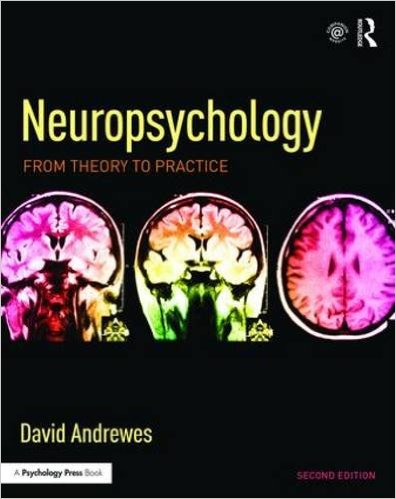
Book Description:
The second edition of this comprehensive textbook for students of Neuropsychology gives a thorough overview of the complex relationship between brain and behaviour. With an excellent blend of clinical, experimental and theoretical coverage, it draws on the latest research findings from neuroscience, cognitive neuroscience, neurochemistry, clinical neuropsychology and neuropsychology to provide students with new insights in this fast moving field.
The book is organised around the main neuropsychological disorders in the areas of perception, executive dysfunction, attention, memory, cerebral asymmetry, language, emotion and consciousness. There is a clear emphasis on bridging the gap between theory and practice with links throughout to clinical issues of both assessment and rehabilitation to build a clear understanding of the application of the theoretical issues. The final section in each chapter illustrates the importance of a more systematic approach to intervention, which takes into account theoretical views of recovery from brain damage.
See following link for full details:
Neuropsychology: From Theory to Practice


January 2016
The Biased Mind: How Evolution Shaped our Psychology Including Anecdotes and Tips for Making Sound Decisions By Jerome Boutang and Michel De Lara
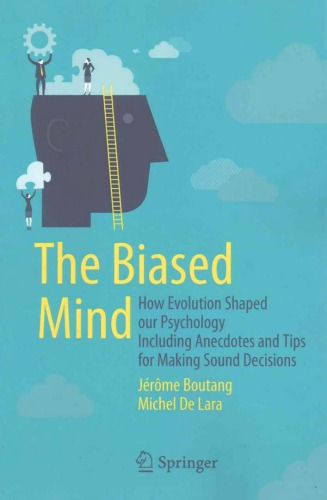
Book Description:
Using a wealth of anecdotes, data from academic literature, and original research, this very accessible little book highlights how we all struggle to cope with the maelstrom of choices, influences and experiences that come our way.
The authors have slogged through piles of dry research papers to provide many wonderful nuggets of information and surprising insights. For example: Why is an upside-down red triangle such a powerful warning sign on the road? What is the best kind of alibi? What makes the number 7 so special? Why is it better to whisper words of love into the left ear?
The reader will discover the amazing tools and shortcuts that millennia of evolution have built into our brains. And this knowledge is power! Knowing more about how the human mind connects the dots helps us understand why decision-making is so tricky. With insights from evolutionary psychology, we become better equipped to understand ourselves and others and to interact and communicate more effectively.
See following link for full details:
The Biased Mind: How Evolution Shaped our Psychology Including Anecdotes and Tips for Making Sound Decisions


December 2015
The Science of Attitudes By Joel Cooper, Shane Blackman, Kyle Keller
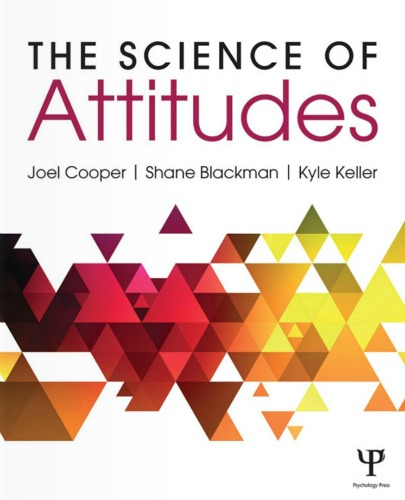
Book Description:
The Science of Attitudes is the first book to integrate classic and modern research in the field of attitudes at a scholarly level. Designed primarily for advanced undergraduates and graduate students, the presentation of research will also be useful for current scholars in all disciplines who are interested in how attitudes are formed and changed.
The treatment of attitudes is both thorough and unique, taking a historical approach while simultaneously highlighting contemporary views and controversies. The book traces attitudes research from the inception of scientific study following World War II to the issues and methods of research that are prominent features of today’s research.
See following link for full details:
The Science of Attitudes


November 2015
Anomalistic Psychology: Exploring Paranormal Belief and Experience By Chris French & Anna Stone
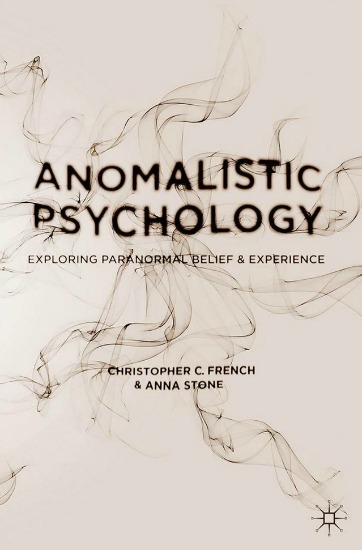
Book Description:
The science behind claims of alien encounters and visions of ghosts can be even more fascinating than the sensationalist headlines. What leads some people to believe in the paranormal? Why might someone think they have been abducted by aliens? And is there any room for superstition in the modern world of science?
Anomalistic Psychology Exploring Paranormal Belief and Experience:
Whether you are a psychology student or simply curious about the paranormal, Anomalistic Psychology is the essential introduction to this contested and controversial field. Belief in the paranormal has been reported in every known society since the dawn of time – find out why.
See following link for full details of this critically acclaimed book:
Anomalistic Psychology: Exploring Paranormal Belief and Experience


October 2015
Mindware: Tools for Smart Thinking By Richard E. Nisbett
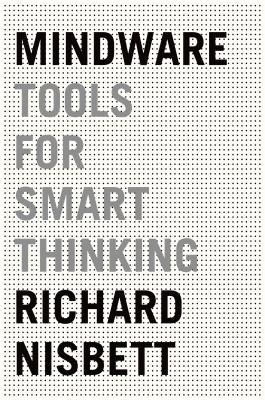
Book Description:
Scientific and philosophical concepts can change the way we solve problems by helping us to think more effectively about our behavior and our world. Surprisingly, despite their utility, many of these tools remain unknown to most of us.
In Mindware, the world-renowned psychologist Richard E. Nisbett presents these ideas in clear and accessible detail. Nisbett has made a distinguished career of studying and teaching such powerful problem-solving concepts as the law of large numbers, statistical regression, cost-benefit analysis, sunk costs and opportunity costs, and causation and correlation, probing the best methods for teaching others how to use them effectively in their daily lives.
In this groundbreaking book, Nisbett shows us how to frame common problems in such a way that these scientific and statistical principles can be applied to them. The result is an enlightening and practical guide to the most essential tools of reasoning ever developed-tools that can easily be used to make better professional, business, and personal decisions.
See following link for full details of this critically acclaimed book:
Mindware: Tools for Smart Thinking


September 2015
Psychology and the Conduct of Everyday Life: Edited By Ernst Schraube & Charlotte Højholt

Book Description:
Psychology and the Conduct of Everyday Life moves psychological theory and research practice out of the laboratory and into the everyday world. Drawing on recent developments across the social and human sciences, it examines how people live as active subjects within the contexts of their everyday lives, using this as an analytical basis for understanding the dilemmas and contradictions people face in contemporary society.
Early chapters gather the latest empirical research to explore the significance of context as a cross-disciplinary critical tool; they include a study of homeless Maori men reaffirming their cultural identity via gardening, and a look at how the dilemmas faced by children in difficult situations can provide insights into social conflict at school. Later chapters examine the interplay between everyday life around the world and contemporary global phenomena such as the rise of the debt economy, the hegemony of the labor market, and the increased reliance on digital technology in educational settings.
The book concludes with a consideration of how social psychology can deepen our understanding of how we conduct our lives, and offer possibilities for collective work on the resolution of social conflict.
See following link for full details of this critically acclaimed book:
Psychology and the Conduct of Everyday Life


August 2015
So You've Been Publicly Shamed
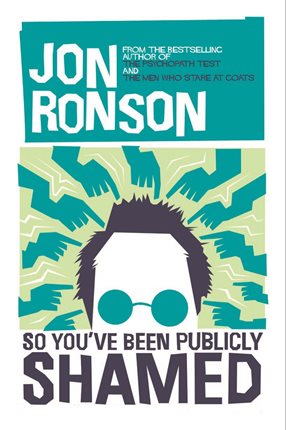
Book Description:
From the Sunday Times top ten bestselling author of The Psychopath Test, a captivating and brilliant exploration of one of our world's most underappreciated forces: Shame.
For the past three years, Jon Ronson has travelled the world meeting recipients of high-profile public shamings. The shamed are people like us – people who, say, made a joke on social media that came out badly, or made a mistake at work. Once their transgression is revealed, collective outrage circles with the force of a hurricane and the next thing they know they're being torn apart by an angry mob, jeered at, demonized, sometimes even fired from their job.
Simultaneously powerful and hilarious in the way only Jon Ronson can be, So You've Been Publicly Shamed is a deeply honest book about modern life, full of eye-opening truths about the escalating war on human flaws - and the very scary part we all play in it.
See following link for full details of this critically acclaimed book:
So You've Been Publicly Shamed


July 2015
Chasing the Scream: The First and Last Days of the War on Drugs By Johann Hari
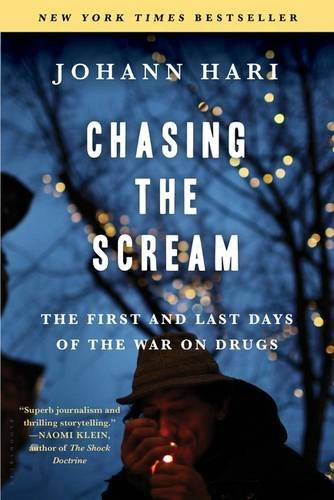
Book Description:
It is now 100 years since drugs were first banned. On the eve of this centenary, journalist Johann Hari set off on an epic three-year, 30,000-mile journey into the war on drugs to uncover its secrets - and he found that there is a startling gap between what we have been told and what is really going on. As strange as it may seem at first, drugs are not what we have been told they are; addiction is not what we think it is; and the drug war has very different motives to the ones we have seen on our TV screens.
In Chasing the Scream, Hari reveals his startling discoveries entirely through the true and shocking stories of people across the world whose lives have been transformed by this war. They range from a transsexual crack dealer in Brooklyn searching for her mother, to a teenage hit-man in Mexico searching for a way out. It begins with Hari's discovery that at the birth of the drug war, Billie Holiday was stalked and killed by the man who launched this crusade - while it ends with the story of a brave doctor who has led his country to decriminalize every drug, from cannabis to crack, with remarkable results.
Chasing the Scream lays bare what we really have been chasing in our century of drug war - in our hunger for drugs, and in our attempt to destroy them. This book will challenge and change how you think about the most controversial - and consequential - question of our time.
See following link for full details of this critically acclaimed book:
Chasing the Scream: The First and Last Days of the War on Drugs


June 2015
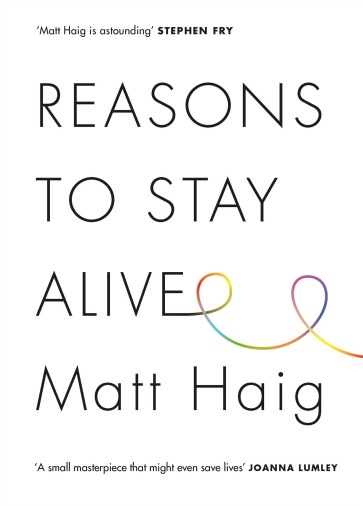
Reasons to Stay Alive By Matt Haig
Book Description:
Aged 24, Matt Haig's world caved in. He could see no way to go on living. This is the true story of how he came through crisis, triumphed over an illness that almost destroyed him and learned to live again.
A moving, funny and joyous exploration of how to live better, love better and feel more alive, Reasons to Stay Alive is more than a memoir. It is a book about making the most of your time on earth.
See following link for full details of this critically acclaimed book:
Reasons to Stay Alive


May 2015
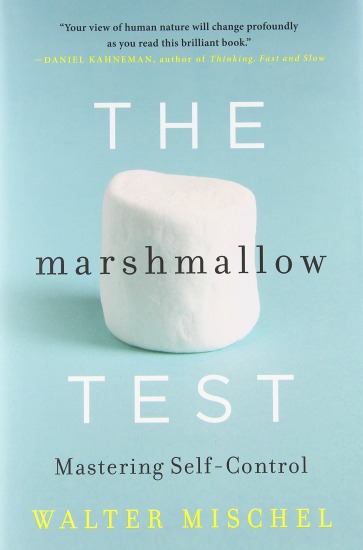
The Marshmallow Test: Mastering Self-Control By Walter Mischel
Book Description:
Renowned psychologist Walter Mischel, designer of the famous Marshmallow Test, explains what self-control is and how to master it.
A child is presented with a marshmallow and given a choice: Eat this one now, or wait and enjoy two later. What will she do? And what are the implications for her behavior later in life?
The world's leading expert on self-control, Walter Mischel has proven that the ability to delay gratification is critical for a successful life, predicting higher SAT scores, better social and cognitive functioning, a healthier lifestyle and a greater sense of self-worth. But is willpower prewired, or can it be taught?
In The Marshmallow Test, Mischel explains how self-control can be mastered and applied to challenges in everyday life--from weight control to quitting smoking, overcoming heartbreak, making major decisions, and planning for retirement. With profound implications for the choices we make in parenting, education, public policy and self-care, The Marshmallow Test will change the way you think about who we are and what we can be.
"Walter Mischel is one of the most influential psychologists of the 20th century, and The Marshmallow Test will make him one of the most influential in this century, too." (Steven Pinker, Johnstone Professor of Psychology, Harvard University.)
See following link for full details of this outstanding book:
The Marshmallow Test: Mastering Self-Control


April 2015
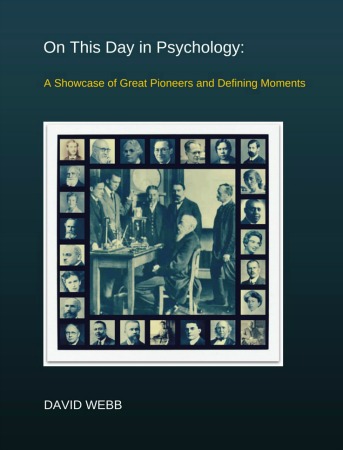
On This Day in Psychology: A Showcase of Great Pioneers and Defining Moments By David Webb
Book Description:
If you like psychology, you'll love this!
Documenting a significant person, event or landmark in the history of psychology every day of the year, the aim of this book is to demonstrate that psychology is a discipline bursting with fascinating topics of investigation and scientific research.
Featuring the life and work of eminent thinkers, revolutionary ideas and groundbreaking publications; you'll find this a thoroughly engaging read whatever your connection with psychology - student, educator, professional or general interest.
A Passion For Psychology
Author David Webb is the writer and host of four websites built around his teaching and research interests, including All-About-Psychology.Com which receives over two million visits a year.
A passionate promoter of psychology through social media his psychology facebook page facebook.com/psychologyonline has over 845,000 likes and he is featured on the British Psychological Society list of the 100 most followed psychologists and neuroscientists on Twitter (twitter.com/psych101)
His Psychology Student Guide published on the Kindle in 2012 is an International #1 Best Seller.
See following link for full Details of On This Day in Psychology:
On This Day in Psychology: A Showcase of Great Pioneers and Defining Moments


March 2015
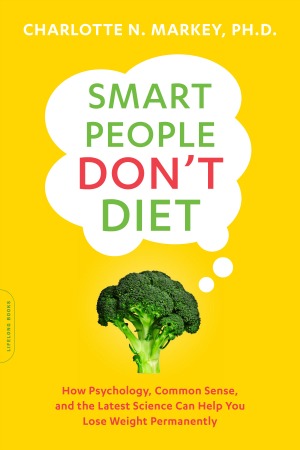
Smart People Don't Diet: How the Latest Science Can Help You Lose Weight Permanently By Charlotte Markey, PH.D.
Book Description
Being on a diet is a miserable experience for most people, and it rarely leads to the desired goal of shedding fat. In fact, studies show that dieters often gain weight rather than lose it because most diets’ intensity, restrictions, and short duration are ill-equipped to produce long-term effects. In Smart People Don’t Diet, Dr. Charlotte N. Markey offers a refreshingly different approach to weight management.
Based on more than 100 years of research by scientists, doctors, nutritionists, and psychologists, Dr. Markey’s plan addresses the underlying causes of weight gain and offers proven strategies for healthful, lasting weight management, including advice on how to eat well, lose weight, and keep it off. The gimmicks don’t work, but Dr. Markey’s reasonable, accessible advice will help you get - and stay - healthy.
See following link for full details:
Smart People Don't Diet: How the Latest Science Can Help You Lose Weight Permanently


February 2015
The Psychopath Whisperer: The Science of Those Without Conscience By Kent A. Kiehl
Book Description
In The Psychopath Whisperer, Dr. Kent Kiehl describes in fascinating detail his years working with psychopaths and studying their thought processes - from the remorseless serial killers he meets with behind bars to children whose behavior and personality traits exhibit the early warning signs of psychopathy.
To aid in his quest to unravel the psychopathic mind, Kiehl created the first mobile functional MRI scanner to study psychopaths in prison populations. The brains of more than five hundred psychopaths and three thousand other offenders have been scanned by Kiehl’s laboratory - the world’s largest forensic neuroscience repository of its kind. Over the course of The Psychopath Whisperer, we follow the scientific bread crumbs that Kiehl uncovered to show that the key brain structures that correspond with emotional engagement and reactions are diminished in psychopaths, offering new clues to how to predict and treat the disorder.
A compelling narrative of cutting-edge science, The Psychopath Whisperer will open your eyes on a fascinating but little understood world, with startling implications for society, the law, and our personal lives.
See following link for full details:
The Psychopath Whisperer: The Science of Those Without Conscience


January 2015
Making Grateful Kids: The Science of Building Character By Jeffrey Froh & Giacomo Bono
Book Description
In Making Grateful Kids, two of the leading authorities on gratitude among young people, Jeffrey J. Froh and Giacomo Bono, introduce their latest and most compelling research, announce groundbreaking findings, and share real-life stories from adults and youth to show parents, teachers, mentors, and kids themselves how to achieve greater life satisfaction through gratitude. Most importantly perhaps, they expand on this groundbreaking research to offer practical and effective common-sense plans that can be used in day-to-day interactions between kids and adults to enhance success and wellbeing.
Their unique, scientifically-based approach for producing grateful youth works whether these kids are very young elementary school students or troubled teenagers. Not only does the purposeful practice of gratitude increase their happiness, but the research indicates that grateful kids also report more self-discipline, fulfilling relationships, and engagement with their schools and communities when compared to their less grateful counterparts. After reading Making Grateful Kids, parents, teachers, and anyone who works with youth will be able to connect more meaningfully with kids so that all parties can focus on the things that matter most and, in turn, create a more cooperative and thriving society.
See following link for full details:
Making Grateful Kids: The Science of Building Character


December 2014
The Upside of Your Dark Side By Todd Kashdan & Robert Biswas-Diener
Book Description
In The Upside of Your Dark Side, two pioneering researchers in the field of psychology show that while mindfulness, kindness, and positivity can take us far, they cannot take us all the way. Sometimes, they can even hold us back. Emotions such as anger, anxiety, guilt, and sadness might feel uncomfortable, but it turns out that they are also incredibly useful. For instance:
In the same vein, we can become wiser and more effective when we harness the darker parts of our personality in certain situations. For instance:
The key lies in what the authors call "emotional, social, and mental agility," the ability to access our full range of emotions and behavior - not just the "good" ones - in order to respond most effectively to whatever situation we might encounter.
Drawing on years of scientific research and a wide array of real-life examples including sports, the military, parenting, education, romance, business, and more, The Upside of Your Dark Side is a refreshing reality check that shows us how we can truly maximize our potential.
See following link for full details:


November 2014
Great Myths of the Brain By Christian Jarrett
Book Description
In Great Myths of the Brain, Dr. Christian Jarrett introduces readers to the field of neuroscience by examining popular myths about the human brain by:
Written engagingly and accessibly for students and lay readers alike, Great Myths of the Brain provides a unique introduction to the study of the brain and teaches readers how to spot neuro hype and neuro-nonsense claims in the media.
See following link for full details:


October 2014
Just Babies: The Origins of Good and Evil By Paul Bloom
Book Description
From John Locke to Sigmund Freud, philosophers and psychologists have long believed that we begin life as blank moral slates. Many of us take for granted that babies are born selfish and that it is the role of society—and especially parents—to transform them from little sociopaths into civilized beings. In Just Babies, Paul Bloom argues that humans are in fact hardwired with a sense of morality. Drawing on groundbreaking research at Yale, Bloom demonstrates that, even before they can speak or walk, babies judge the goodness and badness of others’ actions; feel empathy and compassion; act to soothe those in distress; and have a rudimentary sense of justice.
Still, this innate morality is limited, sometimes tragically. We are naturally hostile to strangers, prone to parochialism and bigotry. Bringing together insights from psychology, behavioral economics, evolutionary biology, and philosophy, Bloom explores how we have come to surpass these limitations. Along the way, he examines the morality of chimpanzees, violent psychopaths, religious extremists, and Ivy League professors, and explores our often puzzling moral feelings about sex, politics, religion, and race.
In his analysis of the morality of children and adults, Bloom rejects the fashionable view that our moral decisions are driven mainly by gut feelings and unconscious biases. Just as reason has driven our great scientific discoveries, he argues, it is reason and deliberation that makes possible our moral discoveries, such as the wrongness of slavery. Ultimately, it is through our imagination, our compassion, and our uniquely human capacity for rational thought that we can transcend the primitive sense of morality we were born with, becoming more than just babies.
Paul Bloom has a gift for bringing abstract ideas to life, moving seamlessly from Darwin, Herodotus, and Adam Smith to The Princess Bride, Hannibal Lecter, and Louis C.K. Vivid, witty, and intellectually probing, Just Babies offers a radical new perspective on our moral lives.
See following link for full details:
Just Babies: The Origins of Good and Evil


September 2014
It's a Jungle in There: How Competition and Cooperation in the Brain Shape the Mind By Dr. David Rosenbaum
Book Description
It's a Jungle in There pursues the hypothesis that the overarching theory of biology, Darwin's theory, should be the overarching theory of cognitive psychology. Taking this approach, David Rosenbaum, cognitive psychologist, distinguished Professor of Psychology at the Pennsylvania State University and former editor of the Journal of Experimental Psychology: Human Perception and Performance, proposes that the phenomena of cognitive psychology can be understood as emergent interactions among dumb neural elements all competing and cooperating in a kind of inner jungle.
Rosenbaum suggests that this perspective allows for the presentation of cognitive psychology in a new way, both for students (for whom the book is mainly intended) and for seasoned investigators (who may be looking for a fresh way to approach and understand their material). Rather than offering cognitive psychology as a rag-tag collection of miscellaneous facts, as has generally been the case in cognitive-psychology textbooks, this volume presents cognitive psychology under a single rubric: "It's a jungle in there."
Written in a light-hearted way with continual reference to hypothetical neural creatures eking out their livings in a tough environment, this text is meant to provide an over-arching principle that can motivate more in-depth study of the mind and brain.
See following link for full details:
It's a Jungle in There: How Competition and Cooperation in the Brain Shape the Mind


August 2014
Drunk Tank Pink: And Other Unexpected Forces That Shape How We Think, Feel, and Behave By Adam Alter
Book Description
A revelatory look at how our environment unconsciously yet dramatically shapes the judgments and decisions we make every day.
Most of us go through life believing that we are in control of the choices we make—that we think and behave almost independently from the world around us. But as Drunk Tank Pink illustrates, the truth is our environment shapes our thoughts and actions in myriad ways without our permission or even our knowledge. Armed with surprising data and endlessly fascinating examples, Adam Alter addresses the subtle but substantial ways in which outside forces influence us—such as color’s influence on mood, our bias in favor of names with which we identify, and how sunny days can induce optimism as well as aggression.
Drunk Tank Pink proves that the truth behind our feelings and actions goes much deeper than the choices we take for granted every day.
See following link for full details:
Drunk Tank Pink: And Other Unexpected Forces That Shape How We Think, Feel, and Behave


July 2014
The Antidote: Happiness for People Who Can't Stand Positive Thinking By Oliver Burkeman
Book Description
In this fascinating new book, Oliver Burkeman introduces us to an unusual collection of people – experimental psychologists and Buddhists, terrorism experts, spiritual teachers, business consultants, philosophers – who share a single, surprising way of thinking about life.
They argue that ‘positive thinking’ and relentless optimism aren’t the solution, but part of the problem. And that there is an alternative, ‘negative path’ to happiness and success that involves embracing failure, pessimism, insecurity and uncertainty – those things we spend our lives trying to avoid. Thought-provoking, counter-intuitive and ultimately uplifting, The Antidote is a celebration of the power of negative thinking.
See following link for full details:
The Antidote: Happiness for People Who Can't Stand Positive Thinking


June 2014
You Are the Music: How Music Reveals What it Means to be Human By Dr. Victoria Williamson
Book Description
Do babies remember music from the womb? Can classical music increase your child’s IQ? Is music good for productivity? Can it aid recovery from illness and injury? And what is going on in your brain when Ultravox’s ‘Vienna’, Schoenberg’s Verklärte Nacht or Dizzee Rascal’s ‘Bonkers’ transports you back to your teenage years?
In a brilliant new work that will delight music lovers of every persuasion, music psychologist Victoria Williamson examines our relationship with music across the whole of a lifetime. Along the way she reveals the amazing ways in which music can physically reshape our brains, explores how ‘smart music listening’ can improve cognitive performance, and considers the perennial puzzle of what causes ‘earworms’.
Requiring no specialist musical or scientific knowledge, this upbeat, eye-opening book reveals as never before the extent of the universal language of music that lives deep inside us all.
See following link for full details:
You Are the Music: How Music Reveals What it Means to be Human


May 2014
Permanent Present Tense: The Unforgettable Life of the Amnesic Patient, H. M. By Dr Suzanne Corkin
Book Description
In 1953, 27-year-old Henry Gustave Molaison underwent an experimental "psychosurgical" procedure - a targeted lobotomy - in an effort to alleviate his debilitating epilepsy. The outcome was unexpected - when Henry awoke, he could no longer form new memories, and for the rest of his life would be trapped in the moment.
Permanent Present Tense pulls back the curtain on the man whose misfortune propelled a half-century of exciting research. With great clarity, sensitivity, and grace, Professor Suzanne Corkin brings readers to the cutting edge of neuroscience in this deeply felt elegy for her patient and friend.
See following link for full details:
Permanent Present Tense: The Unforgettable Life of the Amnesic Patient, H. M.


April 2014
Night School: Wake Up To The Power of Sleep By Richard Wiseman
Book Description
Professor Richard Wiseman’s latest book, Night School, explores the surprising new science of sleep and dreaming, and reveals how to make the most of the missing third of your life. Based on scientific research, mass-participation experiments and the world’s largest archive of dream reports, Night School reveals how to:
See following link for full details:
Night School: Wake Up To The Power of Sleep


March 2014
When Depression Hurts Your Relationship By Dr. Shannon Kolakowski, PsyD
Book Description
This highly acclaimed book offers practical and effective solutions for people whose relationships have been affected by depression, it will also help anyone who wishes to strengthen their relationship.
Editorial Review
"Kolakowski has written a wonderfully practical book to help people dealing with depression and struggling to preserve their relationships. She integrates her psychology expertise in very simple and easy-to-follow ways. From attachment to coping styles, Kolakowski addresses the psychological aspects of depression that contribute to hurting a relationship, and offers practical and easy exercises to break away from harmful patterns.
The book is a great resource—not only for people dealing with depression in their relationship, but also for any couple wanting to improve their communication style, add mindfulness in the relationship, and gain sexual intimacy. As a professor and psychologist working with couples, I intend to recommend this book to my psychology students and couples as an easy read and addendum to clinical work."
Dinelia Rosa, PhD, president-elect of the New York State Psychological Association, director of the Dean Hope Center for Educational and Psychological Services at Columbia University, and adjunct associate professor at the clinical psychology program at Teachers College, Columbia University.
See following link for full details:
When Depression Hurts Your Relationship


February 2014
My Beautiful Genome: Exposing Our Genetic Future, One Quirk at a Time By Lone Frank
Book Description
What if you could predict your future – which political party you will vote for, what kind of person you will marry, which disease will end your life, whether your blue mood will fester into something more troubling, even debilitating. Would you want to know?
Internationally acclaimed science writer Lone Frank swabs up her DNA to provide the first truly intimate account of the new science of consumer-les genomics. She challenges the scientists and business mavericks intent on mapping every baby's genome, ponders the consequences of biological fortune-telling, and prods the psychologists who hope to uncover just how much or how little our environment will matter in the new genetic century - a quest made all the more gripping as Frank considers her family's and her own struggles with depression.
See following link for full details:
My Beautiful Genome: Exposing Our Genetic Future, One Quirk at a Time


January 2014
The Autistic Brain: Thinking Across the Spectrum By Temple Grandin & Richard Panek
Book Description
A cutting-edge account of the latest science of autism, from the best-selling author and advocate
When Temple Grandin was born in 1947, autism had only just been named. Today it is more prevalent than ever, with one in 88 children diagnosed on the spectrum. And our thinking about it has undergone a transformation in her lifetime: Autism studies have moved from the realm of psychology to neurology and genetics, and there is far more hope today than ever before thanks to groundbreaking new research into causes and treatments. Now Temple Grandin reports from the forefront of autism science, bringing her singular perspective to a thrilling journey into the heart of the autism revolution.
Weaving her own experience with remarkable new discoveries, Grandin introduces the neuroimaging advances and genetic research that link brain science to behavior, even sharing her own brain scan to show us which anomalies might explain common symptoms. We meet the scientists and self-advocates who are exploring innovative theories of what causes autism and how we can diagnose and best treat it. Grandin also highlights long-ignored sensory problems and the transformative effects we can have by treating autism symptom by symptom, rather than with an umbrella diagnosis. Most exciting, she argues that raising and educating kids on the spectrum isn’t just a matter of focusing on their weaknesses; in the science that reveals their long-overlooked strengths she shows us new ways to foster their unique contributions.
From the “aspies” in Silicon Valley to the five-year-old without language, Grandin understands the true meaning of the word spectrum. The Autistic Brain is essential reading from the most respected and beloved voices in the field.
See following link for full details:
The Autistic Brain: Thinking Across the Spectrum


December 2013
Graduate Study in Psychology 2014: American Psychological Association
Book Description
Graduate Study in Psychology is the best source of information related to graduate programs in psychology and provides information related to approximately 600 graduate programs in psychology in the U.S. and Canada.
See following link for full details:
Graduate Study in Psychology, 2014 Edition


November 2013
Positive Neuropsychology: Evidence-Based Perspectives on Promoting Cognitive Health Edited By John J. Randolph.
Book Description
Psychology and many of its subfields have seen a significant shift over the past 10-12 years toward a focus on hope, positive attributes, and character strengths through the positive psychology movement. This book provides a blueprint for a burgeoning subfield in neuropsychology - positive neuropsychology.
It proposes an alternative, evidence-based perspective on neuropsychology that incorporates positive psychology principles and a focus on promotion of cognitive health. It synthesizes existing research and provides novel perspectives on promotion of cognitive health in clinical, nonclinical, and academic settings. This work is a resource and reference for neuropsychologists, allied professionals, and students who see the critical role neuropsychologists can play in maintaining, promoting, and being mindful of cognitive health.
See following link for full details:
Positive Neuropsychology: Evidence-Based Perspectives on Promoting Cognitive Health


October 2013
Seeing What Others Don't: The Remarkable Ways We Gain Insights By Gary Klein
Book Description
Insights—like Darwin's understanding of the way evolution actually works, and Watson and Crick's breakthrough discoveries about the structure of DNA—can change the world. We also need insights into the everyday things that frustrate and confuse us so that we can more effectively solve problems and get things done. Yet we know very little about when, why, or how insights are formed—or what blocks them. In Seeing What Others Don't, renowned cognitive psychologist Gary Klein unravels the mystery.
Both scientifically sophisticated and fun to read, Seeing What Others Don't shows that insight is not just a "eureka!" moment but a whole new way of understanding.
See following link for full details:
Seeing What Others Don't: The Remarkable Ways We Gain Insights


September 2013
The Willpower Instinct: How Self-Control Works, Why It Matters, and What You Can Do to Get More of It By Kelly McGonigal Ph.D.
Book Description
Based on Stanford University psychologist Kelly McGonigal's wildly popular course "The Science of Willpower," The Willpower Instinct is the first book to explain the new science of self-control and how it can be harnessed to improve our health, happiness, and productivity.
Informed by the latest research and combining cutting-edge insights from psychology, economics, neuroscience, and medicine, The Willpower Instinct explains exactly what willpower is, how it works, and why it matters. For example, readers will learn:
In the groundbreaking tradition of Getting Things Done, The Willpower Instinct combines life-changing prescriptive advice and complementary exercises to help readers with goals ranging from losing weight to more patient parenting, less procrastination, better health, and greater productivity at work.
See following link for full details:


August 2013
Inside Jokes: Using Humor to Reverse-Engineer the Mind By Matthew M. Hurley, Daniel C. Dennett & Reginald B. Adams Jr.
Book Description
Some things are funny - jokes, puns, sitcoms, Charlie Chaplin - but why? Why does humor exist in the first place? Why do we spend so much of our time passing on amusing anecdotes, making wisecracks, watching The Simpsons?
In Inside Jokes, Matthew Hurley, Daniel Dennett, and Reginald Adams offer an evolutionary and cognitive perspective. Humor, they propose, evolved out of a computational problem that arose when our long-ago ancestors were furnished with open-ended thinking. Mother Nature - aka natural selection - cannot just order the brain to find and fix all our time-pressured misleaps and near-misses. She has to bribe the brain with pleasure. So we find them funny. This wired-in source of pleasure has been tickled relentlessly by humorists over the centuries, and we have become addicted to the endogenous mind candy that is humor.
See following link for full details:
Inside Jokes: Using Humor to Reverse-Engineer the Mind


July 2013
The Psychology of Dexter (Psychology of Popular Culture) Edited By Bella DePaulo PhD
Book Description
A great book to add to your summer reading list. In The Psychology of Dexter 17 psychologists and devoted Dexter fans take on the show’s psychological complexities, analyzing not just the title character but also his family, coworkers, and even his viewers.
Think you know Dexter? The Psychology of Dexter will make you think again.
See following link for full details:
The Psychology of Dexter (Psychology of Popular Culture)


June 2013
Quiet: The Power of Introverts in a World That Can't Stop Talking By Susan Cain
Book Description
At least one-third of the people we know are introverts. They are the ones who prefer listening to speaking; who innovate and create but dislike self-promotion; who favor working on their own over working in teams. It is to introverts - Rosa Parks, Chopin, Dr. Seuss, Steve Wozniak - that we owe many of the great contributions to society.
In Quiet, Susan Cain argues that we dramatically undervalue introverts and shows how much we lose in doing so. She charts the rise of the Extrovert Ideal throughout the twentieth century and explores how deeply it has come to permeate our culture. She also introduces us to successful introverts - from a witty, high-octane public speaker who recharges in solitude after his talks, to a record-breaking salesman who quietly taps into the power of questions.
Passionately argued, superbly researched, and filled with indelible stories of real people, Quiet has the power to permanently change how we see introverts and, equally important, how they see themselves.
See following link for full details:
Quiet: The Power of Introverts in a World That Can't Stop Talking


May 2013
Simply Psychology By Michael W. Eysenck
Book Description
Simply Psychology, 3rd Edition, is a reader-friendly and engaging introduction to the key principles of psychology. Organised around the major approaches to the subject, it covers biological, behaviourist, developmental, social, and cognitive psychology, as well as individual differences.
Supported by a wealth of colour illustrations, it provides students new to the subject with straightforward and clear explanations of all the key topics within contemporary psychology.
Simply Psychology is ideal for students studying psychology for the first time, as well as those in related fields such as nursing, social work and the social sciences.
See following link for full details:


April 2013
Blindspot: Hidden Biases of Good People By Mahzarin R. Banaji & Anthony G. Greenwald
Book Description
I know my own mind.
I am able to assess others in a fair and accurate way.
These self-perceptions are challenged by leading psychologists Mahzarin R. Banaji and Anthony G. Greenwald as they explore the hidden biases we all carry from a lifetime of exposure to cultural attitudes about age, gender, race, ethnicity, religion, social class, sexuality, disability status, and nationality.
“Blindspot” is the authors’ metaphor for the portion of the mind that houses hidden biases. Writing with simplicity and verve, Banaji and Greenwald question the extent to which our perceptions of social groups—without our awareness or conscious control—shape our likes and dislikes and our judgments about people’s character, abilities, and potential.
In Blindspot, the authors reveal hidden biases based on their experience with the Implicit Association Test, a method that has revolutionized the way scientists learn about the human mind and that gives us a glimpse into what lies within the metaphoric blindspot.
The title’s “good people” are those of us who strive to align our behavior with our intentions. The aim of Blindspot is to explain the science in plain enough language to help well-intentioned people achieve that alignment. By gaining awareness, we can adapt beliefs and behavior and “outsmart the machine” in our heads so we can be fairer to those around us. Venturing into this book is an invitation to understand our own minds.
Brilliant, authoritative, and utterly accessible, Blindspot is a book that will challenge and change readers for years to come.
See following link for full details:
Blindspot: Hidden Biases of Good People


March 2013
Time Warped: Unlocking the Mysteries of Time Perception By Claudia Hammond
Book Description
Have you ever tried to spend a day without looking at a clock or checking your watch? It's almost impossible. Time rules our lives, but how much do we understand about it? And is it possible to retrain our brains and improve our relationship with it?
Drawing on the latest research from the fields of psychology, neuroscience and biology, and using original research on the way memory shapes our understanding of time, the acclaimed writer and broadcaster Claudia Hammond delves into the mysteries of time perception. Along the way, Claudia introduces us to an extraordinary array of characters willing to go to great lengths in the interests of research, such as the French speleologist Michel, who spends two months in an ice cave in complete darkness. We meet one group of volunteers who steer themselves towards the edge of a stairwell, blindfolded, and another who are strapped into a harness and dropped off the edge of tower block.
Time Warped shows us how to manage our time more efficiently, speed time up and slow it down at will, plan for the future with more accuracy and, ultimately, use the warping of time to our own advantage.
See following link for full details:
Time Warped: Unlocking the Mysteries of Time Perception


February 2013
Mastermind: How to Think Like Sherlock Holmes By Maria Konnikova
Book Description
No fictional character is more renowned for his powers of thought and observation than Sherlock Holmes. But is his extraordinary intellect merely a gift of fiction, or can we learn to cultivate these abilities ourselves, to improve our lives at work and at home?
We can, says psychologist and journalist Maria Konnikova, and in Mastermind she shows us how. Beginning with the “brain attic” - Holmes’s metaphor for how we store information and organize knowledge - Konnikova unpacks the mental strategies that lead to clearer thinking and deeper insights. Drawing on twenty-first-century neuroscience and psychology, Mastermind explores Holmes’s unique methods of ever-present mindfulness, astute observation, and logical deduction. In doing so, it shows how each of us, with some self-awareness and a little practice, can employ these same methods to sharpen our perceptions, solve difficult problems, and enhance our creative powers.
For Holmes aficionados and casual readers alike, Konnikova reveals how the world’s most keen-eyed detective can serve as an unparalleled guide to upgrading the mind.
See following link for full details:
Mastermind: How to Think Like Sherlock Holmes


January 2013
Teaching Psychology Online: Tips and Strategies for Success By Kelly S. Neff & Stewart I. Donaldson
Book Description
Intended as a resource for psychology educators ranging from teaching assistants to experienced faculty, this book shows readers how to effectively create and manage an online psychology course. Guidelines for preparing courses, facilitating communication, and assigning grades are provided along with activities and assessments geared specifically towards psychology. Pedagogical theories and research are fused with the authors’ teaching experiences to help maximize the reader’s abilities as an online psychology instructor. The book focuses on psychology education at the undergraduate level but it also includes material appropriate for graduate students and professionals. Readers will find helpful examples from all the major content areas including introductory, social, developmental, biological, abnormal, and positive psychology, and human sexuality.
Every chapter is organized around 3 sections. The Purpose part introduces the key concepts, theory, and research. The Implementation section reviews the ‘nuts and bolts’ of online teaching, and the Troubleshooting section addresses key problems and potential solutions. 'Text boxes' highlight important tips. The website www.TeachingPsychologyOnline.com provides additional tips, links to related articles and other resources, and examples of online psychology assignments from across the discipline. The book addresses: launching your online course; enhancing student/instructor communication; modes of multimedia and how to integrate them into your course including lecture videos, podcasting, blogging, wikis, and social networking sites; creating activities for online courses; assessment and grading; and online education trend including doctoral level education.
Ideal for instructors teaching any psychology course, from introductory to upper-level undergraduate to graduate courses, this text can be used for developing on line courses in applied areas such as counseling, health, and industrial psychology as well as for courses in social, cognitive, and developmental psychology. Instructors of any technical skill level can use this book, including those familiar with Blackboard to those who are just getting started. Whether you are a seasoned pro or new to teaching psychology online, the tips in this book can help improve your instruction, reduce your prep time, and enhance your students’ success.
See following link for full details:
Teaching Psychology Online: Tips and Strategies for Success
Special Offer: Psychology Press/Routledge Mental Health are very kindly offering a 20% discount and free shipping on this excellent book until December 31st 2013. Please use discount code ABP20
December 2012
A Psychological Analysis of Adolf Hitler By Walter C. Langer
Book Details
*Newly edited for 2012 and available in paperback for the first time*
In 1943 William Donovan the director of the Office of Strategic Services (the forerunner to the CIA) approached Harvard psychologist Walter Langer and asked him to construct a psychological profile of Adolf Hitler.
Despite his reservations regarding the reliability of the data upon which his analysis would be based, Langer set about this unprecedented task by putting together a team of psychologists and researchers. Langer and his research team had just five months to produce their findings, in which time they interviewed key informants who knew Hitler personally and drew upon over 1000 pages of background research from a document known as The Hitler Source Book.
In order to try and understand Hitler as a person and the motivations underlying his actions, Langer presents his psychological profile within five specific sections
1. Hitler as he believes himself to be.
2. Hitler as the German people know him.
3. Hitler as his associated know him.
4. Hitler as he knows himself.
5. Psychological analysis and reconstruction.
Freudianism at its Height
In constructing a psychological analysis of Hitler, Langer drew heavily upon the ideas of Sigmund Freud, most notably the developmental influence of early childhood experiences. As such the report provides the reader with a fascinating window into the mechanics of Freudian analysis. Among the issues discussed within this paradigm are:
A Classic in The History of Psychology
Langer's report on Adolf Hitler not only showcased the dominant discourse of psychological analysis at the time, but it also served as the catalyst for the development of political profiling as a discipline.
Psychology Gets Political
Without doubt the greatest legacy of Langer's report was the influence it had on the field of political profiling. Dr Jerrold Post cites Langer's analysis of Hitler as the inspiration for the profiling unit he established at the CIA in the 1970s; which would subsequently go on to profile every important world leader up to and including Saddam Hussein.
In discussing Langer's psychological profile of Hitler during an interview with the BBC, Post stated:
"We must understand the leaders we are contending with - you can't deter optimally a leader you don't understand - and to relegate be it a Hitler or a Joseph Stalin or a Saddam Hussein to a crazy evil madman really degrades our capacity to deal with them optimally because we're not thinking about what pushes them, what makes them tick."
While the value of political profiling remains open to question, the seminal importance of Langer's psychological study of Hitler in influencing the discipline is not.
See following link for full details:
A Psychological Analysis of Adolf Hitler


November 2012
Psychology Student Guide By David Webb
Book Description
International #1 Best Seller!
Calling all psychology students - you need to read this guide!
Drawing on the author's experience as both a student and then a University lecturer in Psychology, this guide is designed to inform psychology students at every stage of their educational journey.
What Psychology Students Are Saying About The Guide:
"I'm pursuing a degree in psychology - Thanks for making my life easier." (Caroline, United States)
"This is an excellent guide. It has everything I could possibly ask about psychology and was extremely helpful in my research." (Rebecca, United Kingdom)
"I am currently studying the Psychology of Criminal Behaviour at University. The Psychology Guide is an excellent resource to have. This will help me a lot with my study, assignments, reports, essays etc. Thank you so much for creating this resource. It is a joy to read." (Liza, Ireland)
"I started my degree two weeks ago, the guide is a Godsend. THANK-YOU." (Peggy, Australia)
"This guide is simply amazing. I am a junior in high school considering psychology as a career and this guide truly informed me. Great work!" (Danielle, United States)
Guide Highlights:
See following link for full details:


October 2012
Thinking, Fast and Slow By Daniel Kahneman
Book Description
In the highly anticipated Thinking, Fast and Slow, Kahneman takes us on a groundbreaking tour of the mind and explains the two systems that drive the way we think. System 1 is fast, intuitive, and emotional; System 2 is slower, more deliberative, and more logical. Kahneman exposes the extraordinary capabilities - and also the faults and biases - of fast thinking, and reveals the pervasive influence of intuitive impressions on our thoughts and behavior. The impact of loss aversion and overconfidence on corporate strategies, the difficulties of predicting what will make us happy in the future, the challenges of properly framing risks at work and at home, the profound effect of cognitive biases on everything from playing the stock market to planning the next vacation - each of these can be understood only by knowing how the two systems work together to shape our judgments and decisions.
Engaging the reader in a lively conversation about how we think, Kahneman reveals where we can and cannot trust our intuitions and how we can tap into the benefits of slow thinking. He offers practical and enlightening insights into how choices are made in both our business and our personal lives - and how we can use different techniques to guard against the mental glitches that often get us into trouble. Thinking, Fast and Slow will transform the way you think about thinking.
See following link for more details:


September 2012
Key Studies in Psychology By Richard Gross
Book Description
Psychology is full of agreements and disagreements! Here Richard Gross pairs up 30 studies to show you how the classic theories in Psychology are constantly revisited by modern researchers.
In a new focus for this 6th edition, the emphasis is on how these classic and contemporary studies relate. From the differences and similarities between them you'll understand not just the studies themselves, but develop the study skills you need to write about Psychology in exams and essays. The aim is to help you understand how specific research and issues fit into the science of Psychology as a whole, and where that science is going.
Key Studies in Psychology 6th Edition is a life-saver in the sea of Psychological research - grab onto it!
See following link for more details:


August 2012
Science and Pseudoscience in Clinical Psychology Edited By Scott O. Lilienfeld, Steven Jay Lynn & Jeffrey M. Lohr
Book Description
This is the first major text designed to help professionals and students evaluate the merits of popular yet controversial practices in clinical psychology, differentiating those that can stand up to the rigors of science from those that cannot.
Leading researchers review widely used therapies for alcoholism, infantile autism, ADHD, and posttraumatic stress disorder; herbal remedies for depression and anxiety; suggestive techniques for memory recovery; and self-help models. Other topics covered include issues surrounding psychological expert testimony, the uses of projective assessment techniques, and unanswered questions about dissociative identity disorder.
Providing knowledge to guide truly accountable mental health practice, the volume also imparts critical skills for designing and evaluating psychological research programs. It is ideal for use in advanced undergraduate and graduate-level courses in clinical psychology, psychotherapy, and evidence-based practice.
See following link for more details:
Science and Pseudoscience in Clinical Psychology


July 2012
The Honest Truth About Dishonesty: How We Lie to Everyone - Especially Ourselves By Dan Ariely
Book Description
The New York Times bestselling author of Predictably Irrational

and The Upside of Irrationality

returns with thought-provoking work to challenge our preconceptions about dishonesty and urge us to take an honest look at ourselves.
Most of us think of ourselves as honest, but, in fact, we all cheat. From Washington to Wall Street, the classroom to the workplace, unethical behavior is everywhere. None of us is immune, whether it's the white lie to head off trouble or padding our expense reports. In The (Honest) Truth About Dishonesty, award-winning, bestselling author Dan Ariely turns his unique insight and innovative research to the question of dishonesty.
Generally, we assume that cheating, like most other decisions, is based on a rational cost-benefit analysis. But Ariely argues, and then demonstrates, that it's actually the irrational forces that we don't take into account that often determine whether we behave ethically or not. For every Enron or political bribe, there are countless puffed résumés, hidden commissions, and knockoff purses. In The (Honest) Truth About Dishonesty, Ariely shows why some things are easier to lie about; how getting caught matters less than we think; and how business practices pave the way for unethical behavior, both intentionally and unintentionally. Ariely explores how unethical behavior works in the personal, professional, and political worlds, and how it affects all of us, even as we think of ourselves as having high moral standards.
But all is not lost. Ariely also identifies what keeps us honest, pointing the way for achieving higher ethics in our everyday lives. With compelling personal and academic findings, The (Honest) Truth About Dishonesty will change the way we see ourselves, our actions, and others.
See following link for more details:
The Honest Truth About Dishonesty: How We Lie to Everyone - Especially Ourselves


June 2012
Situations Matter: Understanding How Context Transforms Your World By Sam Sommers
Book Description
An "entertaining and engaging" exploration of the invisible forces influencing your life-and how understanding them can improve everything you do.
The world around you is pulling your strings, shaping your innermost instincts and your most private thoughts. And you don't even realize it.
Every day and in all walks of life, we overlook the enormous power of situations, of context in our lives. That's a mistake, says Sam Sommers in his provocative new book. Just as a museum visitor neglects to notice the frames around paintings, so do people miss the influence of ordinary situations on the way they think and act. But frames- situations- do matter. Your experience viewing the paintings wouldn't be the same without them. The same is true for human nature.
In Situations Matter, Sommers argues that by understanding the powerful influence that context has in our lives and using this knowledge to rethink how we see the world, we can be more effective at work, at home, and in daily interactions with others. He describes the pitfalls to avoid and offers insights into making better decisions and smarter observations about the world around us.
See following link for more details:
Situations Matter: Understanding How Context Transforms Your World


May 2012
Critical Thinking For Psychology: A Student Guide By Mark Forshaw
Book Description
Critical thinking is taught at all universities, often put forward by lecturers as the key skill that can most dramatically improve a student’s understanding of a course and transform their writing. It pervades research methods teaching, critical psychology, and a range of other core curriculum elements, in exactly the same way that critical thinking pervades any discipline, and indeed, life generally.
But what is it, exactly, and how can we apply it specifically to the field of psychology? In his relaxed and accessible style, Mark Forshaw takes modern real-world examples from psychology and everyday life to lighten the learning of critical thinking, explaining what it entails, why it is important, and how it can be applied to this fascinating field of study.
See following link for more details:
Critical Thinking For Psychology: A Student Guide


April 2012
A Lethal Inheritance: A Mother Uncovers the Science Behind Three Generations of Mental Illness By Victoria Costello
Reviewed by Kaitlin Bell Barnett
Amidst a flood of memoirs about mental illness, parents’ accounts of their children’s psychiatric struggles have become something of their own subgenre in recent years. Hurry Down Sunshine, Acquainted With The Night, Crazy: A Father’s Search Through America’s Mental Health Madness, Beautiful Boy, Henry’s Demons - these books and others represent attempts to fathom the unfathomable: How could these parent-authors have let their children sink so low in the first place, and then what can they possibly do to help make the children whole again?
Screenwriter and author Victoria Costello does some of this soul-searching in her new book, A Lethal Inheritance: A Mother Uncovers The Science Behind Three Generations of Mental Illness, recounting her two sons’ diagnoses of paranoid schizophrenia and depression, respectively, and her own struggle to accept what for years she managed to deny.
But as the subtitle suggests, Costello uses her two sons’ descent into mental illness as more of a jumping off point than an end in itself, recounting how their diagnoses and suffering sent her on a journey to discover the family’s unrecognized history of mental illness, including her own depression. This includes excavating and reexamining her own interpretations of her father’s alcoholism and her sister’s drug addiction, as well as what she now thinks was her sister’s undiagnosed bipolar disorder. It also leads her on a wild-eyed search through a morass of public records as she tries to uncover scant hints of about her paternal grandfather’s likely depression and suicide.
A couple of other recent memoirs, including The Family Silver: A Memoir of Depression and Inheritance, delve into the author’s family history of mental illness, but Costello goes still one step further, seeking to digest the research into the complex and varied genetic and environmental factors thought to contribute to psychiatric disorders. A Lethal Inheritance distills what Costello deems the most pertinent aspects of this large and wide-ranging body of research, which in its most simplified form can be boiled down to the equation genes x environment = risk. Later in the book, she explains how parents of children with a heavy genetic predisposition can mitigate their risk with preventive measures and early interventions.
Costello makes an impassioned argument for knowing one’s family history of mental illness, much as one might gather information about cancer, high blood pressure or cardiovascular disease. Amazingly, she notes, this information is not part of routine psychiatric diagnostic screenings. As such, it’s up to individuals to know their own family histories, even if this means being “thrust into the role of sleuths,” and coming up against family members’ reluctance to disclose family secrets or discuss uncomfortable topics. But gathering such information is vital, Costello argues, because for children with a family history of mental illness, early signs of dysfunction are usually not “just a phase,” but, rather, portents of worse suffering ahead.
Had Costello been armed with such knowledge, she would have intervened earlier and more forcefully with her own boys. She spends a considerable portion of the book’s first third discussing her older son’s psychotic break and subsequent diagnosis of paranoid schizophrenia at 18, then retracing his gradual, years-long disintegration, which included withdrawn, delinquent behavior and drug use starting in his early teens. She and her husband didn’t ignore these signs of dysfunction, but, she says, they were too primed by cultural tropes emphasizing teenager delinquency to recognize them as signs of future mental illness, rather than simply ornery behavior. Her younger son, meanwhile, “her little prince,” became a master of pleasing her and hiding his feelings, so that his own depressive breakdown several years after his brother’s came as a complete surprise. Costello devotes a scant dozen pages to his problems, perhaps because the topic of teen depression is more well-worn territory than that of pre-psychosis, and perhaps, I suspect, because he was less comfortable being written about in detail.
Costello’s experiences with her sons make her a staunch advocate of early intervention, especially for children with family histories of mental illness, which is likely to grow “more virulent and dangerous with each passing generation.”
Yet, she realizes that early intervention, especially when it involves medication, is highly controversial - and she acknowledges, citing her younger son’s case, that getting the right kind of intervention is also key (he spent two years on antidepressants at the end of high school to no effect and ultimately suffered a breakdown that forced him to leave college).
Driven by curiosity over what she might have done to help prevent her older son’s first psychotic break, Costello provides a detailed, skillful and measured account of the state of the research regarding treatment of pre-psychosis. This research is investigating ways to ward off the small, intermittent breaks with reality that occur in vulnerable young people before they progress to full-blown psychosis, but it has come under fire because of its potential to treat patients who will never become psychotic and its use of powerful antipsychotic medications in people who do not meet the traditional criteria for psychosis.
Though Costello believes in early interventions, she clearly sees the benefits of treatment at any age. She is finally forced to confront her own, lifelong depression. After her older son is diagnosed and her considerable powers of denial are worn away by exhaustion and worry, she reconsiders her years-long resistance to psychopharmaceutical treatment.
She experiences a dramatic turnaround on antidepressants and commits to taking medication long-term, something that is advised for people who have suffered as many breakdowns as she has. (She wisely notes, however, that “this is not one-size-fits-all-science,” but, rather, a matter of sustained trial and error until more sophisticated tests for genes and biomarkers move from the lab to the exam room).
In the course of reexamining her own illness, Costello also changes her attitude toward therapy, adapting a more pragmatic approach. In the past, for reasons she doesn’t discuss but which we can surmise might be related to her divorce and perhaps her sister’s premature death after complications from a drug overdose, Costello had spent years in traditional psychodynamic therapy without making progress or experiencing any relief from her chronic dysthymia or recurrent episodes of major depression. Therapy, she later concludes, should be time-limited and result-oriented. It should not become a “career.”
Costello has mastered an impressively large body of research concerning the familial transmission of mental illness. She tends to go for depth over breadth, reviewing certain influential longitudinal studies in detail rather than focusing on metaanalyses or summing up the state of the knowledge in a particular area. Researchers and clinicians may appreciate this attention to detail, though I suspect parents and lay readers may crave a bit more generalization, not only in the sections advising them on interventions, where she provides a helpful overview, but also in the sections discussing the state of the science.
Research on schizophrenia and bipolar disorder predominates, in part, I suspect, because there is somewhat more information about genetic transmission of these conditions than in disorders not involving psychosis and mania. Costello’s brief treatment of the influence maternal depression has on children’s mood and behavior is fascinating, as is her discussion of research indicating suicide is preventable, since both topics are rarely discussed in the mainstream press.
Costello has taken on an important and technically complex subject, one badly in need of exploration and explanation for a popular audience. She does an impressive job with a diverse array of characters and topics covering a vast territory and spanning continents and generations.
See following link for more details:
A Lethal Inheritance: A Mother Uncovers the Science Behind Three Generations of Mental Illness


About The Reviewer:
Kaitlin Bell Barnett writes about youth and mental health on her blog My Meds, My Self on PsychCentral.com. Her book Dosed: The Medication Generation Grows Up

releases April/2012.
March 2012
The Psychology Book (Big Ideas Simply Explained)
Book Description
A great book that combines both style and substance throughout. Written in a clear, concise and highly accessible manner, The Psychology Book guides the reader through the origins, seminal ideas and major schools of thought that have shaped the identity of the discipline.
Beginning with a thorough account of psychology's philosophical roots, followed by insightful chapters on behaviorism, psychotherapy, cognitive/social/developmental psychology and the psychology of difference; the reader will find The Psychology Book engaging whatever their connection with the subject - student, educator, professional or general interest.
See following link for more details:


February 2012
Psychology: Modules for Active Learning By Dennis Coon & John O. Mitter
Book Description
This best-selling text by renowned author and educator Dennis Coon and John O. Mitterer, combines the highly effective SQ4R (Survey, Question, Read, Recite, Reflect, Review) active learning system, an engaging style and appealing visuals, and detailed coverage of core topics and cutting-edge research in one remarkable, comprehensive text.
Fully updated and reorganized, this edition includes new and revised content, extensive special features, and learning tools integrated throughout the text. While the text provides a thorough introduction to the study of psychology, its modular design and emphasis on how psychology relates to everyday life make it easy for students to explore, enjoy, and ultimately master a wide variety of topics.
See following link for more details:


January 2012
Graduate Study in Psychology 2012: American Psychological Association
Book Description
Graduate Study in Psychology 2012 is the best source of information related to graduate programs in psychology and provides information related to approximately 600 graduate programs in psychology in the U.S. and Canada.
This extremely useful resource contains information about
See following link for more details:
Graduate Study in Psychology 2012


December 2011
The New Psychology of Leadership: Identity, Influence and Power By S. Alexander Haslam, Stephen D. Reicher and Michael J. Platow
Book Description
Shortlisted for the British Psychological Society Book Award 2011!
According to John Adair, the most important word in the leader's vocabulary is "we" and the least important word is "I". But if this is true, it raises one important question: why do psychological analyses of leadership always focus on the leader as an individual - as the great "I"?
One answer is that theorists and practitioners have never properly understood the psychology of "we-ness". This book fills this gap by presenting a new psychology of leadership that is the result of two decades of research inspired by social identity and self-categorization theories. The book argues that to succeed, leaders need to create, champion, and embed a group identity in order to cultivate an understanding of 'us' of which they themselves are representative. It also shows how, by doing this, they can make a material difference to the groups, organizations, and societies that they lead.
Written in an accessible and engaging style, the book examines a range of central theoretical and practical issues, including the nature of group identity, the basis of authority and legitimacy, the dynamics of justice and fairness, the determinants of followership and charisma, and the practice and politics of leadership.
The book will appeal to academics, practitioners and students in social and organizational psychology, sociology, political science and anyone interested in leadership, influence and power.
See following link for more details:
The New Psychology of Leadership


November 2011
The Student’s Guide to Social Neuroscience By Jamie Ward
Book Description
Social Neuroscience is an expanding field which, by investigating the neural mechanisms that inform our behaviour, explains our ability to recognize, understand, and interact with others. Concepts such as trust, revenge, empathy, prejudice and love are now being explored and unraveled by the methods of neuroscience.
The first book of its kind, this engaging and cutting-edge text is an ideal introduction to the methods and concepts of Social Neuroscience for undergraduate and postgraduate students in fields such as psychology and neuroscience. Each chapter is richly illustrated in attractive full-color with figures, boxes and 'real-world' implications of research. Several pedagogical features help students engage with the material, including essay questions; summary and key points; further reading; and a website with glossary, practice multiple-choice questions and active reference links.
See following link for more details:
The Student's Guide to Social Neuroscience


October 2011
Personality Psychology: Foundations and Findings By Marianne Miserandino
Book Description
Personality Psychology is an undergraduate textbook for personality psychology: the study of individual differences, for identifying ways in which people are both similar and different and for explaining how they became that way.
Written with an approachable, story-telling style, the author presents an evidence-based text with integrated culture references and the key building blocks of the subject matter: genetics, neuroscience, and cognition.
The author Marianne Miserandino is an APA-award winning teacher and has placed learning tools such as self-assessments within each chapter that guide students into a complete understanding throughout the text.
See following link for more details:
Personality Psychology: Foundations and Findings


September 2011
The Secret Life of Pronouns: What Our Words Say About Us by James W. Pennebaker
Book Description
In The Secret Life of Pronouns, social psychologist and language expert James W. Pennebaker uses his groundbreaking research in computational linguistics-in essence, counting the frequency of words we use-to show that our language carries secrets about our feelings, our self-concept, and our social intelligence. Our most forgettable words, such as pronouns and prepositions, can be the most revealing: their patterns are as distinctive as fingerprints.
Using innovative analytic techniques, Pennebaker X-rays everything from Craigslist advertisements to the Federalist Papers-or your own writing, in quizzes you can take yourself-to yield unexpected insights. Who would have predicted that the high school student who uses too many verbs in her college admissions essay is likely to make lower grades in college? Or that a world leader's use of pronouns could reliably presage whether he led his country into war? You'll learn why it's bad when politicians use "we" instead of "I," what Lady Gaga and William Butler Yeats have in common, and how Ebenezer Scrooge's syntax hints at his self-deception and repressed emotion. Barack Obama, Sylvia Plath, and King Lear are among the figures who make cameo appearances in this sprightly, surprising tour of what our words are saying-whether we mean them to or not.
See following link for more details:
The Secret Life of Pronouns: What Our Words Say About Us


August 2011
Cultural Issues in Psychology by Andrew Stevenson
Book Description
Does our cultural background influence the way we think and feel about ourselves and others? Does our culture affect how we choose our partners, how we define intelligence and abnormality and how we bring up our children? Psychologists have long pondered the relationship between culture and a range of psychological attributes. Cultural Issues In Psychology is an all round student guide to the key studies, theories and controversies which seek to explore human behaviour in a global context.
The book explores key controversies in global psychology, such as:
The book also includes detailed examinations of global research into mainstream areas of psychology, such as social, cognitive and developmental psychology, as well as abnormal psychology.
With insightful classroom activities and helpful pedagogical features, this detailed, yet accessibly written book gives introductory-level psychology students access to a concise review of key research, issues, controversies and diverse approaches in the area of culture and psychology.
See following link for more details:
Cultural Issues in Psychology: A Student's Handbook


July 2011
Paranormality: Why We See What Isn't There by Richard Wiseman
Book Description
Psychologist Richard Wiseman is clear about one thing, paranormal phenomena don't exist. But in the same way space travel yields technology that transforms our everyday lives, so research into telepathy, fortune-telling and out-of-body experiences produces remarkable insights into our brains, behaviour and beliefs.
Paranormality explores this new science of the supernatural and is packed with activities that allow you to experience the impossible. Would you like to control your dreams and leave your body, convince strangers that you know all about them, and unleash the power of your unconscious mind? Then throw away your crystals and ditch your lucky charms. It is time to discover the real secrets of the paranormal.
See following link for more details:
Paranormality: Why We See What Isn't There


June 2011
Incognito: The Secret Lives of the Brain by David Eagleman
Book Description
If the conscious mind - the part you consider to be you - is just the tip of the iceberg, what is the rest doing?
In this sparkling and provocative new book, the renowned neuroscientist David Eagleman navigates the depths of the subconscious brain to illuminate surprising mysteries: Why can your foot move halfway to the brake pedal before you become consciously aware of danger ahead? Why do you hear your name being mentioned in a conversation that you didn’t think you were listening to? What do Ulysses and the credit crunch have in common? Why did Thomas Edison electrocute an elephant in 1916? Why are people whose names begin with J more likely to marry other people whose names begin with J? Why is it so difficult to keep a secret? And how is it possible to get angry at yourself - who, exactly, is mad at whom?
Taking in brain damage, plane spotting, dating, drugs, beauty, infidelity, synesthesia, criminal law, artificial intelligence, and visual illusions, Incognito is a thrilling subsurface exploration of the mind and all its contradictions.
See following link for more details:
Incognito: The Secret Lives of the Brain


May 2011
How To Think Straight About Psychology by Keith Stanovich

Book Description
Keith Stanovich's widely used and highly acclaimed book helps students become more discriminating consumers of psychological information, helping them recognize pseudoscience and be able to distinguish it from true psychological research.
How To Think Straight About Psychology also helps instructors teach critical thinking skills within the rich context of psychology. It is the leading text of its kind.
See following link for more details:
How To Think Straight About Psychology (9th Edition)


April 2011
The Rough Guide to Psychology by Dr Christian Jarrett
Book Description
"The Rough Guide to Psychology" looks at the question psychologists have been asking for over a hundred years - why are we the way we are? It starts with you, your mind and brain, broadening out to look at your friends and other relationships, then finally on to crowds, mobs and religion. It explores the latest research relevant to crime, schooling, sport, politics, shopping and health, and what happens when the mind goes wrong, including depression, anxiety, schizophrenia, and more unusual conditions.
"The Rough Guide to Psychology" includes fascinating information on real-life psychology, testing your memory, intelligence, personality and much more, with advice on everything from chat-up lines to developing your creativity. "The Rough Guide to Psychology" is your ultimate guide to this fascinating subject.
See following link for more details:


March 2011
Clinician's Thesaurus: The Guide to Conducting Interviews and Writing Psychological Reports by Edward L. Zuckerman
Book Description
The Clinician's Thesaurus is an indispensable practitioner resource and course text. It presents thousands of standard words, phrases, clinical tips, and interview questions to help practitioners conduct thorough assessments, accurately describe nearly any clinical situation, and shape clinical observations into effective reports.
Finding exactly the right terminology can save hours of paperwork time and improve the quality of documentation. Structured to follow the sequence of a mental health evaluation, the book includes report formats, treatment planning pointers, all DSM-IV-TR and ICD-9-CM diagnostic codes, and much more—all in a large-size format with convenient lay-flat binding.
New To The 7th Edition
See following link for more details:


February 2011
Most Underappreciated: 50 Prominent Social Psychologists Describe Their Most Unloved Work by Robert Arkin (editor)
Book Description
Fifty of today's most prominent social psychologists describe their scholarship, focusing on the human and personal side of the "life of the mind." Each author spotlights his or her least appreciated work, and discusses theory, methods, findings, or application. The contributors also use this opportunity to provide the context behind their work.
Some authors describe their mentors, the influential figures who led them to certain areas of research. Others offer advice to young researchers who are just entering the field and who can learn from their predecessors' mistakes and miscalculations. These contributors address issues like how to prepare for, and make the most of, a professorship in a liberal arts college context, and how to frame a research question, title an article, handle a controversy, pursue a passion, devise a method, think about a meta-analysis, and write persuasively. Still others discuss what makes their research important to them and to the field, describing the impact of their work on their own future research agendas.
In fifty engaging and succinct essays, these eminent psychologists pull back the curtain on their professional lives. Their stories are personal and touch on relationships, passion for ideas, and the emotional highs and lows of academic life. This book is a truly unique glimpse behind scenes of social psychology and the people who have advanced the field.
See following link for more details:
Most Underappreciated: 50 Prominent Social Psychologists Describe Their Most Unloved Work


January 2011
Graduate Study in Psychology 2011: American Psychological Association
Book Description
Graduate Study in Psychology 2011 is the best source of information related to graduate programs in psychology and provides information related to approximately 600 graduate programs in psychology in the U.S. and Canada.
Graduate Study in Psychology 2011 contains information about:
See following link for more details:
Graduate Study in Psychology 2011

December 2010
The Mind's Eye by Oliver Sacks
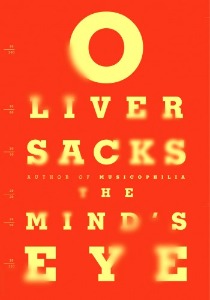
Book Description
In The Mind’s Eye, Oliver Sacks tells the stories of people who are able to navigate the world and communicate with others despite losing what many of us consider indispensable senses and abilities: the power of speech, the capacity to recognize faces, the sense of three-dimensional space, the ability to read, the sense of sight. For all of these people, the challenge is to adapt to a radically new way of being in the world.
There is Lilian, a concert pianist who becomes unable to read music and is eventually unable even to recognize everyday objects, and Sue, a neurobiologist who has never seen in three dimensions, until she suddenly acquires stereoscopic vision in her fifties.
There is Pat, who reinvents herself as a loving grandmother and active member of her community, despite the fact that she has aphasia and cannot utter a sentence, and Howard, a prolific novelist who must find a way to continue his life as a writer even after a stroke destroys his ability to read.
And there is Dr. Sacks himself, who tells the story of his own eye cancer and the bizarre and disconcerting effects of losing vision to one side.
Sacks explores some very strange paradoxes—people who can see perfectly well but cannot recognize their own children, and blind people who become hyper-visual or who navigate by “tongue vision.” He also considers more fundamental questions: How do we see? How do we think? How important is internal imagery—or vision, for that matter? Why is it that, although writing is only five thousand years old, humans have a universal, seemingly innate, potential for reading?
The Mind’s Eye is a testament to the complexity of vision and the brain and to the power of creativity and adaptation. And it provides a whole new perspective on the power of language and communication, as we try to imagine what it is to see with another person’s eyes, or another person’s mind.
See following link for more details:


November 2010
The Psychologist's Companion: A Guide to Writing Scientific Papers for Students and Researchers by Robert J. Sternberg & Karin Sternberg
Book Description
The Psychologist's Companion is intended for students as well as young professionals and writers at all stages of their careers seeking inspiration and guidelines for better scientific writing. This book is also a resource for researchers in related fields. It has been comprehensively updated, revised, and extended for its fifth edition and includes the latest style guidelines of the American Psychological Association's Publication Manual (sixth edition, 2009) as well as chapters encompassing the entire research process from doing literature research and planning an experiment to writing the paper.
The book features new chapters on literature research; ethics; and generating, evaluating, and selling ideas. The Psychologist's Companion also provides information on writing book proposals, grant proposals, and lectures.
See following link for more details:
The Psychologist's Companion: A Guide to Writing Scientific Papers for Students and Researchers


October 2010
The Naked Lady Who Stood on Her Head: A Psychiatrist's Stories of His Most Bizarre Cases by Dr. Gary Small & Gigi Vorgan
Book Description
True stories are more bizarre than any fiction, and Dr. Gary Small knows this best. After thirty distinguished years of psychiatry and groundbreaking research on the human brain, Dr. Small has seen it all - now he is ready to open his office doors for the first time and tell all about the most mysterious, intriguing, and bizarre patients of his career.
The Naked Lady Who Stood on Her Head is a spellbinding record of the doctor's most bewildering cases, from naked headstands and hysterical blindness to fainting schoolgirls and self-amputations. It is an illuminating journey into the mind of a practicing psychiatrist and his life in medicine as it evolves over time—a behind-the-scenes look at the field and a variety of mental diseases as they've never been seen or diagnosed before. You'll find yourself exploring the puzzling eccentricities that make us human.
Often funny, sometimes tragic, and always compelling, Dr. Small takes you on a tour of his career that moves from the halls of a crowded inner-city Boston emergency room to the multimillion-dollar ski lodges of the nation's elite. In between, Dr. Small introduces a strange cast of true-life characters and conditions, while dealing with mysterious hysterical blindness, a man convinced that his penis is shrinking, secret double lives, and frighteningly psychotic romantic desires. His career and personal life come full circle when his own mentor becomes his patient, making Small realize that no one is beyond mental exploration—not even himself.
See following link for more details:
The Naked Lady Who Stood on Her Head: A Psychiatrist's Stories of His Most Bizarre Cases


September 2010
Classic Case Studies in Psychology by Geoff Rolls

Book Description
Have you heard about the man who lived with a hole in his head? Or the boy raised by his parents as a girl? From the woman with multiple personalities, to the man with no brain, this collection of case studies provides a compelling insight into the human mind.
This is a fascinating collection of human stories. Some are well-known case studies that have informed clinical practice, others are relatively unknown. For this edition, Rolls has added recent research findings on each case study plus four brand new cases: the story of Washoe, the ape who could communicate; the much debated case of Holly Ramona and repressed memory; and Kim Peek, the real 'Rainman'.
Classic Case Studies in Psychology is for everyone who has ever wondered about the stranger side of life. No prior knowledge of psychology is required, just an open mind. Prepare to be amazed.
See following link for more details:
Classic Case Studies in Psychology


August 2010
How The Mind Works by Steven Pinker
Book Description
The Pulitzer Prize finalist and national bestseller How the Mind Works is a fascinating, provocative work exploring the mysteries of human thought and behavior. How do we see in three dimensions? How do we remember names and faces? How is it, indeed, that we ponder the nature of our own consciousness? Why do we fall in love?
In this bold, extraordinary book, Pinker synthesizes the best of cognitive science and evolutionary biology to explain what the mind is, how it has evolved, and, ultimately, how it works.
See following link for more details:


July 2010
How Pleasure Works: The New Science of Why We Like What We Like by Paul Bloom
Book Description
In How Pleasure Works, Yale University psychologist Paul Bloom draws on groundbreaking research to unveil the deeper workings of why we desire what we desire. Refuting the longstanding explanation of pleasure as a simple sensory response, Bloom shows us that pleasure is grounded in our beliefs about the deeper nature or essence of a given thing. This is why we want the real Rolex and not the knockoff, the real Picasso and not the fake, the twin we have fallen in love with and not her identical sister.
In this fascinating and witty account, Bloom draws on child development, philosophy, neuroscience, and behavioral economics in order to address pleasures noble and seamy, highbrow and lowbrow. Along the way, he gives us unprecedented insights into a realm of human psychology that until now has only been partially understood.
See following link for more details:
How Pleasure Works: The New Science of Why We Like What We Like


June 2010
Experiments With People: Revelations From Social Psychology by Robert P. Abelson, Kurt P. Frey & Aiden P. Gregg
Book Description
Experiments With People showcases 28 intriguing studies that have significantly advanced our understanding of human thought and social behavior. These studies, mostly laboratory experiments, shed light on the irrationality of everyday thinking, the cruelty and indifference of 'ordinary' people, the operation of the unconscious mind, and the intimate bond between the self and others. This book tells the inside story of how social psychological research gets done and why it matters.
Each chapter focuses on the details and implications of a single study, but cites related research and real-life examples. All chapters are self-contained, allowing them to be read in any order. Each chapter is divided into:
See following link for more details:
Experiments With People: Revelations From Social Psychology


May 2010
The Story of Psychology by Morton Hunt
Book Description
Socrates, Plato, Descartes, Spinoza, Mesmer, William James, Pavlov, Freud, Piaget, Erikson, and Skinner. Each of these thinkers recognized that human beings could examine, comprehend, and eventually guide or influence their own thought processes, emotions, and resulting behavior.
The lives and accomplishments of these pillars of psychology, expertly assembled by Morton Hunt, are set against the times in which the subjects lived. Hunt skillfully presents dramatic and lucid accounts of the techniques and validity of centuries of psychological research, and of the methods and effectiveness of major forms of psychotherapy.
Fully revised, and incorporating the dramatic developments of the last fifteen years, The Story of Psychology is a graceful and absorbing chronicle of one of the great human inquiries - the search for the true causes of our behavior.
See following link for more details:


April 2010
How To Do Research: A Psychologist's Guide by Jonathan St B T Evans
Book Description
Despite the existence of a large number of research methods textbooks, until now there has not been one offering coherent discussion of or clearly outlining a 'strategy' for research. How to do Research is intended to decisively redress this imbalance.
Offering practical advice on all methodological aspects of research from literature review and interpretation of findings - to development of theories, writing and publication, this book also provides a consideration of the major conceptual aspects of conducting research. The whole process of research, from philosophical underpinnings to key concepts in implementation, is critically examined and practical advice provided.
This book will be a useful resource for post-graduate students, at both MA and PhD level, for anyone in the early years of an academic career and for those carrying out research for the first time.
See following link for more details:
How to Do Research: A Psychologist's Guide


March 2010
Public Speaking for Psychologists: A Lighthearted Guide to Research Presentations, Job Talks, and Other Opportunities to Embarrass Yourself by David B. Feldman & Paul J. Silvia
Book Description
Public speaking is one of the most common fears. Few people look forward to talking in front of others and even fewer do it as effectively as they could. A career in psychology and its related fields involves extensive public speaking, so you will need to learn to do it well. With time and practice, you too can become a confident and effective presenter. "Public Speaking for Psychologists" is a practical and lighthearted guide to planning, designing, and delivering a presentation.
The first half of the book covers the nuts-and-bolts of public speaking: preparing a talk, submitting an abstract, developing your slides, managing anxiety, handling questions, and preventing public-speaking disasters. The second half applies these tips to common presentations, such as research talks, poster presentations, job talks, and talks to lay audiences. Throughout the book, the authors - both experienced presenters - offer realistic advice, useful tips, and humorous stories of embarrassing mistakes they'll never make again.
See following link for more details:


February 2010
50 Great Myths of Popular Psychology: Shattering Widespread Misconceptions about Human Behavior by Scott O. Lilienfeld, Steven Jay Lynn, John Ruscio & Barry L. Beyerstein
Book Description
50 Great Myths of Popular Psychology uses popular myths as a vehicle for helping students and laypersons to distinguish science from pseudoscience:
See following link for more details:
50 Great Myths of Popular Psychology: Shattering Widespread Misconceptions about Human Behavior


January 2010
Graduate Study in Psychology 2010: American Psychological Association
Book Description
Graduate Study in Psychology is the best source of information related to graduate programs in psychology and provides information related to approximately 600 graduate programs in psychology in the U.S. and Canada.
Graduate Study in Psychology contains information about:
See following link for more details:
Graduate Study in Psychology 2010


December 2009
Phantoms in the Brain: Probing the Mysteries of the Human Mind by V.S Ramachandran & Sandra Blakeslee
Book Description
Neuroscientist V.S. Ramachandran is internationally renowned for uncovering answers to the deep and quirky questions of human nature that few scientists have dared to address. His bold insights about the brain are matched only by the stunning simplicity of his experiments; using such low-tech tools as cotton swabs, glasses of water and dime-store mirrors.
In Phantoms in the Brain, Dr. Ramachandran recounts how his work with patients who have bizarre neurological disorders has shed new light on the deep architecture of the brain, and what these findings tell us about who we are, how we construct our body image, why we laugh or become depressed, why we may believe in God, how we make decisions, deceive ourselves and dream, perhaps even why we're so clever at philosophy, music and art. Some of his most notable cases:
A woman paralyzed on the left side of her body who believes she is lifting a tray of drinks with both hands offers a unique opportunity to test Freud's theory of denial.
A man who insists he is talking with God challenges us to ask: Could we be "wired" for religious experience?
A woman who hallucinates cartoon characters illustrates how, in a sense, we are all hallucinating, all the time.
Dr. Ramachandran's inspired medical detective work pushes the boundaries of medicine's last great frontier - the human mind - yielding new and provocative insights into the "big questions" about consciousness and the self.
See following link for more details:
Phantoms in the Brain: Probing the Mysteries of the Human Mind


November 2009
The Science of Psychology: An Appreciative View by Laura King
Book Description
The Science of Psychology: An Appreciative View by Laura King (University of Missouri at Columbia) is the first text to bring a truly appreciative view of psychology as a science and for exploring behavior to introductory students. It is built around the idea that students must study the discipline of psychology as a whole, that the sub-disciplines are intricately connected, and that human behavior is best understood by exploring its functioning state in addition to its potential dysfunctions.
For example, imagine that you have been asked to create a science of "watchology." You have two watches that both have had the unfortunate "trauma" of being left in the pocket of someone's jeans through the washer and dryer. One watch has suffered the worst possible fate-it no longer tells time. The other has emerged from the traumatic event still ticking. Which watch would you use to develop your new science of watchology? Clearly, the working watch will help you understand watches better than the broken one.
What does watchology have to do with psychology? Quite simply, in psychology as in watchology, it makes sense to start with what works: to gain a general understanding of human behavior and then apply that knowledge to those who have emerged from life's experiences in dysfunction.
See following link for more details:
The Science of Psychology: An Appreciative View


October 2009
Your Career in Psychology: Putting Your Graduate Degree to Work by Stephen F. Davis, Peter J. Giordano & Carolyn A. Licht
Book Review by Kenneth D. Keith (University of San Diego )
Your Career in Psychology is the kind of book many, if not most, psychologists, whether teachers, researchers, or practitioners, might have wished for when they were setting out. The editors, experienced psychologists themselves, have assembled a wonderfully diverse group of authors who provide honest, witty, and practical advice to readers contemplating new careers or career changes within the field.
They discuss the obvious topics, like teaching roles, private practice, and job finding; and they take on the less pleasant prospects, such as what to do about student loans. From working effectively with mentors to being a good campus citizen, there is something here for anyone serious about psychology as a career field. The advice and counsel comes from psychologists whose wide-ranging experience will prove useful, not only to those seeking or changing careers, but to those of us engaged in teaching the next generation.
This is an excellent collection of interesting, successful authors who have ‘been there and done that.’ Readers will find a wealth of useful ideas and pointers.
See following link for more details:
Your Career in Psychology: Putting Your Graduate Degree to Work


September 2009
Classic Experiments in Psychology by Douglas Mook
Book Description
The typical survey course in psychology has time for only limited presentation of the research on which our knowledge is based. This book presents, in more depth than textbook treatment permits, the background, conduct, and implications of a selection of classic experiments in psychology. The selection is designed to be diverse, showing that even for research in vastly different areas of study, the logic of research remains the same; as do its traps and pitfalls.
See following link for more details:
Classic Experiments in Psychology


August 2009
Getting In: A Step-By-Step Plan for Gaining Admission to Graduate School in Psychology by The American Psychological Association
Book Description
Getting In: A Step-By-Step Plan for Gaining Admission to Graduate School in Psychology, Second Edition is an update of the American Psychological Association's essential resource for anyone considering graduate study in psychology. This handy, readable book simplifies the process for applicants and increases their chances of being accepted. Useful timelines, tips, and tools break the tasks into manageable steps and help readers define their goals, select programs, and navigate the application process.
A monthly timetable and detailed worksheets for selecting the best program matches are included, and a resource section provides a list of publications and organizations that are useful in the various phases of applying. Readers will learn what criteria admissions committees use to evaluate applicants, how to improve their qualifications, and how to showcase their talents in personal essays, letters of recommendations, and preselection interviews.
The costs of a graduate education and financial aid information specific to graduate students are also discussed. Members of special populations, such as women, ethnic minorities, gay and lesbian applicants, and applicants with disabilities will find resources and guidance particular to their needs. While applying to graduate school can be challenging, this book demystifies the process and allays students' concerns about how to tackle it.
See following link for more details:
Getting In: A Step-By-Step Plan for Gaining Admission to Graduate School in Psychology


July 2009
Critical Thinking in Psychology by Robert J. Sternberg, Henry L. Roediger & Diane F. Halpern
Book Description
Good scientific research depends on critical thinking at least as much as factual knowledge; psychology is no exception to this rule. And yet, despite the importance of critical thinking, psychology students are rarely taught how to think critically about the theories, methods, and concepts they must use.
This book shows students and researchers how to think critically about key topics such as experimental research, statistical inference, case studies, logical fallacies, and ethical judgments.
See following link for more details:
Critical Thinking in Psychology


June 2009
Fool's Paradise: The Unreal World of Pop Psychology by Stewart Justman
Book Review By Kenneth Siber From Scientific American
The genre of psychological self-help books has grown tremendously, and authors such as Dr. Phil (McGraw), Wayne Dyer and John Gray are repeat visitors to the best-seller lists. Such popularity poses a paradox, though: If the books really worked, why would readers need to keep buying them? In the erudite yet lively Fool’s Paradise, literary scholar Stewart Justman argues that pop psychology texts are ineffective because, among other things, they encourage people to hyperfocus on their own emotional states.
The literature is rife with supposed success stories about people overcoming negative emotions and behaviors, many of which are suspiciously sketchy and formulaic. Loose or out-of-context quotations from serious literary and philosophical works are another ill staple of the genre. Citing more than 40 guidebooks, he shows that the field’s problems are serious indeed.
See following link for more details:
Fool's Paradise: The Unreal World of Pop Psychology


May 2009
Introduction to Psychology: Gateways to Mind and Behavior with Concept Maps and Reviews by by Dennis Coon & John O. Mitterer
Book Description
Introduction to Psychology: Gateways to Mind and Behavior attracts and holds the attention of even difficult-to-reach students. The Twelfth Edition's hallmark continues to be its pioneering integration of the proven-effective SQ4R learning system (Survey, Question, Read, Reflect, Review, Recite), which promotes critical thinking as it guides students step-by-step to an understanding of psychology's broad concepts and diversity of topics.
Throughout every chapter, these active learning tools together with the book's example-laced writing style, discussions of positive psychology, cutting-edge coverage of the field's new research findings, and excellent media resources ensure that students find the study of psychology fascinating, relevant, and above all, accessible.
See following link for more details:
Introduction to Psychology: Gateways to Mind and Behavior with Concept Maps and Reviews


April 2009
Decoding the Ethics Code: A Practical Guide for Psychologists by Dr. Celia B. Fisher
Book Description
Decoding the Ethics Code: A Practical Guide for Psychologists introduces those in psychology and related fields to the American Psychological Association's Ethical Principles of Psychologists and Code of Conduct. The book helps psychologists apply the Ethics Code to the constantly changing scientific, professional, and legal realities of the discipline.
Author Celia B. Fisher addresses the revised format, choice of wording, aspirational rationale, and enforceability of the code and puts these changes into practical perspective for psychologists. Her book provides in-depth discussions of the foundation and application of each ethical standard to the broad spectrum of scientific, teaching, and professional roles of psychologists. This unique guide helps psychologists effectively utilize ethical principles and standards to morally conduct their work activities, avoid ethical violations, and, most importantly, preserve and protect the fundamental rights and welfare of those with whom they serve.
This insider’s guide is an essential resource for new and established mental health practitioners. Graduate students of psychology will find this core text a valuable source of information on ethics in psychology.
See following link for more details:
Decoding the Ethics Code: A Practical Guide for Psychologists


March 2009
Essentials of Understanding Psychology by Robert Feldman
Book Description
Essentials of Understanding Psychology guides students through Introductory Psychology concepts in an accessible manner, bringing comprehension of difficult material into the grasp of all students because when students understand psychology, they learn psychology. The thoroughly revised Eighth Edition integrates a variety of elements that foster students understanding of psychology and its impact on their everyday lives, including a new Neuroscience and Life feature, alerts to key topics, and study skills for specific concepts. This text also provides instructors with a fully integrated supplements package to objectively gauge their students mastery of psychologys key principles and concepts and to create dynamic lectures.
See following link for more details:
Essentials of Understanding Psychology


February 2009
The New Psychology of Love by Robert J. Sternberg & Karin Weis
Book Description
Love. What is it? Can we define it? What is its role in our lives? What causes love, and what dooms it? No single theory adequately answers all our questions about the nature of love, yet there are many theories that can contribute to our understanding of it. This fascinating book presents the full range of psychological theories on love—biological, taxonomical, implicit, cultural—updated with the latest research in the field.
Robert Sternberg and Karin Weis have here gathered more than a dozen expert contributors to address questions about defining love, the evidence for competing theories, and practical implications. Taken together, these essays offer a comprehensive and engaging comparison of contemporary data and theories.
See following link for more details:


January 2009
Graduate Study in Psychology, 2009: by American Psychological Association
Book Description
Graduate Study in Psychology 2009 is the best source of information related to graduate programs in psychology and provides information related to approximately 600 graduate programs in psychology in the U.S. and Canada.
Graduate Study in Psychology contains information about:
Number of applications received by a program.
Number of individuals accepted in each program.
Dates for applications and admission.
Types of information required for an application.
In-state and out-of-state tuition costs.
Availability of internships and scholarships.
Employment information of graduates.
Orientation and emphasis of departments and programs.
See following link for more details:
Graduate Study in Psychology, 2009


December 2008
Psychology by Daniel L. Schacter, Daniel T. Gilbert & Daniel M. Wegner

Book Description
Psychology, the highly anticipated new introductory psychology textbook by Harvard professors Daniel L. Schacter, Daniel T. Gilbert, and Daniel M. Wegner, takes a fresh approach to the teaching of psychology by focusing on mindbugs: foibles of the mind that are intrinsically fascinating and provide fundamental insights into how the mind works.
Believing an introduction to the field of psychology should be every bit as engaging as reading a popular science book, the authors have utilized the skills that made them successful trade authors to present a compelling case for psychological reasoning. Joined with the latest in psychological science and neuroscience, Psychology will provide students with an introduction to psychology that both educates and entices them
See following link for more details:


November 2008
Science and Pseudoscience in Clinical Psychology by Scott O. Lilienfeld, Steven Jay Lynn & Jeffrey M. Lohr
Book Description
This is the first major text designed to help professionals and students evaluate the merits of popular yet controversial practices in clinical psychology, differentiating those that can stand up to the rigors of science from those that cannot.
Leading researchers review widely used therapies for alcoholism, infantile autism, ADHD, and posttraumatic stress disorder; herbal remedies for depression and anxiety; suggestive techniques for memory recovery; and self-help models. Other topics covered include issues surrounding psychological expert testimony, the uses of projective assessment techniques, and unanswered questions about dissociative identity disorder.
Providing knowledge to guide truly accountable mental health practice, the volume also imparts critical skills for designing and evaluating psychological research programs. It is ideal for use in advanced undergraduate and graduate level courses in clinical psychology, psychotherapy, and evidence-based practice.
See following link for more details:
Science and Pseudoscience in Clinical Psychology
October 2008
Sway: The Irresistible Pull of Irrational Behavior by Ori Brafman & Rom Brafman
Book Description
A fascinating journey into the hidden psychological influences that derail our decision-making, Sway will change the way you think about the way you think.
Why is it so difficult to sell a plummeting stock or end a doomed relationship? Why do we listen to advice just because it came from someone “important”? Why are we more likely to fall in love when there’s danger involved? In Sway, renowned organizational thinker Ori Brafman and his brother, psychologist Rom Brafman, answer all these questions and more.
Drawing on cutting-edge research from the fields of social psychology, behavioral economics, and organizational behavior, Sway reveals dynamic forces that influence every aspect of our personal and business lives, including loss aversion (our tendency to go to great lengths to avoid perceived losses), the diagnosis bias (our inability to reevaluate our initial diagnosis of a person or situation), and the “chameleon effect” (our tendency to take on characteristics that have been arbitrarily assigned to us).
Sway introduces us to the Harvard Business School professor who got his students to pay $204 for a $20 bill, the head of airline safety whose disregard for his years of training led to the transformation of an entire industry, and the football coach who turned conventional strategy on its head to lead his team to victory. We also learn the curse of the NBA draft, discover why interviews are a terrible way to gauge future job performance, and go inside a session with the Supreme Court to see how the world’s most powerful justices avoid the dangers of group dynamics.
Every once in a while, a book comes along that not only challenges our views of the world but changes the way we think. In Sway, Ori and Rom Brafman not only uncover rational explanations for a wide variety of irrational behaviors but also point readers toward ways to avoid succumbing to their pull.
See following link for more details:
Sway: The Irresistible Pull of Irrational Behavior


September 2008
50 Psychology Classics: Who We Are, How We Think, What We Do; Insight and Inspiration from 50 Key Books by Tom Butler-Bowdon
Book Description
We would all like to know the secrets of human nature - who we are, how we think, and what we do. 50 psychology classics explores writings from such iconic figures as Freud Adler, Jung, Skinner, James, Piaget, and Pavlov, and also highlights the work of contemporary psychologists such as Howard Gardner, Daniel Gilbert, and Martin Seligman. In addition, there are fascinating insights from writers and thinkers like Isabel Briggs Myers, Eric Hoffer, and William Styron.
The focus is on 'psychology for non psychologists', books that everyone can read and be enlightened by, or that were expressly written for a general audience. We are in a new golden age of popular psychology writing, and 50 psychology classics reveals a diversity of ideas:
Also exploring some of psychology's most famous experiments and research, such as Stanley Milgram's chilling demonstrations of the human willingness to obey authority, Harry Harlow's work with baby monkeys revealing the importance of physical contact to mental health, and Alfred Kinsey's pot-stirring revelations about people's real sex lives, 50 psychology classics highlights the often surprising scientific work that has changed what we believe about ourselves and what makes people tick.
See following link for more details:

August 2008
The Psychologist as Detective: An Introduction to Conducting Research in Psychology by Randolph A. Smith & Stephen F. Davis
Book Description
The Psychologist as Detective conveys the excitement of research methodology through a lively, conversational style. To make the study of the research process interactive and accessible for readers, pedagogical features and critical thinking activities are integrated throughout the volume. Actual student research appears in each chapter to increase relevance and heighten reader interest.
This text evaluates the science of psychology, research ideas and hypotheses, ethics, nonexperimental methods and the basics of experimentation variables and control, statistics, designing-conducting-analyzing and interpreting experiments, as well as alternative research designs, external validity, critiquing experimental research and writing and assemblling an APA-format research report.
For individuals involved with or interested in psychological research.
See following link for more details:
The Psychologist as Detective: An Introduction to Conducting Research in Psychology (4th Edition)

July 2008
The Blank Slate: The Modern Denial of Human Nature by Steven Pinker
Editorial Review From Publishers Weekly
In his last outing, How the Mind Works, the author of the well-received The Language Instinct made a case for evolutionary psychology or the view that human beings have a hard-wired nature that evolved over time. This book returns to that still-controversial territory in order to shore it up in the public sphere. Drawing on decades of research in the "sciences of human nature," Pinker, a chaired professor of psychology at MIT, attacks the notion that an infant's mind is a blank slate, arguing instead that human beings have an inherited universal structure shaped by the demands made upon the species for survival, albeit with plenty of room for cultural and individual variation.
For those who have been following the sciences in question including cognitive science, neuroscience, behavioral genetics and evolutionary psychology much of the evidence will be familiar, yet Pinker's clear and witty presentation, complete with comic strips and allusions to writers from Woody Allen to Emily Dickinson, keeps the material fresh. What might amaze is the persistent, often vitriolic resistance to these findings Pinker presents and systematically takes apart, decrying the hold of the "blank slate" and other orthodoxies on intellectual life.
He goes on to tour what science currently claims to know about human nature, including its cognitive, intuitive and emotional faculties, and shows what light this research can shed on such thorny topics as gender inequality, child-rearing and modern art.
See following link for more details:
The Blank Slate: The Modern Denial of Human Nature

June 2008
The Lucifer Effect: Understanding How Good People Turn Evil By Philip Zimbardo
Book Description
What makes good people do bad things? How can moral people be seduced to act immorally? Where is the line separating good from evil, and who is in danger of crossing it?
Renowned social psychologist Philip Zimbardo has the answers, and in The Lucifer Effect he explains how–and the myriad reasons why–we are all susceptible to the lure of “the dark side.” Drawing on examples from history as well as his own trailblazing research, Zimbardo details how situational forces and group dynamics can work in concert to make monsters out of decent men and women.
Zimbardo is perhaps best known as the creator of the Stanford Prison Experiment. Here, for the first time and in detail, he tells the full story of this landmark study, in which a group of college-student volunteers was randomly divided into “guards” and “inmates” and then placed in a mock prison environment. Within a week the study was abandoned, as ordinary college students were transformed into either brutal, sadistic guards or emotionally broken prisoners.
By illuminating the psychological causes behind such disturbing metamorphoses, Zimbardo enables us to better understand a variety of harrowing phenomena, from corporate malfeasance to organized genocide to how once upstanding American soldiers came to abuse and torture Iraqi detainees in Abu Ghraib. He replaces the long-held notion of the “bad apple” with that of the “bad barrel”–the idea that the social setting and the system contaminate the individual, rather than the other way around.
This is a book that dares to hold a mirror up to mankind, showing us that we might not be who we think we are. While forcing us to reexamine what we are capable of doing when caught up in the crucible of behavioral dynamics, though, Zimbardo also offers hope. We are capable of resisting evil, he argues, and can even teach ourselves to act heroically. Like Hannah Arendt’s Eichmann in Jerusalem and Steven Pinker’s The Blank Slate, The Lucifer Effect is a shocking, engrossing study that will change the way we view human behavior.
See following link for more details:
The Lucifer Effect: Understanding How Good People Turn Evil

May 2008
Psychology and Life by Richard J. Gerrig & Philip G. Zimbardo
Book Description
This classic book is built around the central theme of presenting psychology as a science and applying that science to our daily lives. Psychology and Life continues to provide a rigorous, research-based presentation that demonstrates that this research has immediate in daily life. For Intro Psychology students, or anyone with an interest in the subject.
See following link for more details:
Psychology and Life (MyPsychLab Series)

April 2008
Forty Studies that Changed Psychology: Explorations into the History of Psychological Research by Roger R Hock

Book Description
This unique book closes the gap between psychology books and the research that made them possible. Its journey through the “headline history” of psychology presents 40 of the most famous studies in the history of the science, and subsequent follow-up studies that expanded their findings and relevance.
Readers are granted a valuable insider's look at the studies that continue to be cited most frequently, stirred up the most controversy when they were published, sparked the most subsequent related research, opened new fields of psychological exploration, and changed most dramatically our knowledge of human behavior.
See following link for more details:

March 2008
Flow: The Psychology of Optimal Experience by Mihaly Csikszentmihalyi
Editorial Review
Aristotle observed 2300 years ago that more than anything men and women seek happiness. Csikszentmihalyi (psychology, Univ. of Chicago) has for 25 years made similar observations regarding "flow," a field of behavioral science examining connections between satisfaction and daily activities.
A flow state ensues when one is engaged in self-controlled, goal-related, meaningful actions. Data regarding flow were collected on thousands of individuals, from mountain climbers to chess players. This thoroughly researched study is an intriguing look at the age-old problem of the pursuit of happiness and how, through conscious effort, we may more easily attain it. Recommended for general readers. (Terry McMaster, Utica Coll. of Syracuse Univ. Lib., N.Y).
See following link for more details:
Flow: The Psychology of Optimal Experience

Recent Articles


-
Why You Beat Yourself Up Over Mistakes (And How to Stop)
Oct 28, 25 02:16 PM
 Learn why we beat ourselves up after mistakes and how sport psychology and self-compassion techniques can help you reset, refocus, and move forward.
 -
Continuing Education for Social Workers: A Path to Career Growth
Oct 27, 25 07:25 AM
 Discover how continuing education for social workers opens new career paths, builds specialized skills, and supports confident professional transitions.
 -
How Psychology In Web Design Affects User Behavior
Oct 22, 25 10:29 AM
 Lean how psychology in web design helps you create a effective user experience that attracts and retains visitors and helps you convert them.


Go From Great Psychology Books Back To The Home Page