Psychology Classics On Amazon
Psychology Research Methods
The fact that research methods and statistics are a compulsory component of most psychology courses should immediately alert you to their importance. Not least because that in order to conduct your own research, (another core component of most psychology courses) you will need a clear understanding of the principles underpinning research design and analysis.
I know from my time as both a student and then a university lecturer that this is an area that many people struggle with and worry about. If you're one of those people, I hope as you explore this page and check out the excellent support material and resources, you'll choose to embrace research methods and statistics, rather than fear and avoid them.
All the best
David Webb BSc (Hons), MSc
Setting The Scene
- Psychological researchers generally follow a scientific approach...This involves careful definition and measurement, and the logic of testing hypotheses produced from falsifiable theories.
- Theories in psychology are not 'proven' true but are supported or challenged by research evidence.
- Much research attempts to broaden the scope of a previously demonstrated effect or to find instances where the effect does not occur.
- Scientific research is a continuous and social activity, involving promotion and checking of ideas among colleagues.
- Research has to be planned carefully, with attention to design, variables, samples and subsequent data analysis.
- Some researchers support qualitative methods and data gathering, dealing with meaningful verbal data rather than exact measurement and statistical summary.
Information Via: Research Methods and Statistics in Psychology by Hugh Coolican
Don't worry if you are confused by some of the details above. When you first start learning about research methods and statistics you're bombarded with complicated sounding terminology. However, the ideas and concepts that these terms refer to, really aren't that difficult to get your head around, particularly if you can relate them to something personally meaningful. For example, consider the logic of the experimental method.
If two groups of participants are equal in all respects save one and are not similar in respect of a behavior that is being measured, then the difference between them must be attributable to the one way in which they were different.
(J.S Mill)
I promise, this was just like my reaction when I started learning about the experimental method. Yet, a few years later I was teaching the subject as part of an introductory research methods course which I co-wrote with Dr David Tyfa at the University of Huddersfield (UK). And we were determined to transform any initial confusion among our students into:
Something To Relate To
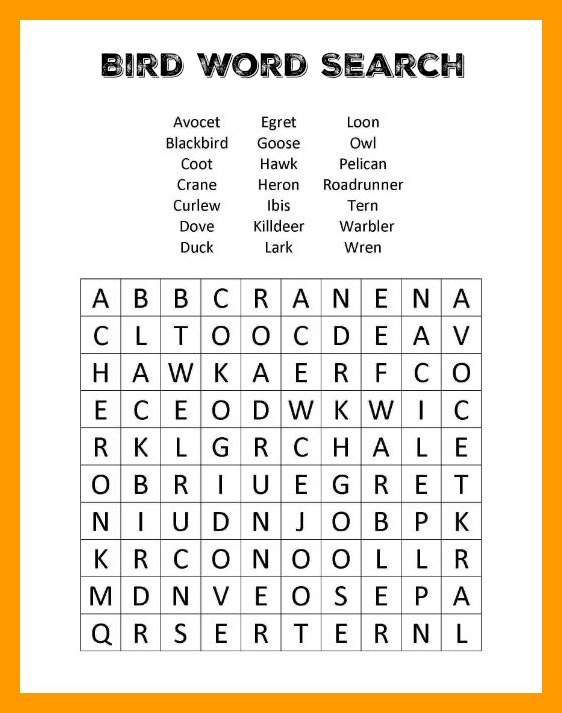
The first thing our students did on their introduction to research methods course was to complete a simple word search puzzle similar to the one shown above. Each student did the puzzle on a computer and when they had found all the words, the time it took them to complete the puzzle (in seconds) appeared on the screen.
Now what the students didn't realize at the time is that they were actually taking part in an experiment.
I (along with my teaching support team) took half the students into PC lab 1. My colleague Dr Tyfa (along with his teaching support team) took the other half of the students into PC lab 2.
When the students were doing the puzzle in PC lab 1 (my lab), the teaching team made their presence felt as much as possible, walking up and down each bank of computers, looking over the students shoulder, essentially being as conspicuous as possible.
In PC lab 2 (Dr Tyfa's lab) the teaching team did the opposite i.e. they remained as inconspicuous as possible and showed no interest in what the students were doing at all.
(Try to imagine yourself as one of the students doing the word search puzzle in either PC lab 1 or PC lab 2)
The students were completely unaware what was going on, as far as they were concerned the object of the exercise was to collect some data i.e. the time taken to complete the puzzle, which they could then practice entering into a statistical software package.
The true nature of the exercise wasn't revealed until the following week when I gave a lecture on the experimental method. Because what I was able to do now, was take key experimental design concepts and relate them to something the students had direct experience of i.e. the word search puzzle experiment.
For instance, let's go back to the logic of the experimental method.
If two groups of participants are equal in all respects save one and are not similar in respect of a behavior that is being measured, then the difference between them must be attributable to the one way in which they were different.
Hopefully by exploring this logic in relation to the word search experiment you'll see that it’s actually very straightforward.
When we did the word search experiment we had two groups of participants, i.e. some in (PC lab 1) and some in (PC lab 2). Now for the time being, let’s accept that these two groups of participants were equal in all respects save one. This of course begs the question, what was the one way in which the two groups of participants were not equal?
The answer is level of teacher presence!
Remember, when the students were doing the puzzle in PC lab 1 (my lab), the teaching team made their presence felt as much as possible, walking up and down each bank of computers, looking over the students shoulder, essentially being as conspicuous as possible. In PC lab 2 (Dr Tyfa's lab) the teaching team did the opposite i.e. they remained as inconspicuous as possible i.e. showed no interest in what the students were doing at all.
Now if it turns out that the psychology students in PC lab 1 and PC lab 2 were not similar in respect of the behavior that was being measured (in our case the time taken to complete a word search puzzle), then according to the logic of the experimental method, this difference must be attributable to level of teacher presence. In other words
Level of teacher presence (the cause) made a difference in the time taken to complete the puzzle (the effect).
So the first thing to note about the experimental method is that it is fundamentally concerned with establishing cause and effect.
Want to learn more about key experimental design concepts? (Go on! You know you want to!) You can do the full experimental design tutorial via the following link.
Outstanding Research Methods Resources

I first came across the Noba during an interview I did with Dr. Robert Biswas-Diener who along with a group of other psychologists has been endeavoring to make high quality materials free for everyone regardless of background. Noba is a free online platform that provides high-quality, flexibly structured textbooks and educational materials, including a number of excellent research methods related resources, which you can access via the following links.
Conducting Psychology Research in the Real World
Research Methods in Social Psychology
The Replication Crisis in Psychology
See following link for an excellent article on qualitative content analysis which includes a very useful checklist for researchers on how to improve the trustworthiness of a content analysis study.
Qualitative Content Analysis: A Focus on Trustworthiness

Written by Professor William M.K. Trochim, The Research Methods Knowledge Base is a comprehensive web-based textbook that addresses all of the topics in a typical introductory undergraduate or graduate course in social research methods.
It covers the entire research process including: formulating research questions; sampling (probability and nonprobability); measurement (surveys, scaling, qualitative, unobtrusive); research design (experimental and quasi-experimental); data analysis; and, writing the research paper. It also addresses the major theoretical and philosophical underpinnings of research including: the idea of validity in research; reliability of measures; and ethics.
The Research Methods Knowledge Base was designed to be different from the many typical commercially-available research methods texts. It uses an informal, conversational style to engage both the newcomer and the more experienced student of research. It is a fully hyperlinked text that can be integrated easily into an existing course structure or used as a sourcebook for the experienced researcher who simply wants to browse. You can access this incredibly useful online research methods resource via the following link.
The Research Methods Knowledge Base
Essential Reading

This sixth edition of Research Methods and Statistics in Psychology has been fully revised and updated, providing students with the most readable and comprehensive survey of research methods, statistical concepts and procedures in psychology today. Assuming no prior knowledge, this bestselling text takes you through every stage of your research project giving advice on planning and conducting studies, analysing data and writing up reports.
The book provides clear coverage of statistical procedures, and includes everything needed from nominal level tests to multi-factorial ANOVA designs, multiple regression and log linear analysis. It features detailed and illustrated SPSS instructions for all these procedures eliminating the need for an extra SPSS textbook.
New features in the sixth edition include:
- "Tricky bits" - in-depth notes on the things that students typically have problems with, including common misunderstandings and likely mistakes.
- Improved coverage of qualitative methods and analysis, plus updates to Grounded Theory, Interpretive Phenomenological Analysis and Discourse Analysis.
- A full and recently published journal article using Thematic Analysis, illustrating how articles appear in print.
- Discussion of contemporary issues and debates, including recent coverage of journals’ reluctance to publish replication of studies.
- Fully updated online links, offering even more information and useful resources, especially for statistics.
- Each chapter contains a glossary, key terms and newly integrated exercises, ensuring that key concepts are understood. A companion website provides additional exercises, revision flash cards, links to further reading and data for use with SPSS.
See following link for full details.
Research Methods and Statistics in Psychology

Especially designed for Halloween loving psychology students, this Funny Paranormal Distribution T-Shirt is perfect for trick or treating or for a spooky costume party. Also ideal for anyone who likes research methods, math and statistics who will appreciate the humorous play on words. Sales help support All-About-Psychology.Com which has been providing free and comprehensive information and resources for psychology students and educators since 2008.

Recent Articles


-
Serial Killer Traits
Apr 28, 24 06:24 AM
 What are the common traits or characteristics observed in serial killers?
 -
Being A People Pleaser
Apr 27, 24 11:05 AM
 Is my tendency to constantly seek approval and accommodate others a sign of being a people pleaser, and if so, how can I better understand and address
 -
Psychological Theories
Apr 25, 24 09:43 AM
 I’ve set a lofty or an over ambitious goal of reading and gathering psychological theories or principles starting from prehistorical religion up until
Please help support this website by visiting the All About Psychology Amazon Store to check out an awesome collection of psychology books, gifts and T-shirts.
 |
 |
Go From Psychology Research Methods Back To The Home Page
New! Comments
Have your say about what you just read! Leave me a comment in the box below.