What is Psychology?
David Webb, psychology educator, author and founder of All About Psychology
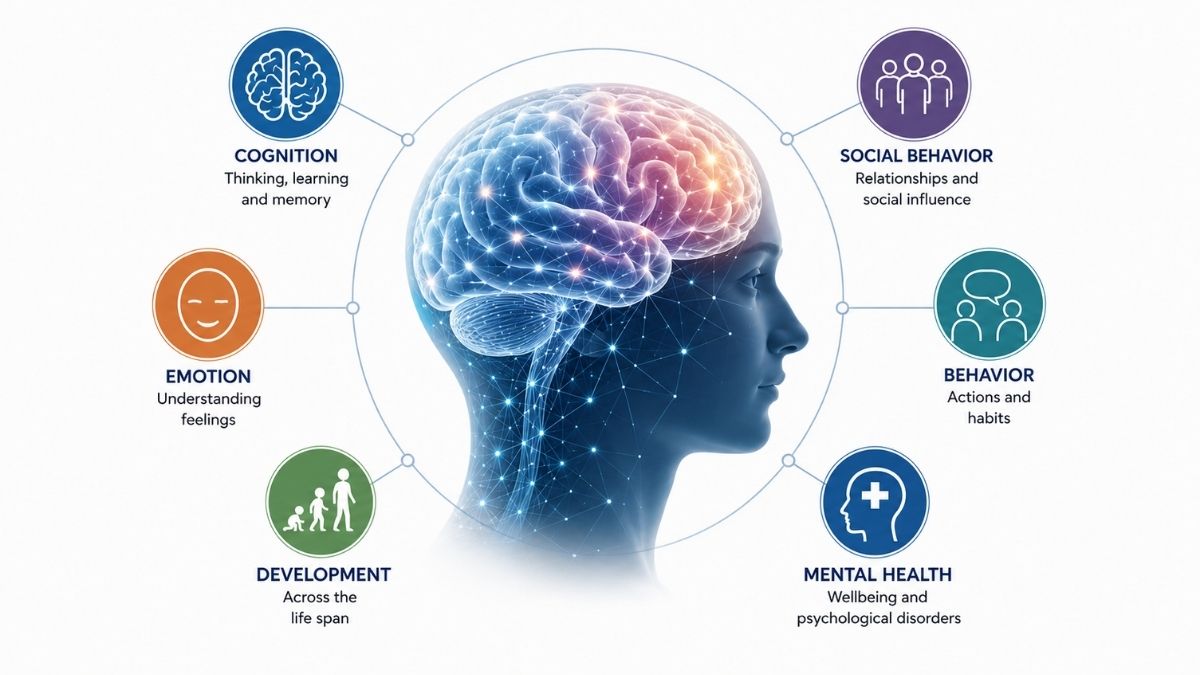
Psychology is the scientific study of the mind and behavior. It explores how people think, feel and act, examining everything from perception, memory and emotion to development, social interaction and mental health. Psychology is both a scientific discipline and a professional field, with applications across healthcare, education, business, sport and many other areas of everyday life.
Despite its broad scope, psychology is often misunderstood. Tell someone you study or teach psychology and you may still hear comments such as, “I’d better be careful what I say,” or “So, do you know what I’m thinking?” These familiar reactions reflect a common misconception that psychology is mainly about reading people or treating mental illness.
What is the definition of psychology?
Psychology is commonly defined as the scientific study of mind and behavior. Two major professional bodies describe the field in closely related ways.
“Psychology is the scientific study of people, the mind and behavior. It is both a thriving academic discipline and a vital professional practice.”
American Psychological Association
“The scientific study of the behavior of individuals and their mental processes.”
Taken together, these definitions show that psychology is concerned with both observable behavior and the internal mental processes that help explain it. These include thinking, memory, perception, emotion, motivation and decision-making.
Why is psychology difficult to define?
Psychology can be difficult to define because the field examines human thought and behavior from several different perspectives. The same behavior may be explored in terms of brain processes, learning and experience, thoughts and beliefs, emotions, social influences or development across the lifespan.
These different levels of explanation are one of psychology's strengths. Rather than assuming that every aspect of human behavior has a single cause, psychologists can investigate the same question from biological, cognitive, behavioral, developmental and social perspectives.
The key idea: Psychology is a broad scientific discipline united by a common goal: understanding how and why people think, feel and behave as they do.
For anyone new to psychology, there is no need to master all of these perspectives at once. Understanding that psychologists can approach the same question at different levels provides a useful framework for making sense of the subject as you explore it in greater depth.
Is psychology a science?
Yes. Psychology is a scientific discipline that uses systematic observation, measurement and research methods to investigate questions about human thought and behavior. Psychologists develop hypotheses, collect and analyze data, and use evidence to test explanations of how people think, feel and act.
This scientific focus is much broader than the popular image of psychology as primarily concerned with therapy or mental illness. Psychological research also examines areas such as learning, memory, perception, decision-making, personality, development, relationships, social influence and the links between the brain and behavior.
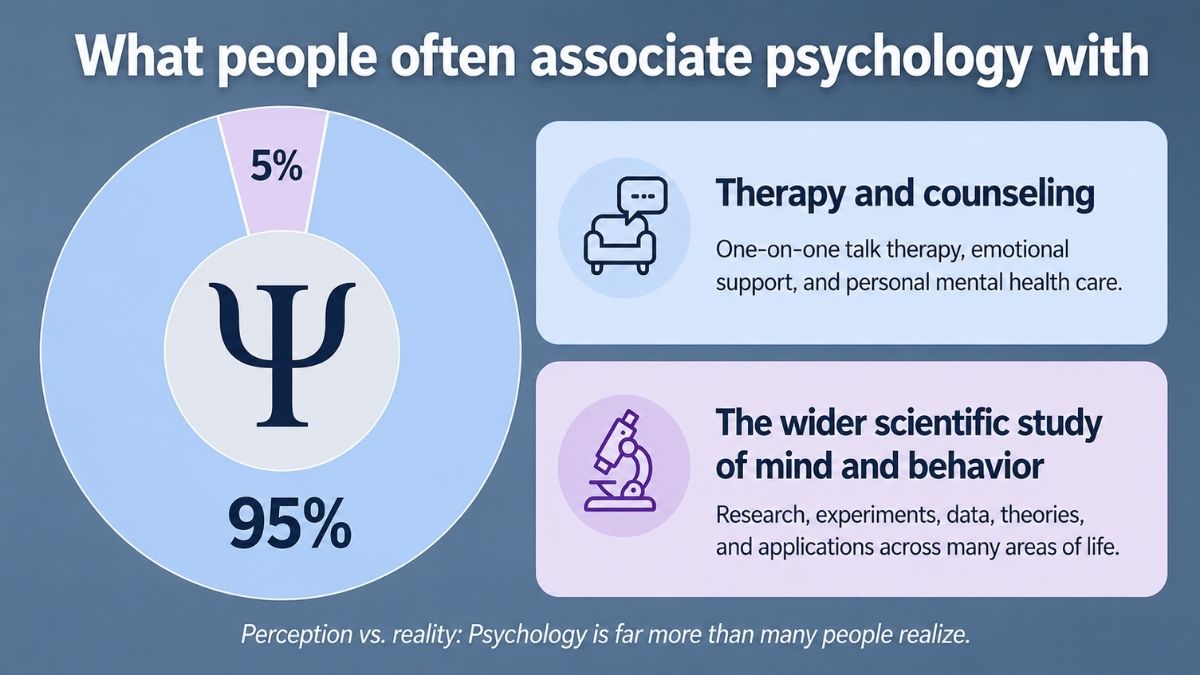
Psychology is more than mental health.
“It is common knowledge that public understanding of psychology is typically aligned with the mental health and intervention aspects of the discipline. Most people think of psychologists as clinicians and counselors. Few understand that psychology is the science of behavior, cognition and emotion... Everyone should recognize psychology as a STEM (Science-Technology-Engineering-Mathematics) discipline.”
Steven Breckler, PhD
Recognizing psychology as a science is important because it explains why the field draws on methods and knowledge from areas including biology, neuroscience, statistics and the social sciences. It also helps explain the enormous range of questions psychologists are able to investigate.
What does psychology study?
Psychology studies how people think, feel and behave. It examines both observable behavior and the mental processes that influence it, from basic functions such as perception and memory to complex areas such as personality, relationships and decision-making.
Major areas studied in psychology include:
- Cognition – thinking, attention, memory, language, problem-solving and decision-making.
- Emotion and motivation – how feelings, needs and goals influence behavior.
- Learning and behavior – how experience, reinforcement and the environment shape what people do.
- Development – how people change physically, cognitively, emotionally and socially across the lifespan.
- Personality and individual differences – why people differ in characteristic patterns of thinking, feeling and behaving.
- Social behavior – how other people, groups and social situations influence attitudes and actions.
- Biological processes – how the brain, nervous system, hormones and genetics relate to behavior and mental processes.
- Mental health and psychological disorders – how psychological difficulties develop, are understood and can be treated.
Because these areas overlap, psychologists often study the same question from several perspectives. A behavior such as anxiety, for example, can be examined in terms of brain activity, learning history, patterns of thought, personality, development and social context. You can explore these areas in more detail in our guide to the different types of psychology.
Interested in studying psychology?
“I think psychology is the most interesting of all fields. It's the most interesting because it's about us. It's about the most important and intimate aspects of our lives. It's about language and perception, it's about our memory of things, it's about our dreams, love, hate, it's about morality, our sense of right and wrong, it's about when things go wrong as in depression, our anxiety, it's about happiness, it's about everything that matters to us.”
What is the difference between psychology and psychiatry?
Psychology and psychiatry both deal with human behavior and mental health, but they are different disciplines. Psychology is the scientific study of mind and behavior, while psychiatry is a medical specialty focused on the diagnosis, treatment and prevention of mental disorders.
| Psychology | Psychiatry |
|---|---|
| Studies mind, behavior and mental processes across a wide range of human experience. | Focuses primarily on mental disorders and their medical treatment. |
| Psychologists typically train in psychology rather than medicine. | Psychiatrists are medically qualified doctors. |
| May work in research, education, healthcare, business, sport and many other settings. | Primarily works in healthcare and clinical settings. |
| Treatment may include psychological therapies and behavioral interventions. | Can prescribe medication as part of medical treatment. |
The two professions often work together, particularly in mental health services, but psychology extends well beyond mental illness and clinical treatment.
Understanding psychology
Psychology is a broad scientific discipline that seeks to understand human thought, feeling and behavior through systematic study and evidence. Its scope ranges from basic mental processes such as perception and memory to development, social interaction, personality and mental health.
To explore the field further, see our guide to the major branches and specialisms within psychology.