Thinking About Studying Psychology Online?
Explore online psychology degree options, including program types, accreditation, costs, career pathways and what to check before choosing a course.
Read The Online Psychology Degree Guide
The Psychology of Stranger Things: Trauma, Grief, Friendship, and Resilience
David Webb (Founder and Editor of All-About-Psychology.com)
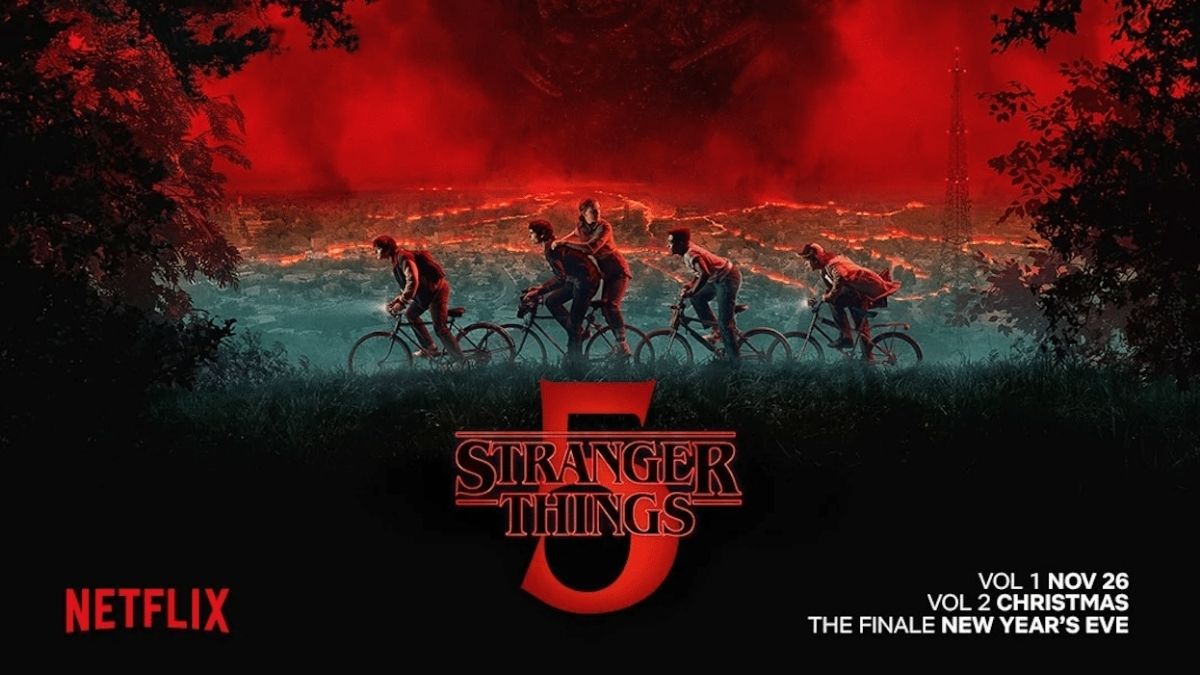
The final episode of Stranger Things premieres at 8 p.m. (EST) on New Year’s Eve. I can’t wait to see it, but I’d be lying if I said I didn’t also feel a twinge of sadness. The show has been running for nearly a decade and has unfolded alongside a real passage of time, both on screen and off. My sons, like the show’s central characters, Eleven, Dustin, Lucas, Will, and Max, are now adults, which has made the upcoming ending feel more personal, and more reflective, than most series finales.
To say I like Stranger Things is a massive understatement. Growing up in the 1980s, means that nostalgia (something I have written about) has played a significant role in my affection for the series. However, the focus of this article is not to discuss the reasons why people love the show but rather to identify the show’s key psychological themes and concepts.
I realised just how rich Stranger Things is from a psychological perspective when I read a piece in Psychology Today by a child psychiatrist who described using the storyline involving Max and Kate Bush’s Running Up That Hill as a way of connecting with her young patients.
Why Stranger Things Is Psychologically Rich
What makes Stranger Things especially interesting from a psychological perspective is that it consistently operates on two levels at once. On the surface, it’s a supernatural drama filled with monsters, alternate dimensions, and escalating threats. Beneath that, it’s a story about inner experience.
The supernatural elements rarely function as spectacle alone. Instead, they act as metaphors that externalize psychological states. The Upside Down is frightening not simply because it’s dangerous, but because it mirrors feelings that are already familiar: being trapped, unseen, cut off, or overwhelmed. The monsters don’t arrive randomly. They tend to appear when characters are most vulnerable, isolated, or burdened by experiences they haven’t been able to articulate or process.
This, I would argue is why the show strikes a chord with such a wide audience. You don’t need to relate to the specifics of the threat to recognize the emotional terrain. Adolescence, in particular, is portrayed as a psychologically intense period where identity is fragile, emotions are volatile, and social connection can feel like a matter of survival.
It’s also important to note that the series never treats its characters as psychological case studies. Their struggles aren’t presented as diagnoses to be decoded. Instead, the show invites viewers to recognize patterns of human experience: how people respond to loss, how they cope with fear, how relationships buffer distress, and how meaning is constructed in the face of uncertainty.
Stranger Things functions as a shared psychological text. It gives us a common set of images and narratives through which to think about development, trauma, attachment, and resilience, without requiring any formal psychological language. That combination is what makes it such a rich and accessible starting point for exploring the psychology woven through its story.
Trauma Made Visible: Eleven, Vecna, and Psychological Wounds
One of the clearest psychological threads running through Stranger Things is trauma. Not as a single event that gets overcome and left behind, but as something that lingers, resurfaces, and reshapes how people see themselves and the world.
Eleven’s early life is defined by institutional control, isolation, and repeated violation of trust. She grows up without consistent care, language, or safety, and the series shows the effects of this quietly rather than clinically. Emotional regulation is difficult. Threat and abandonment are never far away. Her powers are closely tied to fear, anger, and distress, which works as a narrative shorthand for a deeper idea: unresolved trauma does not stay neatly contained. It leaks into how a person reacts, relates, and copes under pressure.
Season 4 extends this theme through Vecna, who functions less like a traditional villain and more like an externalised psychological force. He targets characters who are already carrying guilt, grief, or shame, and exploits what they have not been able to integrate or speak about. The danger does not come from weakness, but from wounds that have gone unprocessed. Vecna’s power lies in pulling people back into moments they want to escape, trapping them in loops of self-blame and despair.
What makes this portrayal effective is that trauma is never framed as something that can simply be defeated. It recurs when ignored, intensifies when isolated, and loosens its grip only when it is met with connection, meaning, and support.
Adolescence Under Pressure: Identity, Friendship, and Becoming
Alongside trauma, Stranger Things is also, at its core, a story about growing up.
Adolescence is a period defined by identity formation. Psychologically, it’s when questions of Who am I? and Where do I belong? move from the background to the foreground. What Stranger Things does so effectively is place these ordinary developmental challenges into an environment of extraordinary threat, without losing sight of the fact that the underlying struggles are recognisably human.
The characters are navigating the emotional terrain of adolescence: shifting friendships, emerging independence, social comparison, romantic confusion, and the desire to be seen as more than a child. The supernatural elements don’t replace these experiences. They intensify them. Monsters, alternate dimensions, and looming danger become narrative pressure points that mirror the emotional intensity of this confusing life stage.
Crucially, the series anchors friendship as a stabilising force. Within the group, the characters find validation, shared meaning, and a sense of continuity at a time when everything else feels uncertain. Developmental psychology consistently shows that peer relationships play a central role during adolescence, not as a replacement for caregivers, but as a different kind of support system, one built on mutual recognition rather than authority.
Developmental psychology can be defined as the discipline that attempts to describe and explain the changes that occur over time in the thought, reasoning and functioning of a person due to biological, individual and environmental influences. Alan Slater & Gavin Bremner
What’s striking is that the group’s strength doesn’t come from sameness. The characters differ in temperament, confidence, social status, and coping style. Their bond works precisely because it allows space for difference while still offering belonging. In psychological terms, it’s a protective factor, not because it eliminates stress, but because it makes stress survivable.
Stranger Things doesn’t portray adolescence as something derailed by horror. It portrays adolescence as something revealed by it. The fear, urgency, and emotional volatility that define the show echo the intensity of growing up itself. The monsters may be fictional, but the developmental challenges they amplify are not.
The series captures something psychologically honest about becoming who you are under pressure, and about how rarely that process happens alone.
Grief, Loss, and the Refusal to Let Go
If trauma in Stranger Things is often sudden and violent, grief is subtler and more enduring. It reshapes how characters move through the world, often long after the immediate crisis has passed.
Joyce Byers embodies this early on. After Will’s disappearance, her refusal to accept his absence is often framed by others as irrational or unhinged. But psychologically, her behavior reflects something very human. Grief disrupts our sense of time and probability. It narrows attention and amplifies meaning. Joyce doesn’t “move on” because, for her, letting go feels like a second loss. Her persistence is not denial so much as attachment stretched to its limit.
Will’s experience reflects another side of this process. Even after his physical return, he remains psychologically suspended. He is present, but not fully back. His difficulty re-entering ordinary life, his lingering connection to the Upside Down, and his sense of being out of sync with his peers all echo a familiar grief response. Loss doesn’t just remove something from the past. It interferes with how the future is imagined. For Will, time never quite resumes its normal flow.
Jim Hopper’s grief operates on a much longer arc. The death of his daughter Sara predates the events of the series, yet it quietly shapes almost everything he does. His emotional withdrawal, heavy drinking, and relocation to Hawkins are not signs of resolved loss, but of avoidance. Hopper isn’t numb because he feels nothing. He’s numb because feeling too much once nearly destroyed him. Grief here becomes something to be managed rather than processed, pushed aside rather than integrated.
What changes Hopper is not the disappearance of his grief, but the return of purpose. Caring for Eleven doesn’t erase his loss. It gives it somewhere to go. His fear of attachment, his overprotectiveness, and his willingness to sacrifice himself all reflect a man who has learned what loss costs and is desperate not to repeat it. Grief, in his case, doesn’t weaken responsibility. It intensifies it.
Dustin Henderson’s grief over Eddie Munson introduces yet another variation. Unlike Hopper, Dustin’s loss is immediate and witnessed. He doesn’t just lose Eddie. He holds him as he dies. This kind of loss often resists consolation. Dustin’s anger, withdrawal, and defensive edge are not personality shifts so much as grief looking for somewhere to land. He is carrying a loss that others around him are quicker to contextualize, minimize, or move past.
What makes Dustin’s experience especially isolating is that Eddie’s death is not publicly mourned in the same way. There is no shared ritual or collective acknowledgment. His strain with Steve reflects this tension. He needs someone to sit with the loss, not smooth it over.
Across these characters, grief functions less like an episode and more like a state. It alters attention, decision-making, relationships, and time perception. It keeps people tethered to what was, not because they are broken, but because attachment doesn’t dissolve on command.
Stranger Things treats grief not as something to be cured, but as something that persists, reshapes, and sometimes quietly directs a life. The question isn’t whether characters let go. It’s how they learn to carry what they’ve lost without being defined entirely by it.
It’s a question I still struggle with myself, more than twenty years after losing my brother Mick in 2003.
The Upside Down and the Shadow
Beyond individual characters, Stranger Things also works at a more collective psychological level. This is where the Upside Down becomes especially revealing.
In depth psychology, Carl Jung used the term the Shadow to describe parts of ourselves that are ignored, denied, or pushed out of awareness. These aren’t necessarily evil traits. More often, they’re painful emotions, unacceptable thoughts, or aspects of experience that don’t fit the story we want to tell about who we are. The Shadow grows not because something is bad, but because it goes unacknowledged.
The Upside Down functions as a powerful metaphor for this process. It’s not a separate world so much as a distorted version of the familiar one. The same streets, the same buildings, the same structures, but altered, decayed, and dangerous. What’s been ignored doesn’t disappear. It lingers beneath the surface, changing form and gaining force.
Importantly, the danger in Stranger Things doesn’t come from having a Shadow. It comes from pretending it isn’t there. The Upside Down becomes more invasive when it’s denied, sealed off, or treated as something that can be permanently buried. Every attempt to wall it off without understanding it only seems to strengthen its hold.
This mirrors a well-established psychological idea: unintegrated inner material doesn’t stay quiet. It resurfaces indirectly, often in disruptive or destructive ways. When individuals or communities refuse to face what frightens them, what shames them, or what doesn’t fit their preferred self-image, those elements don’t vanish. They find other routes back in.
Seen through this lens, the Upside Down isn’t just a place monsters come from. It’s a reminder of what happens when fear, guilt, anger, or grief are excluded from conscious life rather than worked through.
The Upside Down unsettles us not because it’s alien, but because it feels uncomfortably familiar. It gives shape to the unsettling idea that what we refuse to face does not stay buried. It waits.
Coping Through Story: Dungeons & Dragons and Meaning-Making
One of the most psychologically revealing features of Stranger Things is not the monsters, but how the characters make sense of them.
From the very beginning, Dungeons & Dragons is presented as a shared interpretive framework for the show’s main characters. The game doesn’t distract them from danger. It gives them a language for it. When something terrifying and unfamiliar appears, their first instinct is not to flee into fantasy, but to translate the unknown into something nameable: Demogorgon, Mind Flayer, Vecna.
Psychologically, naming is a powerful form of containment. When fear remains undefined, it overwhelms attention and erodes control. When it’s given a structure, even a symbolic one, it becomes something that can be discussed, anticipated, and responded to. The game provides rules, roles, probabilities, and limits. Within that structure, fear becomes navigable.
This isn’t escapism in the sense of avoidance. It’s meaning-making under pressure.
The shared narrative of Dungeons & Dragons also allows the children to distribute emotional load. No one carries the fear alone. Each player has a role, a responsibility, and a place within the story. That collective framing mirrors what psychologists recognise as a core protective factor in stress regulation: shared understanding. When a threat is jointly interpreted, it becomes less isolating, even if it remains dangerous.
There’s another subtle function at work here. Stories allow emotional rehearsal. Within the game, loss, risk, failure, and sacrifice are encountered repeatedly, but at a symbolic distance. That distance doesn’t trivialise fear. It makes it tolerable. The characters are practicing how to respond to danger long before they face it in the real world.
Crucially, the series never suggests that storytelling makes fear disappear. The monsters remain lethal. The stakes remain real. What changes is the characters’ relationship to the fear itself. By embedding it in narrative, they regain a sense of orientation. They know where they stand, even when the outcome is uncertain.
What Stranger Things Gets Right About Resilience
One of the most psychologically accurate aspects of Stranger Things is how it treats resilience. It isn’t portrayed as toughness, optimism, or the ability to “move on.” It’s shown as something quieter and more relational.
Characters don’t become resilient by defeating fear once and for all. They become resilient by staying connected while fear continues to exist. Eleven doesn’t regain strength by eliminating vulnerability but by learning to remain open to others despite it. Max doesn’t escape grief by overpowering it, but by staying tethered to people who refuse to let her disappear into it. Hopper doesn’t resolve loss through insight or redemption, but by continuing to show up, even when it hurts.
This matters because it reflects a core finding in psychological research: resilience is rarely an individual trait. It emerges through relationships, shared meaning, and the capacity to be held by others when internal resources are stretched thin. The show consistently places connection at the centre of survival, not as a sentimental add-on, but as a practical necessity.
Equally important is what resilience is not shown to be. It isn’t constant strength. Characters withdraw, regress, lash out, and lose their footing. These moments aren’t framed as failures. They’re treated as part of the cost of continuing. Resilience, here, looks less like victory and more like endurance with support. That portrayal is psychologically honest. It reflects how people actually adapt to prolonged stress, loss, and uncertainty.
Stranger Things offers a quietly realistic account of resilience. Not as something you achieve, but as something you sustain. Not through triumph, but through connection that makes persistence possible.
Why This Story Stayed With Us
Stranger Things stayed with so many of us because it never treated fear, loss, or growing up as problems to be solved once and for all. It treated them as companions that change shape over time.
The story showcased both the confusion of becoming someone new while trying not to lose who you were and the experience of watching time move forward whether you’re ready or not. Friendships shift. Children grow up. Roles change.
Psychologically, that’s why the show is so engaging. It doesn’t promise escape from the past. It shows what it means to keep moving while carrying it. The Upside Down is never fully sealed away. The characters don’t emerge untouched. What changes is their relationship to what frightened them. Fear becomes something they can name, share, and face together, even when it doesn’t disappear.
For me, Stranger Things isn’t really about monsters or nostalgia, or even childhood. It’s about the long process of integrating what has shaped us, including the parts we’d rather forget.
I’m sure the story of Stranger Things will linger long after the credits roll for the final time, because it asks something of us too. Not whether we’ve defeated our own darker places, but how we live alongside them. What we’ve learned to carry. What still feels unresolved. And who, if anyone, helps us hold what we carry.
If You Enjoyed This Article…
I’m very happy to share that my new book, Why We Are the Way We Are: Psychology for the Curious, is now available on Amazon in both paperback and eBook format.
📘 Paperback: www.amazon.com/Why-We-Are-Way-Psychology/dp/B0G4D1WJCW
📱 Kindle eBook: www.amazon.com/Why-We-Are-Way-Psychology-ebook/dp/B0G4BGR9T3
The book is a carefully curated collection of the most popular articles from this website and my Psychology Substack. If you’ve enjoyed this piece and the exploration of why we think, feel, and behave the way we do, the book brings these ideas together in one place. It also makes a thoughtful gift for anyone who loves psychology or is simply curious about what makes us tick.
If you do pick up a copy, I’d be incredibly grateful if you could leave a rating or review on Amazon. Even a short line makes a real difference. Reviews help raise the profile of the book and allow more people to discover it.
Any profit from sales goes directly toward the hosting and running costs of the All About Psychology website, which helps ensure that:
- Students and educators can continue accessing the most important and influential journal articles in psychology completely free.
- Readers everywhere can hear directly from world-class psychologists and leading experts.
- High-quality psychology content remains freely available to the public.
Thank you, as always, for reading, supporting, and being part of this community. It’s very much appreciated.
All the very best,
David Webb
Founder, All-About-Psychology.com
Author | Psychology Educator | Psychology Content Marketing Specialist
