
Your Clinical Twin: AI Support Built Around Therapeutic Expertise
Built by a psychologist, Ecko Health is an AI mental health platform designed to reduce admin burden and support continuity of care between sessions.
Designed as an extension of your clinical self, Ecko learns your style and remembers what matters across your caseload.
Our interview with Ecko’s Clinical Lead explores what it means to use AI in a way that strengthens rather than replaces the human side of therapy.
When you split the brain, do you split the person?
(Yaïr Pinto)
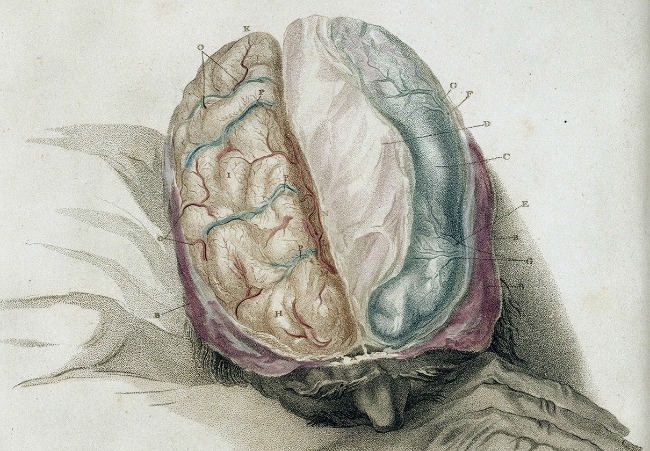
Charles Bell The Anatomy of the Brain. Courtesy Wellcome Images
The brain is perhaps the most complex machine in the Universe. It consists of two cerebral hemispheres, each with many different modules. Fortunately, all these separate parts are not autonomous agents. They are highly interconnected, all working in harmony to create one unique being: you.
But what would happen if we destroyed this harmony? What if some modules start operating independently from the rest? Interestingly, this is not just a thought experiment; for some people, it is reality.
In so-called ‘split-brain’ patients, the corpus callosum – the highway for communication between the left and the right cerebral hemispheres – is surgically severed to halt otherwise intractable epilepsy.
The operation is effective in stopping epilepsy; if a neural firestorm starts in one hemisphere, the isolation ensures that it does not spread to the other half. But without the corpus callosum the hemispheres have virtually no means of exchanging information.
What, then, happens to the person? If the parts are no longer synchronised, does the brain still produce one person? The neuroscientists Roger Sperry and Michael Gazzaniga set out to investigate this issue in the 1960s and ’70s, and found astonishing data suggesting that when you split the brain, you split the person as well. Sperry won the Nobel prize in medicine for his split-brain work in 1981.
How did the researchers prove that splitting the brain produces two persons, one per hemisphere? Through a clever set-up controlling the flow of visual information to the brain.
They already knew that both eyes sent information to both brain hemispheres – and that the relationship was complex. If you fixated on one point, then everything to the left of that point (the left visual field) was processed by the right hemisphere, and everything to the right of your fixation point (the right visual field) was processed by the left hemisphere. Moreover, the left hemisphere controlled the right side of the body and language output, while the right hemisphere controlled the left side of the body.
When Sperry and Gazzaniga presented stimuli to the right visual field (processed by the speaking left hemisphere), the patient responded normally. However, when stimuli were presented to the left visual field (processed by the mute right hemisphere), the patient said he saw nothing. Yet his left hand would draw the image shown. When asked why his left hand did that, the patient looked baffled, and responded that he had no idea.
What was going on here? The left hemisphere could not see the left visual field, so when a stimulus appeared there, it rightfully responded that it saw nothing. Yet, the right hemisphere did see the stimulus, and indicated this the only way it could, by directing the left hand. The conclusion, drawn by Sperry and Gazzaniga, was clear: a single split-brain patient should actually be thought of as two half-brain patients – a Siamese twin of sorts. Sperry argued that this went beyond mere curiosity – it literally proved the concept of materialism in the area of consciousness. If you split the person when you split the brain, that leaves little room for an immaterial soul.
Case closed? Not to me. We’ve got to admit that split-brain patients feel and behave normally. If a split-brain patient walks into the room, you would not notice anything unusual. And they themselves claim to be completely unchanged, other than being rid of terrible epileptic seizures. If the person was really split, this wouldn’t be true.
To try to get to the bottom of things, my team at the University of Amsterdam re-visited this fundamental issue by testing two split-brain patients, evaluating whether they could respond accurately to objects in the left visual field (perceived by the right brain) while also responding verbally or with the right hand (controlled by the left brain). Astonishingly, in these two patients, we found something completely different than Sperry and Gazzaniga before us. Both patients showed full awareness of presence and location of stimuli throughout the entire visual field – right and left, both. When stimuli appeared in the left visual field, they virtually never said (or indicated with the right hand) that they saw nothing. Rather, they would accurately indicate that something had appeared, and where.
But the split-brain patients we studied were still not completely normal. Stimuli could not be compared across the midline of the visual field. Moreover, when a stimulus appeared in the left visual field, the patient was better at indicating its visual properties (even when he responded with the right hand or verbally!), and when a stimulus appeared in the right visual field, he was better at verbally labelling it (even when he responded with the left hand).
Based on these findings, we have proposed a new model of the split-brain syndrome. When you split the brain, you still end up with only one person. However, this person experiences two streams of visual information, one for each visual field. And that person is unable to integrate the two streams. It is as if he watches an out-of-sync movie, but not with the audio and video out of sync. Rather, the two unsynced streams are both video.
And there’s more. While the previous model provided strong evidence for materialism (split the brain, split the person), the current understanding seems to only deepen the mystery of consciousness. You split the brain into two halves, and yet you still have only one person. How does a brain, consisting of many modules, create just one person? And, how do split-brainers operate as one when these parts are not even talking to each other?
Yaïr Pinto
This article was originally published at Aeon and has been republished under Creative Commons.
Want To Read More Great Psychology Articles?
See following link to check out a fascinating collection of psychology articles by leading academics and researchers.
Recent Articles


-
Psychology Expert Interviews
May 16, 26 10:34 AM
 Psychology Expert Q & A: Fascinating interviews with experts spanning a range of psychology topic areas.
 -
AI In Therapy: Supporting Clinicians Without Replacing Care
May 16, 26 10:09 AM
 AI in therapy can reduce admin burden and support clinicians. Rosie Chapple of Ecko Health explains how AI can strengthen, not replace, human care.
 -
Psychology of Attention: How It Works and What Research Shows
May 16, 26 07:09 AM
 Psychology of attention explained: what attention is, how sustained and selective attention work, and what decades of research show about focus, interruption, and digital life.
Please help support this website by visiting the All About Psychology Amazon Store to check out an awesome collection of psychology books, gifts and T-shirts.
 |
 |

