Thinking About Studying Psychology Online?
Explore online psychology degree options, including program types, accreditation, costs, career pathways and what to check before choosing a course.
Read The Online Psychology Degree GuideWhy Popcorn Tastes Better When You Eat It with Chopsticks
The Psychology of Hedonic Adaptation and Renewing Familiar Pleasures
David Webb (Founder and Editor of All-About-Psychology.com)
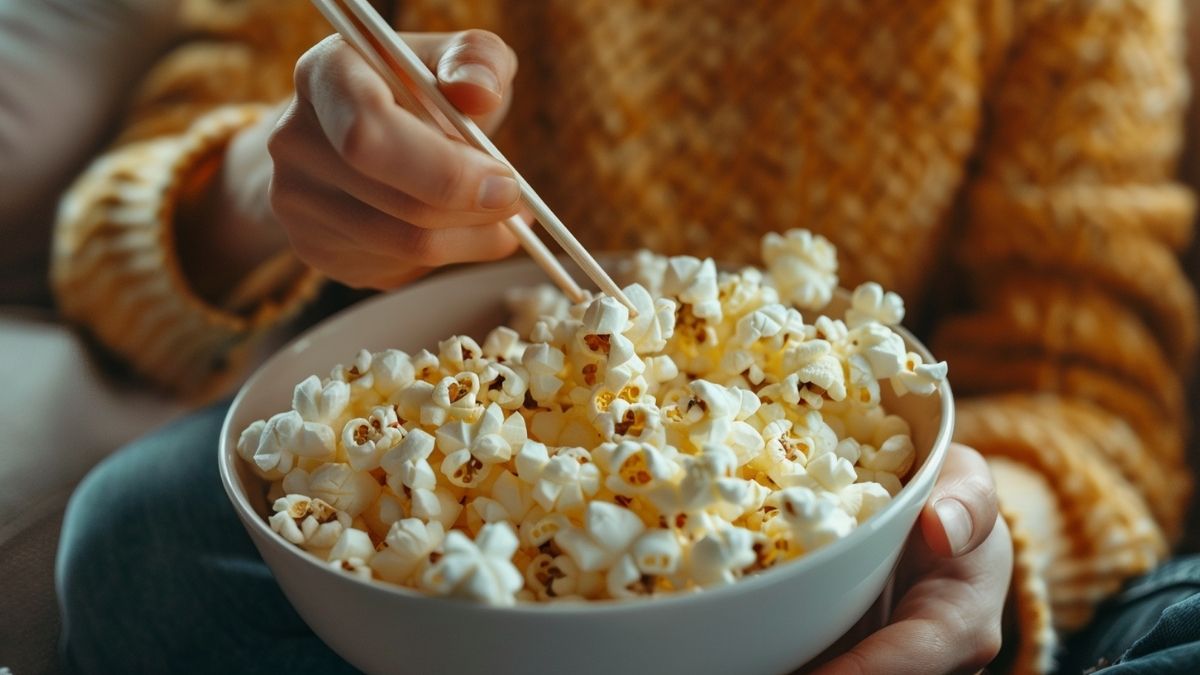
I’ve always had a soft spot for quirky psychology headlines, so when I saw one asking why popcorn tastes better when you eat it with chopsticks, it stopped me mid-scroll.
The headline pointed to a series of studies by Ed O’Brien at the University of Chicago and Robert Smith at Ohio State. In one experiment, people were given a small amount of popcorn and asked to eat it either in the usual way or one kernel at a time using chopsticks. Those using chopsticks reported enjoying it more. They found it more flavorful and more fun, even though the popcorn itself hadn’t changed at all.
What mattered wasn’t the snack. It was the way it was consumed.
The researchers didn’t stop there. In another study, participants were asked to drink plain water, but to do so in deliberately odd ways. Some used unusual glasses. Others lapped it like a cat. As strange as it sounds, people reported enjoying the water more when the experience felt new and slightly awkward.
The same idea showed up with videos. Participants watched the same short, exciting motorcycle clip multiple times. As you’d expect, enjoyment dropped with each viewing. But when some people were asked to watch it again using so-called hand goggles, making circles with their fingers and tracking the action by moving their heads, their enjoyment bounced back. Not only that, they were more likely to want to keep the video afterward, suggesting the clip itself felt better, not just the gimmick.
Across all of these studies, the pattern was the same. Enjoyment returned not because the thing itself improved, but because the unusual method forced people to slow down, pay attention, and re-engage with the experience. The novelty pulled the mind out of autopilot.
That’s what caught my attention. It wasn’t really about chopsticks, water, or hand goggles. It was about why things we once loved start to feel flat, even when nothing obvious has changed. Why favorite snacks lose their spark. Why familiar routines fade into the background. And why doing something slightly differently can make it feel new again.
So the real question isn’t why popcorn tastes better with chopsticks. It’s why familiar pleasures fade in the first place, and what that tells us about how the mind works.
Why Familiar Pleasures Stop Working
If you’ve ever wondered why something you once loved slowly lost its spark, psychology has a name for it: hedonic adaptation. It’s the process by which repeated exposure to the same pleasure leads to a gradual drop in emotional response. What once felt exciting becomes ordinary. What once stood out fades into the background.
This idea is often described through the hedonic treadmill. The notion that we move forward, chasing enjoyment, but emotionally we stay in roughly the same place. New pleasures give us a lift, but over time the mind adjusts, expectations rise, and the boost levels off. Then we look for the next thing.
You can see this pattern almost everywhere in everyday life.
A new purchase feels satisfying at first. A few weeks later, it’s just part of the furniture. A favorite food delivers a rush the first few times, then becomes familiar, then forgettable. Travel works the same way. The first visit feels vivid and memorable. Repeated visits feel easier, smoother, and often less intense. Even entertainment follows this curve. Songs, shows, and videos rarely hit as hard the tenth time as they did the first.
Daily routines aren’t immune either. A morning coffee, a walk you used to look forward to, even time set aside to relax can slowly lose its emotional punch. Nothing is wrong with the activity itself. What’s changed is how the mind processes it.
This isn’t a personal failure, and it isn’t a lack of gratitude. It’s a feature of how the brain works.
The mind is built to be efficient, not to keep pleasure permanently turned up. It quickly learns what’s predictable and shifts attention away from it. That frees mental resources for things that are new, uncertain, or potentially important. From an evolutionary perspective, this makes sense. A nervous system that stayed permanently dazzled by the same reward would be distracted and slow to respond to change.
Hedonic adaptation is also protective. Constant high emotional intensity would be exhausting and, over time, harmful. By letting pleasures fade into familiarity, the mind maintains balance and stability.
The problem is that this same efficiency can make life feel flatter than we expect it to. We assume that if something stops feeling good, we’ve chosen badly or lost our appreciation. In reality, the mind has simply done what it does best: adapted.
Understanding this mechanism matters because it reframes a common frustration. When familiar pleasures lose their positive impact, it’s because our minds are tuned to notice change, not sameness.
Why the Brain Adapts at All
It’s easy to view adaptation as something that robs us of enjoyment. But from the brain’s point of view, adaptation is doing an important job. It exists because emotional intensity is costly, both mentally and physically.
Strong feelings demand energy. They sharpen attention, speed up decision-making, and prepare the body for action. That’s useful in short bursts, but living in a constant state of heightened pleasure or excitement would be exhausting. Over time, it would crowd out rest, recovery, and clear thinking. Adaptation acts as a brake, preventing emotional systems from running at full volume indefinitely.
This leads to the first core function of adaptation: protection. By dialing down repeated positive stimulation, the brain reduces the risk of chronic overstimulation. The same principle applies on the negative side too. Fear, stress, and pain also adapt when they’re no longer informative or urgent. Without this dampening effect, the body would remain stuck in states that are meant to be temporary.
The second function is perceptual sharpening. The brain is especially sensitive to change. When something new enters the picture, it stands out. When it stays the same, it gradually blends into the background. This contrast-based system makes us better at detecting shifts in the environment, which has clear survival value. If everything felt equally intense all the time, it would be much harder to notice what actually mattered.
You can see this logic in basic perception. A sudden sound grabs attention. A constant hum fades away. The same thing happens with emotional experience. Adaptation isn’t erasing pleasure. It’s recalibrating the signal so that differences remain meaningful.
There’s also an important boundary worth keeping in mind. Adaptation shows up most clearly with discretionary pleasures, the enjoyable extras of life. Favorite foods, entertainment, comfort purchases, and routines are especially prone to it. These are experiences the brain expects to repeat, so it learns them quickly.
Basic needs are different. People don’t adapt easily to chronic hunger, unsafe conditions, or ongoing deprivation. Serious adversity doesn’t simply fade into the background with time. The same is true for deep emotional losses or threats to security. Adaptation isn’t a blanket process that flattens everything. It operates most strongly where repetition is safe and expected.
Seen this way, adaptation isn’t a flaw in human psychology. It’s a regulatory system that keeps us responsive rather than overwhelmed. The frustration we feel when pleasures fade is a side effect of a brain designed to protect balance and highlight change, not to keep any single experience permanently intense.
Once we understand that, the real question shifts. If adaptation is doing its job, how can we work with it rather than fight it?
The Psychology of Boredom: Habits, Attention, and Automation
One of the most common reasons enjoyment fades isn’t that we stop liking something. It’s that our minds stop really noticing it.
The brain is excellent at turning repeated actions into habits. Once a behavior is learned, it gets automated. This is efficient. It frees up mental resources and allows us to function without having to consciously manage every small decision. We don’t have to relearn how to drive the same route, eat familiar foods, or settle into nightly routines. The system works because attention can be redirected elsewhere.
But that efficiency comes with a cost. When an activity becomes automatic, it requires less conscious involvement. Movements smooth out. Decisions shrink. Attention drifts. The experience itself becomes thinner, even if the object or activity hasn’t changed at all.
This is where boredom often enters. Not because the activity has lost its value, but because it has lost its salience.
Salience refers to how much something stands out in awareness. Repetition lowers salience. The brain learns what to expect and stops allocating much attention to it. When that happens, enjoyment tends to drop, even when motivation hasn’t disappeared. You can still want the coffee, the show, or the routine, but it no longer feels vivid or engaging.
Attention works in the opposite direction. When attention increases, salience increases with it. Details come back into focus. Sensory information feels sharper. The experience feels richer, not because it’s objectively better, but because it’s being processed more fully.
This helps explain why boredom often shows up even with things we genuinely enjoy. Doing something the same way, at the same time, in the same context invites automation. The mind slips into low-bandwidth mode. Nothing feels wrong, but nothing feels especially alive either.
Seen this way, boredom isn’t a lack of desire. It’s an attentional issue. The system is conserving energy by running on autopilot. Enjoyment fades not because pleasure has vanished, but because awareness has.
That distinction matters. It suggests that fading enjoyment is less about losing interest and more about how the brain manages repetition. And it sets the stage for understanding why small changes in how we engage with familiar experiences can make such a noticeable difference.
How Unconventional Consumption Breaks the Spell
By now, a pattern should be clear. Enjoyment fades not because the thing itself changes, but because our engagement with it becomes automatic. Unconventional Consumption Methods, often shortened to UCMs in the research, work because they interrupt that automatic process.
An Unconventional Consumption Method is exactly what it sounds like. It’s a deliberate change in how a familiar experience is consumed. The object stays the same. The method changes. What shifts is the level of attention the experience demands.
These methods work for three closely related reasons.
First, they interrupt automation. When you eat, drink, or watch something the same way every time, the brain hands the task off to habit. Very little conscious processing is required. An unconventional method blocks that shortcut. The brain can’t rely on its usual script, so it has to stay engaged.
Second, they force deliberate attention. Using chopsticks to eat popcorn or inventing a strange way to drink water isn’t efficient. That’s the point. The awkwardness pulls attention back into the moment. Movements slow down. Sensations stand out again. The experience becomes immersive because it can’t be skimmed.
Third, they introduce friction. Friction is usually treated as something to eliminate, but in this context it’s useful. A small amount of effort keeps the mind involved. That effort restores immersion and brings back the feeling of novelty, even though nothing about the popcorn, the water, or the video has objectively changed.
This is exactly what showed up in the studies that sparked this article. Eating popcorn with chopsticks didn’t improve the popcorn. It changed how participants engaged with it. Drinking water from unusual containers didn’t make water tastier. It made people more attentive to the act of drinking. Watching a familiar video with hand goggles didn’t add new content. It altered how closely viewers tracked what they were seeing.
In every case, enjoyment returned because attention returned.
There’s an important limitation here. The effect doesn’t last forever. If the unusual method becomes routine, it loses its power. Chopsticks stop feeling novel once they’re familiar. The same hand goggles used repeatedly would eventually become just another habit. Once automation creeps back in, enjoyment fades again.
That detail matters because it shows this isn’t a trick or a shortcut. It’s a psychological mechanism. UCMs don’t defeat adaptation permanently. They work by temporarily restoring attention. And they do it by changing how we engage, not by chasing something new to consume.
Understanding that distinction sets up the next question. If attention is the key lever, what does that tell us about managing enjoyment more broadly in everyday life?
Three Ways to Recapture the “First-Time” Experience
Across the research, the same patterns keep appearing. When enjoyment returns, it does so for reliable psychological reasons. These patterns help explain why unconventional methods work across food, media, and everyday experiences, even when nothing about the object itself has changed.
Rather than framing these as tips, it’s more useful to think of them as categories. They describe the conditions under which attention re-engages.
1. Method changes
One route involves altering how a familiar experience is encountered. This is what happens when popcorn is eaten with chopsticks or a familiar video is watched in an unusual way.
The crucial factor isn’t novelty for novelty’s sake. It’s the disruption of automatic processing. When habitual motor patterns no longer run smoothly, attention is pulled back into the present moment. Sensations become more vivid because they require monitoring again.
The object stays the same. What changes is the level of engagement.
For example, many people notice that a song or movie they’ve loved for years can suddenly feel vivid again when they watch someone else experience it for the first time. Reaction videos work because the familiar material is filtered through another person’s surprise, confusion, or delight. Seeing those first responses can pull our own attention back into the experience, restoring some of the emotional intensity that familiarity has dulled. The content hasn’t changed, but the way we’re engaging with it has.
2. Interruptions and spacing
A second pathway involves breaking continuity. Enjoyment often fades because exposure is constant and uninterrupted. When an experience repeats without pause, the brain recalibrates and treats it as background.
Research shows that interruptions can reverse this effect. Pauses allow the adaptive baseline to drop. When the experience resumes, it feels sharper and more engaging.
The key point is contrast. Pleasure doesn’t build through sheer repetition. It reappears when repetition is disrupted.
3. Variety and diversification
A third pattern operates at a broader level. Concentrating pleasure in a narrow set of experiences speeds adaptation. Spreading enjoyment across varied domains slows it down.
Variety prevents any single standard from dominating. Each experience remains relatively fresh because it isn’t constantly compared to an identical predecessor. The brain stays responsive because context keeps shifting.
Across all three patterns, the mechanism is the same. Enjoyment returns when attention returns. It fades when experience becomes automatic.
The “first-time” feeling isn’t usually lost. It’s just obscured by efficiency, familiarity, and habit.
Why Buying More Rarely Solves the Problem
When enjoyment fades, the most common response is to replace what we have with something new. A better phone. A nicer sofa. A different streaming service. The assumption is simple: novelty lives in the object itself. If the pleasure has worn off, the solution must be an upgrade.
Research suggests otherwise. New purchases tend to deliver a short-lived lift because the mind adapts quickly to improvements in material quality. What initially feels exciting soon becomes normal, then expected. Attention shifts away, comparison levels rise, and the baseline quietly resets. The cycle repeats, often faster than we expect.
Research on consumption and well-being supports this pattern. Increasing the volume of pleasurable goods doesn’t reliably increase enjoyment over time. What matters more is variety. Many smaller, varied experiences tend to generate more sustained satisfaction than fewer, larger upgrades. Variety disrupts comparison standards. Volume reinforces them.
This helps explain why a single major purchase can feel underwhelming after a brief honeymoon period, while modest changes continue to feel rewarding. A new car adapts quickly. A different route, a new ritual, or a slight shift in how something is used often lasts longer. The mind responds more strongly to changes in engagement than to increases in magnitude.
There’s also a subtle trap in novelty chasing. When we rely on constant replacement to restore enjoyment, we train ourselves to overlook what’s already present. Pleasure becomes something that must be acquired rather than something that can be re-accessed. Over time, this can dull sensitivity rather than sharpen it.
Buying more isn’t irrational. It’s just an inefficient solution to a psychological problem. The evidence suggests that enjoyment fades less because objects lose their value and more because attention moves on. When that’s the case, adding more things rarely fixes what’s actually happening.
Using This Knowledge Without Turning Life into a Project
Once you understand how enjoyment fades and how attention brings it back, there’s a temptation to apply the idea everywhere. To redesign routines. To tweak every habit. To turn ordinary moments into optimization problems. That impulse is understandable, but it misses an important balance.
Habits exist for a reason. Automation saves mental energy and makes daily life manageable. If every action required deliberate attention, even simple tasks would become exhausting. Friction is useful, but only in the right places.
The key is selectivity. Unconventionality works best when it’s reserved for moments that matter. Experiences you value. Activities that once brought real enjoyment but have slipped into the background. Introducing novelty there can restore engagement without overwhelming the rest of life.
This also helps avoid fatigue. Constantly trying to make everything feel special often has the opposite effect. When novelty becomes the norm, it stops being novel. Attention dulls again, and the cycle quietly returns.
Enjoyment doesn’t need to be engineered with precision. It benefits more from light design than relentless control. Small shifts, used occasionally and intentionally, tend to work better than sweeping changes applied everywhere.
Seen this way, the goal isn’t to escape adaptation entirely. It’s to work with it. To let habits do their job most of the time, and to gently interrupt them when an experience is worth feeling again.
Meaning, Engagement, and the Limits of Pleasure
Enjoyment is an important part of a good life, but it isn’t the whole picture. Pleasure tends to be immediate, sensory, and responsive to change. Meaning operates on a different timescale. It’s built through engagement, commitment, and a sense that what we’re doing matters beyond the moment itself.
This distinction helps explain why some activities lose their spark quickly while others remain deeply satisfying. Simple pleasures are especially vulnerable to fading because the mind learns them fast. Once the pattern is familiar, attention drifts and the emotional impact softens. Meaningful activities work differently. They tend to involve challenge, growth, or contribution, which keeps attention anchored over time.
When people are absorbed in something that stretches their skills or aligns with their values, adaptation slows. The experience remains engaging because it continues to change internally, even if the outward activity looks the same. Progress, learning, and purpose introduce variation that the mind does not easily automate.
This doesn’t mean pleasure is trivial or that enjoyment strategies are misguided. It means they work best when they’re part of a broader life structure. Small interventions that restore enjoyment can make everyday experiences richer, but they’re most effective when they sit alongside pursuits that already carry meaning.
In that sense, managing pleasure isn’t about replacing depth with novelty. It’s about supporting it. When enjoyment and meaning work together, pleasure becomes less fleeting and engagement becomes easier to sustain.
Closing Reflection: Why Variety Really Is the Spice of Life
When enjoyment fades, it’s rarely a sign that life has become dull or that we need to replace what we have. More often, it’s a sign that our minds have become efficient. They’ve learned the pattern, filed it away, and moved on. The pleasure didn’t disappear. Our attention did.
What the research shows is reassuring. We don’t need new lives, new homes, or constant upgrades to feel engaged again. Sometimes all that’s needed is a shift in perspective. A small disruption. A different way of doing something familiar that gently wakes the mind up.
There’s something sustainable and deeply appealing about this idea. It favors curiosity over consumption. Attention over accumulation. It asks less of the world and a little more of how we meet it.
With this in mind, it’s worth asking yourself: where could a small change in how you do something make it feel fresh again?
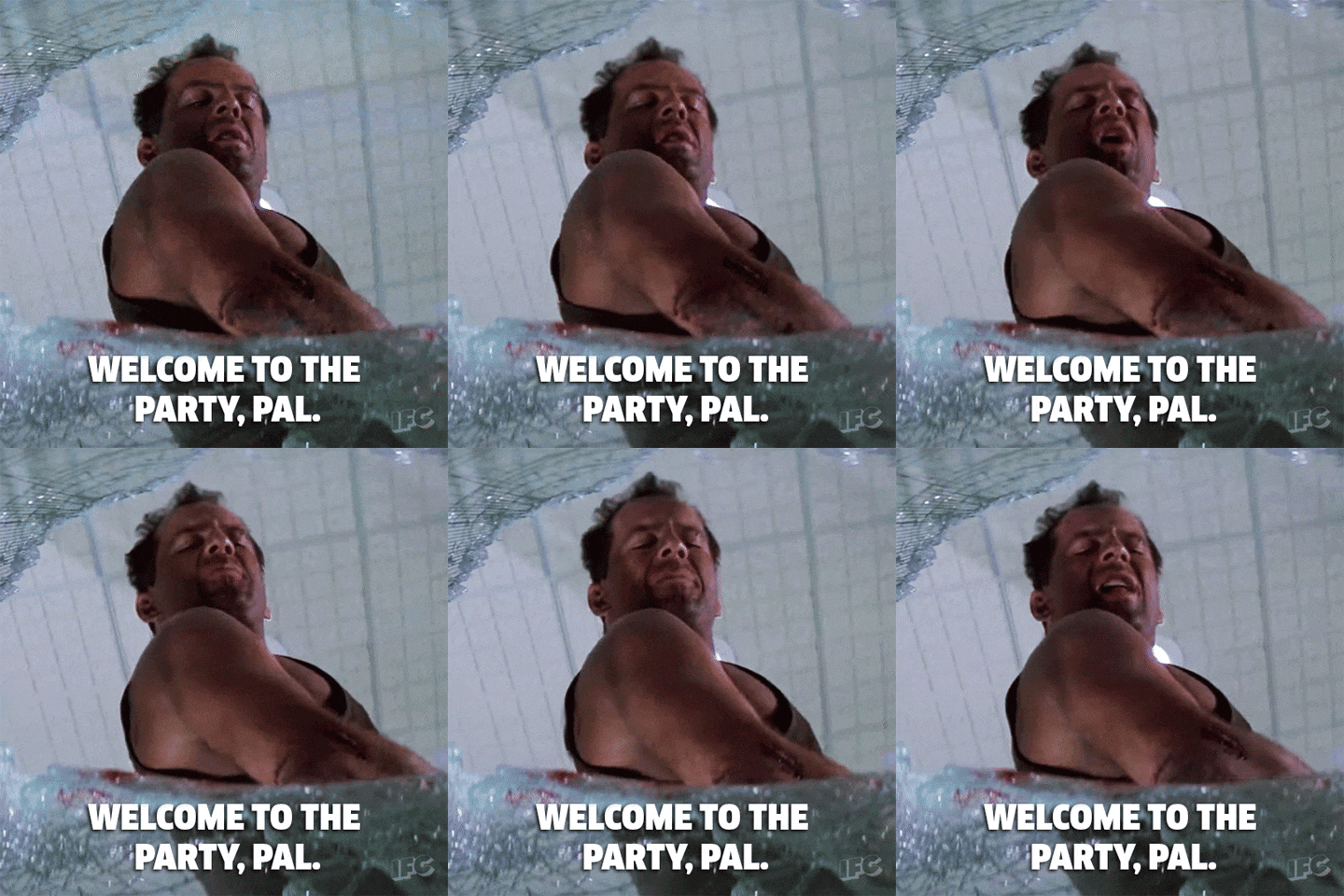
For me, it’ll be the holiday tradition of watching Die Hard, but this year via a first-time reaction video.
If You Enjoyed This Article…
I’m very happy to share that my new book, Why We Are the Way We Are: Psychology for the Curious, is now available on Amazon in both paperback and eBook format.
📘 Paperback: www.amazon.com/Why-We-Are-Way-Psychology/dp/B0G4D1WJCW
📱 Kindle eBook: www.amazon.com/Why-We-Are-Way-Psychology-ebook/dp/B0G4BGR9T3
The book is a carefully curated collection of the most popular articles from this website and my Psychology Substack. If you’ve enjoyed this piece and the exploration of why we think, feel, and behave the way we do, the book brings these ideas together in one place. It also makes a thoughtful gift for anyone who loves psychology or is simply curious about what makes us tick.
If you do pick up a copy, I’d be incredibly grateful if you could leave a rating or review on Amazon. Even a short line makes a real difference. Reviews help raise the profile of the book and allow more people to discover it.
Any profit from sales goes directly toward the hosting and running costs of the All About Psychology website, which helps ensure that:
- Students and educators can continue accessing the most important and influential journal articles in psychology completely free.
- Readers everywhere can hear directly from world-class psychologists and leading experts.
- High-quality psychology content remains freely available to the public.
Thank you, as always, for reading, supporting, and being part of this community. It’s very much appreciated.
All the very best,
David Webb
Founder, All-About-Psychology.com
Author | Psychology Educator | Psychology Content Marketing Specialist

Know someone who’d enjoy reading this?
Share this page with them.
Go From "Why Popcorn Tastes Better When You Eat It with Chopsticks” Back To The Home Page