Continuing Bonds: The Psychology of Staying Connected After Loss
Why grief doesn't mean letting go, and what the research actually says about staying connected after death.
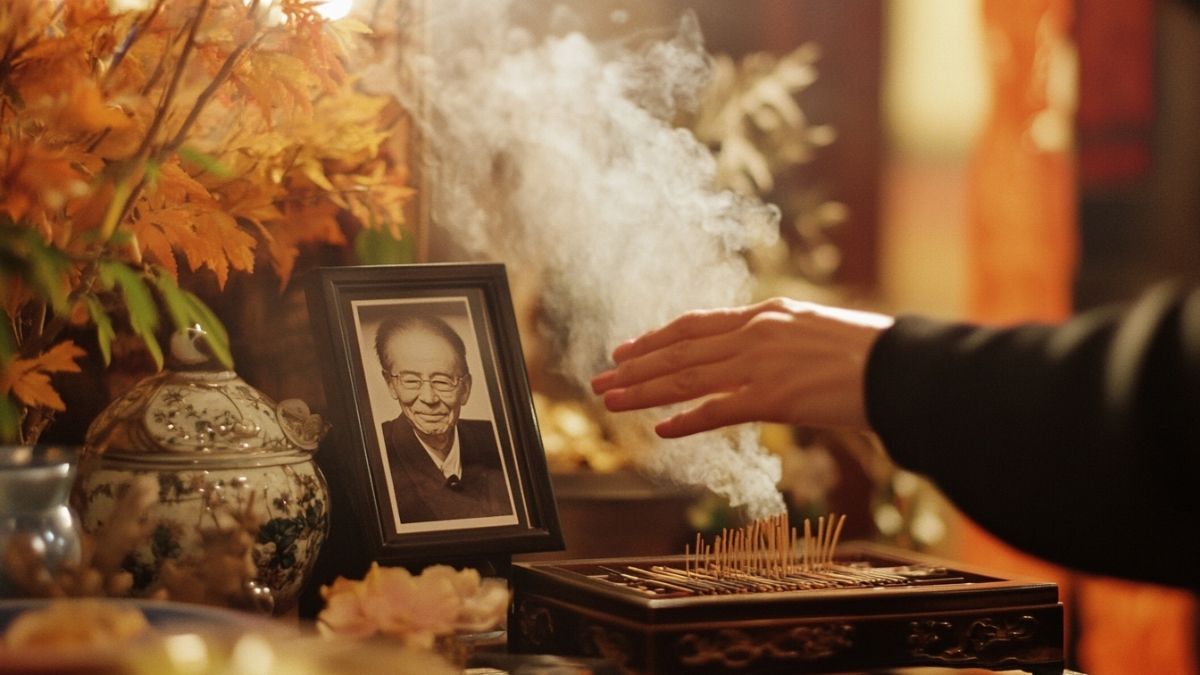
Across many cultures, maintaining a connection with the deceased through ritual, offerings, and daily conversation is not a sign of unresolved grief, it is a natural expression of continuing love.
Most of us have done it. Talked to someone who is no longer here. Replayed a conversation. Visited a place because it still feels like theirs. Kept a voicemail not because we need to hear the information, but because we need to hear the voice.
For much of the twentieth century, psychology treated these behaviours with suspicion. The dominant view, rooted in Freud's concept of "grief work," held that healthy mourning required detachment. The bereaved were expected to withdraw emotional energy from the deceased and reinvest it in new relationships. Holding on was seen as a failure to move forward.
That view has changed substantially. And the shift tells us something important about how psychology itself evolves.
The Old Model: Letting Go
Freud's 1917 essay Mourning and Melancholia set the tone for decades of clinical thinking. Grief, in this framework, was a process of gradually severing the emotional tie to the person who had died. The work of mourning meant confronting the reality of the loss, piece by piece, until the attachment dissolved.
This wasn't presented as harsh or cold. It was understood as necessary. The assumption was that emotional energy is finite, and remaining attached to someone who is gone prevents the bereaved from forming new bonds and engaging fully with life.
For much of the century that followed, this "letting go" model shaped how clinicians, counsellors, and even well-meaning friends responded to grief. Phrases like "you need to move on" or "they would want you to be happy" carried an implicit message: continuing to feel connected to the deceased was a sign that something was stuck.
The Challenge: Continuing Bonds
In 1996, Dennis Klass, Phyllis Silverman, and Steven Nickman published a collection of research that directly challenged this assumption. Their book, Continuing Bonds: New Understandings of Grief, drew on studies of bereaved parents, widows, and children to argue that maintaining an ongoing relationship with the deceased is not pathological. It is, in many cases, a normal and healthy part of adaptation.
The continuing bonds perspective does not suggest that the bereaved are in denial. Rather, it proposes that the relationship is transformed. The person is no longer physically present, but the bond persists in memory, in conversation, in the way decisions are made, and in the ongoing sense of who the bereaved person is.
People commonly report talking to a loved one in their thoughts. They keep photographs close. They revisit shared places. They consult the deceased when facing difficult decisions, asking themselves, "What would they have said?" These are not signs of complicated grief. They are ways of integrating the loss into an ongoing life.
What makes this perspective significant is not simply that it offered comfort to the bereaved. It challenged a foundational assumption in clinical practice: that attachment to the dead is something to be resolved rather than renegotiated.
Attachment Theory and the Roots of Grief
The continuing bonds framework builds naturally on attachment theory, one of the most influential ideas in developmental psychology.
John Bowlby, who developed attachment theory across the 1960s and 1970s, argued that human beings are biologically wired to form deep emotional bonds with a small number of key figures. These attachment relationships provide a sense of safety, security, and emotional regulation. When an attachment figure becomes permanently unavailable through death, the attachment system does not simply switch off.
Bowlby described four phases of mourning: numbing, yearning and searching, disorganisation and despair, and reorganisation. The second phase is particularly relevant to continuing bonds. Yearning and searching reflects the attachment system still reaching for the person who is no longer there. The bereaved may find themselves scanning crowds, hearing the person's voice, or instinctively reaching for the phone to share news.
In Bowlby's framework, grief is not a sign of weakness or dependency. It is the natural consequence of love. The depth of the grief reflects the depth of the bond.
This matters because it reframes grief as a relational response, not a disorder to be treated. The pain is not a symptom. It is a signal of something that mattered.
Making Meaning After Loss
If attachment explains why grief happens, the question becomes: how do people adapt over time?
Robert Neimeyer's meaning reconstruction model proposes that adapting to loss involves more than emotional regulation. It involves rebuilding a coherent sense of meaning after the disruption that death creates.
The death of someone close can unsettle fundamental assumptions. Our sense of safety, our identity, our expectations about the future can all be called into question. Neimeyer suggests that grief often involves a process of narrative reconstruction, in which the bereaved work to integrate the loss into the broader story of their life.
This might look like asking: Who am I now, without this person? What does this relationship mean in the context of my life as a whole? How do I carry what they gave me into the future?
Not everyone engages in this process consciously. And not everyone finds meaning. For some, grief remains raw and disorienting. But for many, the gradual process of making sense of the loss becomes part of how they adapt.
Neimeyer's framework is important because it acknowledges that grief is not only about feeling. It is about understanding. The emotional work and the cognitive work happen together.
Oscillation: The Dual Process Model
One of the most useful frameworks for understanding how grief actually unfolds day to day is the Dual Process Model, developed by Margaret Stroebe and Henk Schut in 1999.
The model proposes that bereaved people do not simply progress through linear stages. Instead, they oscillate between two orientations. Loss-orientation involves confronting the pain of the bereavement directly, processing emotions, and dwelling on the bond with the deceased. Restoration-orientation involves attending to the practical changes that follow a death: managing finances, adjusting routines, developing a new identity.
Healthy adaptation, in this model, involves moving back and forth between the two. A person might spend a morning sorting through practical paperwork and an afternoon looking through photographs and weeping. Neither response is better or worse. Both are necessary.
What the Dual Process Model captures, and what simpler stage models miss, is that grief is not a straight line. It oscillates. Some days feel like progress. Others feel like starting over. The model normalises that experience rather than treating it as a setback.
When Grief Becomes Prolonged
It is worth noting that while continuing bonds are normal for most people, a minority of bereaved individuals experience grief that remains severe and debilitating over an extended period, including cases involving families of veterans affected by asbestos-related illnesses such as Mesothelioma Navy.
In 2022, Prolonged Grief Disorder was formally recognised in the DSM-5-TR, the diagnostic manual used by mental health professionals. The ICD-11 includes a similar category. The criteria include intense longing for the deceased, preoccupation with the loss, and significant impairment in daily functioning, persisting for at least twelve months in adults.
The inclusion of this diagnosis has been debated. Some argue it risks pathologising normal grief. Others point out that a small but significant proportion of bereaved individuals, estimated at around 7 to 10 per cent, experience a level of distress that does not ease with time and that responds to targeted intervention.
The distinction matters. Continuing bonds, in most cases, are part of healthy adaptation. Prolonged Grief Disorder describes a pattern where the loss dominates the person's life to the point where functioning is significantly impaired. The two are not the same, and confusing them risks either dismissing genuine suffering or pathologising normal mourning.
Continuing Bonds Across Cultures
One of the strongest arguments for the continuing bonds perspective comes from looking beyond Western psychology.
In Japan, many families maintain a butsudan, a home altar where offerings are made to deceased relatives. Conversations with the dead are common and culturally expected. The bond is not hidden or treated as something to work through. It is woven into daily life.
In Mexico, Día de los Muertos celebrates the return of deceased loved ones with altars, photographs, favourite foods, and music. The dead are welcomed back into the family space, not as ghosts to be feared, but as presences to be honoured.
In China, the Qingming Festival involves visiting ancestral graves, cleaning burial sites, and making offerings. The relationship with the deceased is maintained as an ongoing obligation and expression of respect.
These practices predate the continuing bonds framework by centuries. What Klass, Silverman, and Nickman articulated in 1996 was, in many ways, something that non-Western cultures had understood all along: that maintaining a relationship with the dead is not denial. It is a natural human response to love and loss.
The Western clinical tradition's insistence on "letting go" was, in this light, the outlier, not the norm.
What This Means
The research on continuing bonds does not prescribe how anyone should grieve. Grief is deeply personal, shaped by culture, personality, the nature of the relationship, and the circumstances of the death.
What the research does suggest is that staying connected to someone who has died is not, in itself, a problem. It is not a failure to move on. It is not being stuck. For most people, it is part of how the loss becomes integrated into a continuing life.
The bond changes. The person is no longer physically present. But the relationship, in some form, goes on. It lives in memory, in values carried forward, in the way the bereaved person understands themselves.
As Helen Keller wrote, "What we have once enjoyed we can never lose. All that we love deeply becomes a part of us."
The psychology of grief increasingly supports that idea. The relationship does not vanish. It becomes part of the architecture of who we are.
This article is a companion piece to Can AI Soften Grief?, which explores what happens when technology enters the space between memory and simulation.
References
- Bowlby, J. (1980). Attachment and Loss: Vol. 3. Loss: Sadness and Depression. Basic Books.
- Freud, S. (1917). Mourning and Melancholia. The Standard Edition of the Complete Psychological Works.
- Klass, D., Silverman, P. R., & Nickman, S. (Eds.). (1996). Continuing Bonds: New Understandings of Grief. Taylor & Francis.
- Neimeyer, R. A. (2001). Meaning Reconstruction and the Experience of Loss. American Psychological Association.
- Stroebe, M., & Schut, H. (1999). The dual process model of coping with bereavement: Rationale and description. Death Studies, 23(3), 197-224.
- American Psychiatric Association. (2022). Diagnostic and Statistical Manual of Mental Disorders (5th ed., text rev.).
About the Author

David Webb is a psychology educator and author who has spent over twenty-five years helping people make sense of why we think, feel, and behave the way we do. He runs All About Psychology, a long-running hub of articles, interviews, and resources visited by over a million people each year.
His books, including Why We Are The Way We Are, are written for curious readers interested in what makes us tick.
You can explore more of his work and books on his Amazon author page.
📬 Subscribe to the All About Psychology Newsletter
Join 72,000+ psychology enthusiasts
If you're fascinated by human behaviour and what makes people tick, including yourself, the All About Psychology Substack is for you. David writes about a range of topics from a psychological perspective, offering insights into the latest studies and trends, as well as actionable life hacks for improved wellbeing and positive mental health.
