Thinking About Studying Psychology Online?
Explore online psychology degree options, including program types, accreditation, costs, career pathways and what to check before choosing a course.
Read The Online Psychology Degree Guide
Why Doing Nothing Feels So Hard
David Webb (Founder and Editor of All-About-Psychology.com)
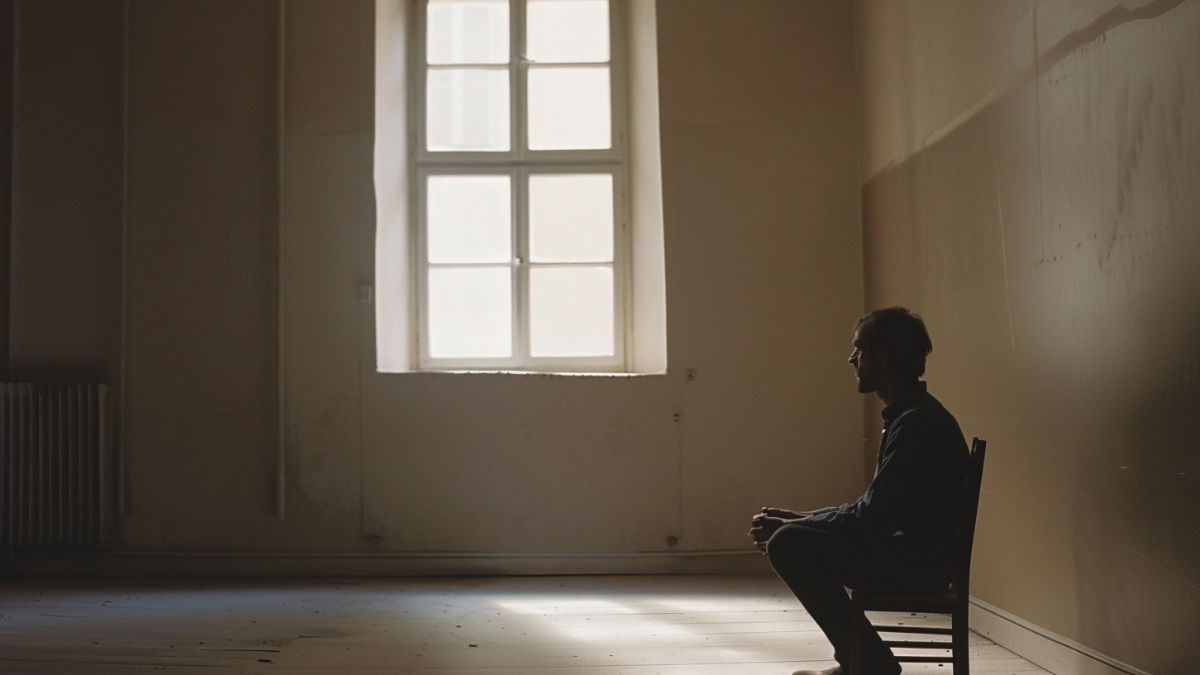
If you had to spend 15 minutes in an empty room with nothing to do but think, how easy do you think you would find it?
On the surface, it doesn’t seem like a big deal. A few empty minutes. No demands. No obligations. Just time to ourselves. In theory, it sounds like a small relief in an otherwise crowded day.
However, a classic set of studies found that most people prefer to be doing something rather than nothing, even if that something is negative.
The studies in question, conducted by Timothy D. Wilson and his colleagues, consisted of a series of deceptively simple experiments. The findings were published in the July 4, 2014 edition of Science under the title “Just think: The challenges of the disengaged mind.”
Participants were asked to spend between six and fifteen minutes sitting alone in a bare room. Beforehand, they were required to put away all personal belongings. No phones. No books. No pens. Nothing to occupy themselves with except their own thoughts. The instructions were minimal: remain seated, stay awake, and entertain yourself with your thoughts.
After the thinking period, participants were asked how enjoyable they found the experience, how difficult it was to concentrate, and how much their minds wandered.
For many people, the experience was harder than expected.
A large proportion reported that they struggled to focus, that their thoughts drifted uncontrollably, and that they didn’t particularly enjoy the time they’d spent “just thinking.” Even when there was nothing competing for their attention, the mind proved difficult to hold steady. Left to itself, it wandered.
To rule out the possibility that the laboratory setting itself was the problem, some participants were asked to repeat the exercise at home. The result was much the same. Being in a familiar environment didn’t make thinking more enjoyable or easier to sustain. In some cases, it made it harder.
When participants were given the alternative option of engaging in simple external activities (reading, listening to music, browsing the web), they consistently preferred those activities to being alone with their thoughts. Not because the activities were especially stimulating or meaningful, but because they provided something for attention to hold onto.
Then came the finding that made the study famous.
In one version of the experiment, participants were again asked to sit alone with their thoughts. This time, however, they were also given a button. If they chose to press it, they would receive a brief electric shock.
Importantly, this wasn’t framed as a test of pain tolerance. Before the thinking period, participants had already experienced the shock and had indicated that they found it unpleasant. Many had even said they would pay money to avoid receiving it again.
And yet, when left alone with nothing to do but think, a substantial number of participants chose to shock themselves anyway.
Not once, but sometimes multiple times.
The striking thing here isn’t recklessness or thrill-seeking. It’s what the behavior suggests about the alternative. For some people, being alone with their thoughts, with no structure or distraction, was aversive enough that a known unpleasant stimulus felt preferable.
The researchers were careful not to jump to dramatic conclusions. They examined whether participants were stuck in negative self-focus or rumination. They weren’t. The content of people’s thoughts didn’t reliably predict how much they enjoyed the experience. What mattered more was how well they could direct and sustain attention.
In the following video, Timothy Wilson informally explains the logic behind the studies and why the findings surprised even the researchers.
The Mind’s Default Setting
What the researchers were really brushing up against here is something psychologists and neuroscientists have been studying for years: what the mind does when it isn’t being deliberately steered.
When we’re not focused on a task, not responding to the outside world, and not actively directing our attention, the brain doesn’t simply switch off. Instead, it slips into a characteristic pattern of activity known as the default mode network (DMN). This is the mental state we enter when attention turns inward rather than outward.
In everyday terms, this is the mode the mind falls into during daydreaming, mental time travel, and self-reflection. It’s active when we replay conversations, imagine future scenarios, revisit memories, or try to see things from another person’s perspective. It’s also the state we drift into when our bodies are on autopilot, such as during a familiar commute, while the mind quietly wanders elsewhere.
This inward-directed mode serves important functions. It allows us to imagine, plan, reflect, and connect experiences across time. Left enough freedom, it can foster creativity and insight. Many of our most original ideas emerge when attention loosens and the mind is allowed to roam.
But default-mode thinking has a less comfortable side as well.
When attention isn’t anchored by something external, the mind often gravitates toward the self, especially concerns about the past and the future. Regrets, worries, unfinished conversations, and anticipated challenges can all crowd in. Without intention or guidance, inward attention can quickly slide from imaginative wandering into repetitive, unproductive loops.
This helps clarify an important point about the Wilson studies. Participants weren’t distressed because they were thinking about the wrong things. What mattered was the difficulty of sustaining attention in an open, unguided mental space.
Default-mode processing, in other words, isn’t inherently pleasant or unpleasant. Its quality depends on how well attention is regulated and whether the mind has any structure to lean on. Without that, inward attention can feel effortful, restless, or even aversive.
Seen this way, the discomfort many participants experienced begins to make psychological sense. They weren’t failing at solitude. They were encountering the mind in its default setting, without the usual buffers, habits, or supports that make inner life feel manageable. The Wilson et al studies point to a simple but unsettling conclusion: while we are capable of rich inner thought, we are not especially good at enjoying it when it is unstructured. Without guidance, practice, or an external anchor, the default activity of the mind can feel surprisingly effortful.
There is no doubt that people are sometimes absorbed by interesting ideas, exciting fantasies, and pleasant daydreams. Research has shown that minds are difficult to control, however, and it may be particularly hard to steer our thoughts in pleasant directions and keep them there. This may be why many people seek to gain better control of their thoughts with meditation and other techniques, with clear benefits. Without such training, people prefer doing to thinking, even if what they are doing is so unpleasant that they would normally pay to avoid it. The untutored mind does not like to be alone with itself.
(from: Just think: The challenges of the disengaged mind.)
Why This Isn’t Really About Being Alone
At first glance, it’s easy to read these findings as an argument against solitude. If being left alone with our thoughts feels uncomfortable, even aversive, perhaps the lesson is that we’re better off staying busy, distracted, or externally engaged.
But that would be a mistake.
What the Wilson studies are really about is not aloneness, but unstructured mental space. The participants weren’t choosing solitude. They weren’t engaging in reflection, creativity, or quiet absorption. They were placed in a situation where the mind was expected to entertain itself without guidance, purpose, or support.
That distinction matters.
Most forms of solitude that people find nourishing are not mentally empty. A walk, a shower, writing in a journal, listening to music, even sitting quietly with a cup of coffee. These experiences may look like “doing nothing” from the outside, but psychologically they’re doing quite a lot. They give attention somewhere to rest, a loose structure that helps the mind move without getting stuck.
The experimental condition stripped all of that away.
In the thinking-only condition, participants weren’t given a topic to reflect on or a task to engage with. They weren’t encouraged to daydream creatively or to focus on something meaningful. They were simply told to think, and to keep thinking, with no scaffolding to support attention. In effect, they were asked to generate both the content of thought and the control of thought at the same time.
For most people, that turns out to be hard.
This helps explain why the discomfort wasn’t driven by what people were thinking about. It wasn’t that their minds filled with especially dark or negative material. It was that sustaining attention in an open, unguided mental space proved surprisingly demanding.
Seen this way, the study doesn’t contradict research on the benefits of solitude at all. It sharpens it.
Solitude is often beneficial when it gives the mind room to move with some sense of direction. When that direction is missing, inward attention can feel restless rather than restorative. The mind doesn’t settle. It searches.
What the study reveals, then, is not that we’re incapable of being alone with ourselves, but that being alone with the mind is a skill. One that depends on structure, intention, and practice. Without those, even a few quiet minutes can feel longer than expected.
And that insight has implications far beyond a laboratory room with a chair and an electric shock button.
Why Modern Minds Struggle With Unstructured Thought
Most of us rarely spend time in genuinely unstructured mental space anymore. We still have quiet moments, of course. But they’re usually brief, and they’re easily filled. A phone in the pocket. A tab left open on the computer. A podcast “in the background.” The mind is almost never left without an external anchor for long.
Over time, that changes what stillness feels like.
When attention is used to having something to lock onto, the absence of stimulation can register not as relief but as unease. It’s not that the mind is broken. It’s that the mind is doing what minds do: searching for a focal point, trying to orient, trying to reduce uncertainty.
Modern life offers a simple solution to that discomfort: instant input.
This helps explain why “just thinking” can feel effortful. Unstructured thought asks us to do something the external world normally does for us. It asks us to generate our own mental direction, sustain it, and keep it coherent. That takes attention, and attention tires quickly when it has nothing to hold onto.
There’s also the small matter of habit. If the default response to any lull is to reach for stimulation, then a lull without stimulation won’t feel neutral. It will feel like something is missing.
So the Wilson studies aren’t just about what happens when people sit in an empty room. They’re also a mirror held up to a culture that has quietly trained itself to avoid mental silence. Not because silence is harmful, but because we’ve made it unfamiliar.
Which raises a more interesting question than “Why can’t people sit still?” It’s this: what would it take for unstructured inner space to feel less uncomfortable and more like a place the mind can actually settle?
The Default Mode Is Automatic. Comfort Is Not.
To answer that question, we need to separate two things that are often assumed to be the same.
When external demands fall away, the mind doesn’t go quiet. As the research on the default mode network shows, inward-directed activity is the brain’s natural setting. Memories surface. Future scenarios are imagined. The self becomes the reference point. In that sense, being “alone with the mind” is not something we have to learn. It happens on its own.
What doesn’t happen automatically is comfort.
The Wilson studies make this distinction clear. Participants didn’t struggle to have thoughts. Their minds were active from the moment the external world dropped out. What they struggled with was staying with those thoughts in a way that felt settled, coherent, or even mildly pleasant. The difficulty wasn’t entering the default mode. It was inhabiting it.
This helps resolve a common confusion. If the mind defaults inward, why doesn’t inward time feel restful? The answer is that default mode activity describes where attention goes, not how it feels once it gets there. The brain can shift into self-focused, internally generated thought without that experience being calm, meaningful, or enjoyable.
Comfort in inner space depends on something else: the ability to regulate attention once it turns inward.
Without structure, attention tends to scatter. Thoughts arise, fade, and are replaced by others, often with no clear direction. The mind jumps between memories, worries, plans, and fragments of imagination. That movement isn’t inherently negative, but it can be tiring when there’s nothing to organize it or bring it to rest.
Seen this way, the discomfort reported in the studies isn’t surprising. Participants weren’t encountering an absence of thought. They were encountering thought without guidance. The mind was active, but attention had nowhere to settle.
This is why the findings don’t suggest that people are incapable of inner life, or that solitude is somehow unnatural. They suggest something more precise: while inward attention is automatic, ease within that space is not. Comfort requires some form of structure, intention, or practice, even if it’s minimal.
And once that distinction is clear, the broader implications come into focus. The question isn’t why the mind defaults inward. It’s why, in the absence of external anchors, that inward turn so often feels restless rather than restorative.
Why Structure Changes Everything
What the Wilson studies reveal is that the mind doesn’t struggle because it’s empty. It struggles because it’s uncontained.
When external structure disappears, attention is asked to do two jobs at once. It has to generate the content of thought and also decide where to stay. That’s a heavier cognitive load than it sounds. Without some form of scaffolding, attention keeps slipping, restarting, searching for something to settle on.
Structure changes that dynamic.
Even very light structure gives the mind a place to land. A rhythm. A focal point. A boundary. That might be a physical activity like walking, a simple sensory anchor like music, or a mental frame such as reflecting on a specific question. From the outside, these moments can look like “doing nothing.” Psychologically, they’re doing a great deal.
This helps explain why people so often prefer mundane activities to unstructured thinking. Reading a few pages, listening to a familiar song, or scrolling idly may not be especially meaningful, but they offer something crucial: attentional support. They spare the mind from having to constantly decide what to think about next.
It also explains why practices that are often associated with inner calm rarely begin that way. Meditation, for example, doesn’t remove structure. It introduces it. Attention is gently directed, often toward the breath, bodily sensations, or a repeated phrase. Over time, that structure trains the mind to remain with experience rather than flee from it.
The same is true of many activities we intuitively find restorative. Writing organizes thought. Walking gives it rhythm. Creative work provides direction. Even quiet routines, repeated over time, offer enough shape to keep attention from dissolving into restlessness.
Seen this way, the discomfort people feel when asked to “just think” isn’t a failure of imagination or a resistance to inner life. It’s what happens when attention is left without support. Structure doesn’t constrain thought. It steadies it.
And once attention has somewhere to rest, the inner space that once felt empty or aversive can begin to feel inhabitable. Not because the mind has changed, but because the conditions around it have.
Rethinking “Doing Nothing”
We tend to imagine that if the external world falls silent, the mind should automatically follow. That if we remove demands and distractions, something peaceful will take their place. The Wilson studies show why that expectation so often goes unmet. Inner life doesn’t settle simply because the outside world steps back.
This doesn’t mean the mind is restless by nature, or that modern life has broken something fundamental. It means we’ve confused absence of activity with absence of effort. Unstructured inner space still requires attention to hold itself together. When that effort isn’t supported, the experience can feel thin, jittery, or strangely uncomfortable.
What we label as boredom, restlessness, or impatience is often the mind reacting to a lack of shape. It isn’t protesting silence. It’s protesting having nowhere to rest.
Seen this way, the desire to fill every quiet moment with stimulation isn’t necessarily avoidance. It’s an attempt to restore balance. The mind reaches outward because outward structure is familiar, reliable, and easy to sustain. Inner structure, by contrast, has to be cultivated.
This reframing matters because it shifts the conversation away from blame. The difficulty people experience when left alone with their thoughts isn’t a personal failing or a sign of psychological fragility. It’s a predictable response to being asked to inhabit mental space without guidance, practice, or support.
And once that’s understood, the findings stop sounding bleak. They become clarifying. They tell us not that inner quiet is impossible, but that it has conditions. Like most worthwhile psychological states, it doesn’t appear on demand. It emerges when the mind is given enough shape to feel safe settling in.
A Quiet Reframing
It’s worth returning to the question we started with.
If you had to spend fifteen minutes alone in an empty room with nothing to do but think, how easy would you find it?
The Wilson studies suggest that, for many people, the answer is simply: harder than expected. Not because the mind is empty, but because it’s busy in a way that lacks shape. Not because inward life is inaccessible, but because comfort within it doesn’t arrive automatically.
Seen in that light, the findings are less unsettling than they first appear. They don’t tell us that solitude is harmful or that inner life is something to avoid. They tell us that unstructured mental space asks more of attention than we usually realize, and that attention, like any other capacity, needs support.
The mind defaults inward all the time. What varies is how we meet it there.
When inner space feels restless or uncomfortable, it isn’t a sign that something has gone wrong. It’s a sign that attention has been left without anything to steady it. Given even a small amount of structure, the experience can change. Thought slows. The sense of deprivation eases. The space becomes inhabitable.
Perhaps the deeper takeaway isn’t that people struggle to sit alone with their thoughts, but that we’ve misunderstood what that situation really demands. “Doing nothing” isn’t neutral. It has conditions. And when those conditions are met, inner quiet can become something other than an endurance test.
So the question may not be whether we can tolerate being alone with our minds, but whether we’ve learned how to give the mind somewhere to rest once it gets there.
If You Enjoyed This Article…
I’m very happy to share that my new book, Why We Are the Way We Are: Psychology for the Curious, is now available on Amazon in both paperback and eBook format.
📘 Paperback: www.amazon.com/Why-We-Are-Way-Psychology/dp/B0G4D1WJCW
📱 Kindle eBook: www.amazon.com/Why-We-Are-Way-Psychology-ebook/dp/B0G4BGR9T3
The book is a carefully curated collection of the most popular articles from this website and my Psychology Substack. If you’ve enjoyed this piece and the exploration of why we think, feel, and behave the way we do, the book brings these ideas together in one place. It also makes a thoughtful gift for anyone who loves psychology or is simply curious about what makes us tick.
If you do pick up a copy, I’d be incredibly grateful if you could leave a rating or review on Amazon. Even a short line makes a real difference. Reviews help raise the profile of the book and allow more people to discover it.
Any profit from sales goes directly toward the hosting and running costs of the All About Psychology website, which helps ensure that:
- Students and educators can continue accessing the most important and influential journal articles in psychology completely free.
- Readers everywhere can hear directly from world-class psychologists and leading experts.
- High-quality psychology content remains freely available to the public.
Thank you, as always, for reading, supporting, and being part of this community. It’s very much appreciated.
All the very best,
David Webb
Founder, All-About-Psychology.com
Author | Psychology Educator | Psychology Content Marketing Specialist
