Thinking About Studying Psychology Online?
Explore online psychology degree options, including program types, accreditation, costs, career pathways and what to check before choosing a course.
Read The Online Psychology Degree GuideWhat Is Antifragility? How Stress Helps Us Grow Stronger
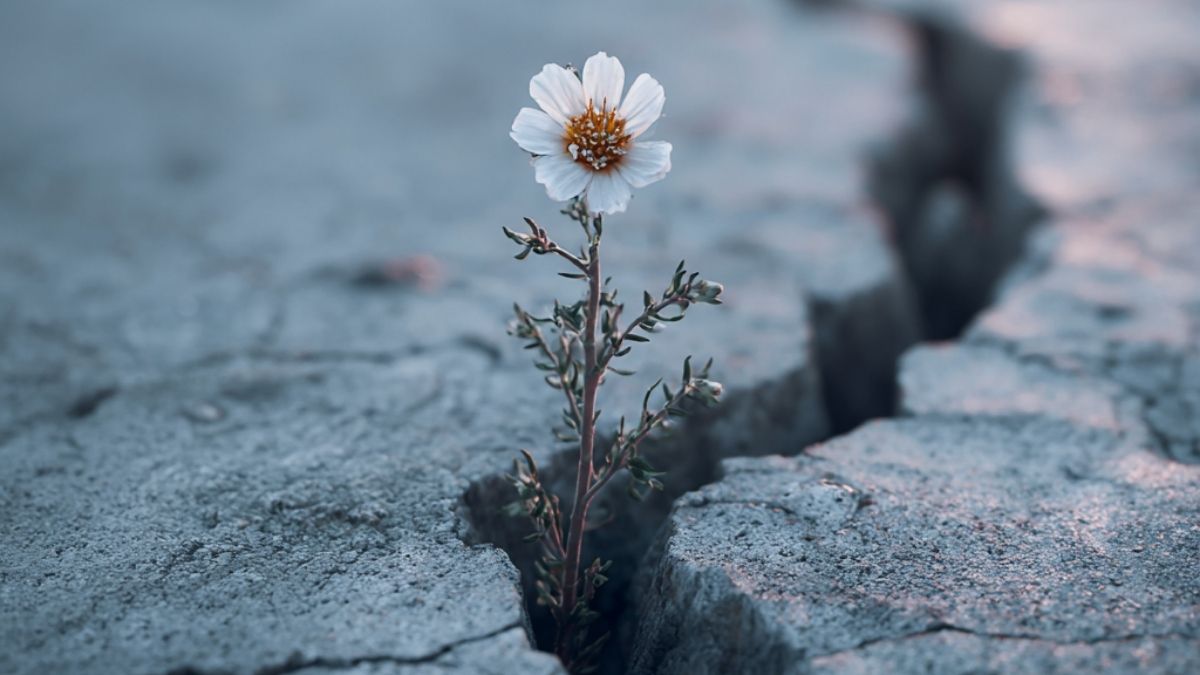
David Webb (Founder and Editor of All-About-Psychology.com)
I was reading an article that mentioned cold showers as an example of an “antifragile” habit, something that supposedly helps you grow stronger by exposing yourself to small, deliberate discomforts.
That line caught my attention straight away, because I already take two cold showers a day. I live with ankylosing spondylitis, a chronic inflammatory condition that affects the spine and can cause a lot of pain, stiffness, and loss of flexibility. Cold water is not a miracle cure, but I’ve found it helps. It wakes up my body, takes the edge off the pain, and leaves me feeling a little more alive and mobile.
So when I read that cold showers were being described as an example of “antifragility,” I realised I had been bumping into this word for a while without really understanding it. I had a vague sense that it had something to do with thriving under stress rather than just surviving it, but that was about it. I wanted to know more. What exactly does antifragility mean? Is it just a clever bit of self-help language, or is there a serious idea behind it?
The more I thought about it, the more it felt like a useful lens for a lot of everyday questions. Why do some people seem to come out of difficulties tougher and more flexible, while others feel ground down by smaller shocks. How much of that is luck, how much is circumstance, and how much comes down to the way we structure our habits, routines, and thinking. And is it really possible to design a life, or even a mindset, that benefits from a certain amount of stress and unpredictability instead of being worn out by it.
This article is my attempt to explore those questions. I want to look at where the idea of antifragility comes from, what it actually means, how it differs from more familiar concepts like resilience, and what it might look like in practice for an ordinary person trying to navigate an uncertain world.
Before we can ask whether an antifragile approach to life is helpful, though, we need to start with something simpler: a clear understanding of what the term really means.
What Antifragility Really Means
When Nassim Nicholas Taleb coined the term antifragility, he was trying to name something that didn’t exist in our vocabulary. We had words for things that break under pressure, and we had words for things that hold steady or bounce back. What we didn’t have was a word for systems that actually improve when they’re exposed to stress, randomness, or volatility.
That’s the core idea: an antifragile system doesn’t just survive difficulty. It gets better because of it.
Taleb describes this as a gap in the language with real consequences. Fragile clearly means something that’s harmed by shocks. Robust describes something that resists them. Resilient covers systems that can recover after being knocked down. But in all three cases, the best possible outcome is staying the same.
Antifragility is different. It refers to systems that strengthen under pressure. A useful way to picture the distinction is as a simple triad:
Fragile: weakened or damaged by stress.
Robust / resilient: able to withstand stress or return to baseline, but unchanged by it.
Antifragile: made stronger by stress.
Antifragility is beyond resilience or robustness. The resilient resists shocks and stays the same; the antifragile gets better. — Nassim Nicholas Taleb
We see this most clearly in the body. Bones become denser when they’re put under load. Muscles grow by repairing the tiny tears created during effort. Even the immune system improves through exposure to certain stressors. These aren’t metaphors. They’re everyday examples of systems that require challenge in order to develop.
So if antifragility is the opposite of breaking under pressure, what creates it?
The Core Mechanisms Behind Antifragility (Non-Psychological)
To understand how antifragile systems grow stronger under stress, it helps to look at the structural features that create this effect. Taleb outlines several mechanisms that show up across biology, engineering, economics, and complex systems.
Optionality
Some systems are built so they can take advantage of unexpected opportunities without being badly hurt when things go wrong. They have many small “options,” and most carry limited downside. If one pays off, the whole system benefits.
Barbell Strategy
This approach protects what matters most while letting a small, contained part of the system take risks. One side stays extremely safe. The other side experiments. The protected core can’t be wiped out, and the risky side has the chance to produce big gains.
Redundancy
Redundancy means having more capacity or backup than seems necessary. Extra resources, cushions, or duplicate parts prevent collapse when stress hits. It looks inefficient during calm periods but becomes essential when conditions turn unpredictable.
Via Negativa
Often the easiest way for a system to become stronger is not by adding more layers or complexity, but by removing the things that make it fragile in the first place. Subtracting weak points reduces the chances of serious failure.
Hormesis
In biology, small, controlled stressors can create positive adaptation. A mild challenge triggers a response that leaves the organism better prepared next time. The principle shows how some systems need periodic stress to stay strong.
Decentralization
Distributed systems, where power and decision-making are spread across many nodes, tend to handle shocks better than systems with a single point of failure. Local units can adapt independently, preventing one failure from pulling the whole system down.
These mechanisms explain how systems become antifragile. But what does this mean for us?
The Psychology of Becoming Stronger Through Stress
When you translate antifragility into psychological terms, the core idea becomes surprisingly familiar: people often grow through manageable challenge, not the absence of it. Much of what strengthens us mentally comes from gradual exposure, variation, and the chance to learn from small mistakes.
One of the clearest examples is how repeated, tolerable stress can build capacity over time. In clinical psychology, this shows up in stress inoculation theory, which suggests that encountering difficulties in controlled, digestible doses helps people cope better with future stress. The goal isn’t to avoid discomfort altogether but to experience it in a way the mind can process and integrate.
This process is helped by cognitive flexibility, the ability to shift perspectives, update assumptions, and adapt strategies. When people face uncertainty or mild strain, they often discover new ways of thinking or problem-solving. Variability forces the mind to stretch, and those adjustments become part of its long-term toolkit.
Avoidance, by contrast, tends to create fragility. Anxiety research shows that when we steer clear of what feels uncomfortable, the relief is short-lived. The underlying sensitivity increases, tolerance shrinks, and the avoided situation becomes even harder to face next time. Over time, this feedback loop can make people more brittle in the face of ordinary stress.
Psychology also offers a parallel to Taleb’s broader idea: post-traumatic growth. It doesn’t mean that trauma is desirable or beneficial, far from it. But researchers have found that some people report positive shifts in perspective, priorities, or self-understanding after hardship. The relevance here is the underlying principle: adaptation often emerges from encountering difficulty, not from a smooth, predictable path.
A consistent finding across the interdisciplinary field of learning science is that variability and error are essential for improvement. Whether it’s motor learning, reasoning, or skill acquisition, engaging with small mistakes helps the brain update its models of the world. Systems that never face challenge don’t accumulate this kind of learning.
Together, these insights point to a simple psychological truth: the mind is shaped by what it encounters. And under the right conditions, encountering manageable strain can build the flexibility and capacity that help us navigate future uncertainty.
So how do we build this kind of adaptability into the way we live?
How to Lead an Antifragile Life
The ideas behind antifragility become useful when they shape the way we make everyday decisions. We cannot control volatility, but we can decide how exposed we are to it and how easily we recover when things shift.
One helpful starting point is the idea of small, voluntary challenges. These are the manageable stressors that stretch you without overwhelming you. Cold exposure is one version. So is learning a new skill, taking on a task you usually avoid, or trying something that carries a low risk of failure. These experiences build capacity over time much like repeated training does for the body.
Another principle is having a buffer. A little extra time in your schedule, some financial breathing room, or space in your weekly routine gives you the ability to absorb surprises without collapsing under them. Buffers protect the core of your life so you can handle change with less strain.
Optionality also matters. This is the personal version of giving yourself more than one way forward. Keeping multiple interests alive, staying open to new opportunities, or experimenting with small projects creates room for unexpected upside. You do not have to predict which path will pay off. You only need to keep a few paths open.
Part of becoming less fragile is avoiding the trap of over-optimizing. When everything is engineered to run at maximum efficiency, even small disruptions can cause big problems. A schedule packed to the minute, a budget with no slack, or a lifestyle that depends on everything going smoothly turns ordinary stress into crisis.
The inverse is the practice of removing fragilities. Sometimes the most powerful changes come not from adding new habits, but from subtracting the things that wear you down. Reducing overcommitment, or stepping back from draining routines often does more for resilience than any clever productivity strategy.
Finally, there is the idea of letting stressors be small and frequent rather than rare and catastrophic. A life that avoids every challenge often accumulates unseen fragility. A life that includes manageable, recurring challenges tends to build stability. It’s about having enough flexibility to try things in your life that don’t always depend on a single plan or routine that could fall apart under pressure, or that leaves you stuck if something changes.
These habits work best when supported by a particular way of thinking.
Developing an Antifragile Mindset
Up to this point, we’ve been looking at behaviors and structures. But none of these habits work well without a shift in how we interpret stress, uncertainty, and change. An antifragile mindset isn’t about seeking hardship or glorifying struggle. It’s about seeing stress as information rather than catastrophe and treating uncertainty as something to work with instead of something to eliminate.
One element is reframing discomfort. When we see a challenge as a threat, our attention narrows, our thinking tightens, and our willingness to try new approaches drops. When we see the same challenge as a cue to learn, our mental flexibility increases. The situation hasn’t changed, but our internal framing has, and that shift shapes how quickly we adapt.
Another piece is tolerance for variability. People who cope well with uncertainty often treat life as a series of small experiments. If something doesn’t work, it offers feedback rather than proof of inadequacy. This mindset prevents the kind of all-or-nothing thinking that makes systems brittle. Instead of expecting the world to behave predictably, we practice adjusting to what actually happens.
There’s also the role of self-distancing. Psychological research shows that when people step back from a difficult moment and observe it with gentle curiosity, their emotional responses become more manageable. This reduces reactivity and creates space for wiser decisions. It also mirrors the structural idea that systems grow when they’re not overwhelmed by a single shock.
Finally, an antifragile mindset makes room for uncertainty. Instead of assuming stability is the norm and disruption is the exception, we remember that change is constant. This shift reduces the anxiety that comes from trying to hold everything still. It also encourages habits that make life more adaptable, such as planning with margins, allowing for recovery, and pacing ourselves during periods of stress.
This way of thinking doesn’t remove difficulty. It simply helps us engage with it in a way that strengthens rather than weakens us. It’s a mindset that supports the practical choices described earlier and helps make them sustainable over time.
Closing Reflection: Living Well in an Unpredictable World
Antifragility is ultimately a reminder of something very human. We cannot clear uncertainty out of our lives, and we cannot plan our way past every surprise, but we can shape how we meet the world when it shifts around us. Many of the moments that change us most are the ones we never asked for. Yet they often leave us better equipped, more adaptable, and sometimes even more ourselves.
What I find compelling about this idea is that it replaces the urge to control everything with a quieter kind of confidence. We do not have to predict every outcome. We do not have to be unshakeable. We only need enough flexibility, buffer, and curiosity to learn from what comes our way. That feels more realistic, and far kinder, than chasing certainty in a world that never stops moving.
As you think about your own life, you might notice places where you already respond to stress with more strength than you give yourself credit for. You might also see spots where a small, intentional challenge could help you grow in a direction that matters to you.
Where might you already be a little more antifragile than you think?
Where could trying something slightly outside your comfort zone give you a little more confidence or strength?
These are personal questions, and the answers will look different for everyone. But they are worth sitting with, because they point toward a way of living that does not hide from uncertainty, but learns to meet it with a bit more steadiness and trust.
If You Enjoyed This Article…
I’m very happy to share that my new book, Why We Are the Way We Are: Psychology for the Curious, is now available on Amazon in both paperback and eBook format.
📘 Paperback: www.amazon.com/Why-We-Are-Way-Psychology/dp/B0G4D1WJCW
📱 Kindle eBook: www.amazon.com/Why-We-Are-Way-Psychology-ebook/dp/B0G4BGR9T3
The book is a carefully curated collection of the most popular articles from this website and my Psychology Substack. If you’ve enjoyed this piece and the exploration of why we think, feel, and behave the way we do, the book brings these ideas together in one place. It also makes a thoughtful gift for anyone who loves psychology or is simply curious about what makes us tick.
If you do pick up a copy, I’d be incredibly grateful if you could leave a rating or review on Amazon. Even a short line makes a real difference. Reviews help raise the profile of the book and allow more people to discover it.
Any profit from sales goes directly toward the hosting and running costs of the All About Psychology website, which helps ensure that:
- Students and educators can continue accessing the most important and influential journal articles in psychology completely free.
- Readers everywhere can hear directly from world-class psychologists and leading experts.
- High-quality psychology content remains freely available to the public.
Thank you, as always, for reading, supporting, and being part of this community. It’s very much appreciated.
All the very best,
David Webb
Founder, All-About-Psychology.com
Author | Psychology Educator | Psychology Content Marketing Specialist

Know someone who would be interested in reading
What Is Antifragility? How Stress Helps Us Grow Stronger.
Share This Page With Them.
Go From "What Is Antifragility? How Stress Helps Us Grow Stronger” Back To The Home Page