Thinking About Studying Psychology Online?
Explore online psychology degree options, including program types, accreditation, costs, career pathways and what to check before choosing a course.
Read The Online Psychology Degree Guide
The Placebo Effect: How Expectation Shapes Experience From everyday performance to pain, healing, and the brain
David Webb (Founder and Editor of All-About-Psychology.com)
I’ve always been fascinated by the idea that what you believe about the situation you’re facing has the power to shape how you respond to it.
Here’s a great example from Harry Potter and the Half-Blood Prince. Before a crucial Quidditch match, Harry tricks Ron into believing he has taken Felix Felicis, a “liquid luck” potion that supposedly guarantees success. Ron hasn’t taken anything at all, but his belief that he has changes how he plays. He becomes calmer, more confident, and goes on to produce a heroic performance. The only thing that changed before and after Ron thought he’d taken liquid luck was his expectation, and that expectation influenced his behavior and experience in a very real way.
What this example points to is a well-studied phenomenon in psychology and medicine, one that shows how expectation can produce real, measurable changes in experience and behavior. This phenomenon is known as the placebo effect, and in this article I want to explore what it actually is, how it works in the brain, where its limits lie, and why it matters for how we experience treatment, illness, and care in everyday life.
Historical Foundations of the Placebo Effect
Long before the term placebo entered medical parlance, healers from ancient ritual traditions to early Western physicians such as Hippocrates and Galen recognized that belief, trust, and expectation were central to healing, often noting that patients who believed they would recover tended to fare better than those who did not.
The term itself originates from the Latin placebo, meaning “I shall please,” and first appeared in a medical context in Motherby’s New Medical Dictionary, where it was defined as a common medical practice.
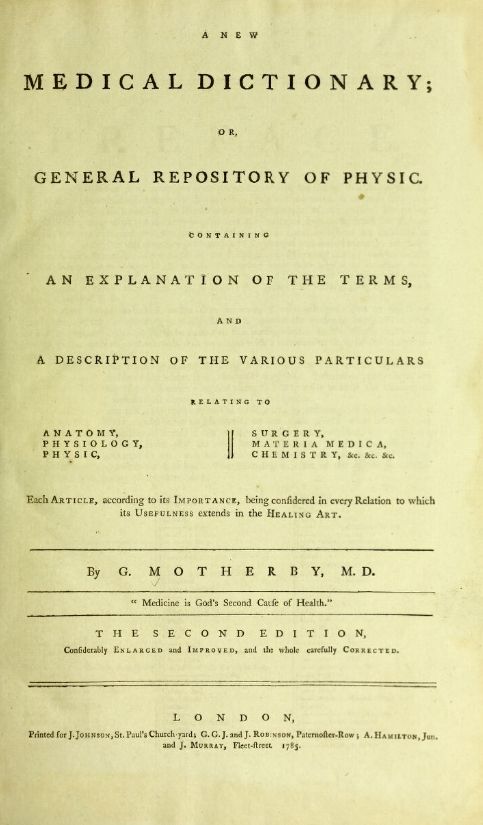
Interestingly, within the space of just fifty years, the meaning of placebo had shifted. What was once seen as a routine element of medical care came to be described by the Oxford Medical Dictionary as a “therapeutic activity attributable solely to the imagination, essentially a therapeutic illusion.” This early divide, between placebo as a legitimate tool in patient care and as a mere trick of the mind, set the stage for centuries of debate that continue to shape how we think about belief, healing, and medicine today.
What the Placebo Effect Actually Is (and Isn’t)
At its simplest, the placebo effect refers to real changes in symptoms or experience that occur after a person receives a treatment with no active medical ingredient.
A sugar pill.
A saline injection.
A procedure that looks convincing but does nothing physically.
What matters is not the substance itself, but what it means to the person receiving it.
That last point is crucial, because the placebo effect is often misunderstood. It’s commonly dismissed as something that’s “just psychological,” as if that makes it trivial, imaginary, or irrelevant. In reality, placebo responses are among the clearest demonstrations we have that expectations, beliefs, and context can produce measurable changes in the body.
This is why many researchers describe the placebo effect as a meaning response: a way of showing that the clinical setting, the explanation given, the confidence of the clinician, past experiences, and cultural beliefs all contribute to how a treatment is experienced.
It’s also important to separate a few concepts that often get blurred together.
The placebo effect refers specifically to beneficial changes triggered by an inert treatment. The placebo response is broader. It includes improvement due to natural recovery, regression to the mean, repeated measurement, and other factors that occur in placebo groups during clinical trials. The nocebo effect is the flip side: when negative expectations lead to worse symptoms or side effects, even in the absence of a harmful agent.
None of these imply deception in everyday life, nor do they suggest that symptoms are fabricated. People experiencing placebo or nocebo effects are not pretending. Their pain, relief, nausea, fatigue, or improvement is subjectively real and often physiologically detectable.
What the placebo effect does not mean is that the mind can cure any illness at will, or that belief replaces medicine. Placebos do not shrink tumors, eliminate infections, or correct underlying biochemical damage. But they can alter pain, movement, mood, perception, and functioning in ways that are clinically meaningful.
Placebos show us where expectation and meaning intersect with the nervous system. Understanding that boundary is what makes the placebo effect scientifically interesting rather than mystically exaggerated.
What the Placebo Effect Looks Like in Practice
Many people assume that the placebo effect only applies to sugar pills in laboratory settings. In reality, its influence shows up across medicine, psychology, and everyday life, often in ways that are both subtle and striking.
In clinical pain research, for example, how a drug is administered can matter as much as the drug itself. Studies have shown that when patients receive pain medication openly, knowing it is being given to them, the relief is significantly stronger than when the same medication is administered without their awareness. In some cases, patients required substantially higher doses to achieve the same effect when the treatment was delivered covertly. The chemistry hadn’t changed, but the absence of expectation weakened the outcome.
The same principle has appeared in surgical research, where expectations are wrapped up in some of the most powerful medical rituals we have. In one well-known set of studies on knee surgery, patients with osteoarthritis were randomly assigned either to receive a standard arthroscopic procedure or to undergo a carefully staged sham operation. Those in the placebo group were anesthetized, incisions were made, and the full theatre of surgery was performed, but no therapeutic intervention took place inside the joint. When outcomes were assessed months later, many patients who had received the fake surgery reported improvements comparable to those who had undergone the real procedure. The experience of surgery itself was enough to produce meaningful changes in pain and function for a substantial proportion of patients.
Placebo effects are not limited to medicine. They also appear in cognitive performance and everyday functioning. In one set of experiments, participants were led to believe they had slept longer and more soundly than they actually had. This belief alone was enough to improve their performance on tasks involving reasoning, language, and mathematics. Their brains were no more rested in physiological terms, but the expectation of being well rested changed how effectively they used their cognitive resources.
Even creativity appears to be susceptible to expectation. In another line of research, participants were told that exposure to a particular scent would enhance creative thinking. The odor itself was inert and had no known cognitive properties, yet those who believed it was beneficial went on to produce more original and flexible ideas than those who were not given that suggestion.
Taken together, these examples point to the same underlying pattern. Expectation can shape perception, behavior, and performance in measurable ways. The effects are not imaginary, but neither are they unlimited. They tend to be strongest where experience, interpretation, and subjective states play a central role.
This is why the placebo effect continues to sit at the intersection between psychology and medicine. It reminds us that treatment is never just a chemical transaction. It is also a human experience, shaped by meaning, belief, and context.
How Expectations Become Biology: The Brain on Placebo
Up to this point, we’ve seen that expectations can shape symptoms, behavior, and experience in reliable ways. But how does this actually work? What turns an expectation into a change in pain, movement, or mood?
The short answer is that placebo effects are not vague mental influences drifting down into the body. They are coordinated brain responses that recruit the same neural systems targeted by many active treatments.
The Brain as a Prediction Engine
Modern neuroscience increasingly understands the brain not as a passive receiver of sensory input, but as a prediction-making system. At any given moment, it’s constantly generating expectations about what will happen next and adjusting those expectations based on incoming information.
When a person expects relief, improvement, or safety, those expectations are not abstract thoughts. They are encoded as neural predictions. If the context of treatment strongly supports those predictions, the brain begins to act as if the expected outcome is already underway.
This is where placebo effects begin to shift from psychology into physiology.
Pain, Expectation, and the Brain’s Internal Pharmacy
Pain has been the most intensively studied domain in placebo research, largely because it is both subjective and biologically measurable. Neuroimaging studies show that when people experience placebo pain relief, several specific brain systems are activated.
Regions in the prefrontal cortex become engaged first. These areas are involved in expectation, meaning, and evaluation. From there, signals are sent to deeper brain structures that regulate pain processing.
One of the most important of these is the endogenous opioid system. This is the same system targeted by drugs like morphine. During placebo analgesia, the brain releases its own opioid-like chemicals, which bind to receptors in pain-related regions of the brain and spinal cord. This is not inferred indirectly. It has been demonstrated by studies showing that placebo pain relief can be blocked by naloxone, a drug that specifically prevents opioids from working.
In other words, belief does not distract people from pain. It can trigger the release of the body’s own pain-modulating chemistry.
Expectation as Reward: Dopamine and Motivation
Placebo effects are not limited to pain. In conditions like Parkinson’s disease, where dopamine loss plays a central role, placebo responses have revealed another critical pathway.
When patients believe they are receiving an effective treatment, dopamine is released in brain regions involved in movement and reward. Imaging studies have shown that this dopamine release occurs even when the treatment is inert. The brain is responding not to the drug, but to the expectation of improvement.
This is why placebo effects are often said to be engaging the brain’s reward circuitry. Anticipating relief or improvement functions, at a neural level, much like anticipating a meaningful reward.
This helps explain why placebo effects are often strongest in conditions involving motivation, effort, movement, or subjective experience.
Learning, Memory, and Conditioned Responses
Not all placebo effects rely on conscious belief. Some are shaped by learning history.
When a person repeatedly experiences relief after taking a particular medication or undergoing a specific procedure, the brain begins to associate the sensory features of that treatment with improvement. Over time, those cues alone can activate the same neural pathways, even in the absence of the active ingredient.
This conditioning process recruits memory-related brain systems and autonomic pathways that regulate bodily functions. It helps explain why placebo effects can occur even when people are unsure, ambivalent, or only mildly optimistic about a treatment.
The brain has learned what usually follows a particular context, and it prepares the body accordingly.
Why This Matters
What these findings show is not that belief overrides biology, but that belief is one way biology is organized. Expectations shape neural activity, neurotransmitter release, and downstream physiological responses.
This also clarifies why placebo effects are selective rather than unlimited. The brain can modulate pain, movement, perception, and mood because those systems are designed to be flexible and context-sensitive. It cannot, by expectation alone, eliminate infections, reverse tissue damage, or correct genetic disorders.
Understanding the neurobiology of placebo effects helps move the conversation out of slogans like “mind over matter” and into something more precise. Expectations do not heal by magic. They heal by engaging specific brain systems that already exist to regulate how the body responds to threat, safety, effort, and relief.
Open-Label Placebos: When Knowing Doesn’t Cancel the Effect
One of the most surprising developments in placebo research is that deception is not always required. In a growing number of studies, people have shown meaningful improvement even when they are explicitly told they are receiving a placebo.
These are known as open-label placebos. The pills are clearly labeled as placebos. Participants are told, directly and honestly, that the treatment contains no active drug. There is no attempt to disguise this fact or to mislead anyone about what they are taking.
At first glance, this seems like it should not work at all. If expectation is so central to placebo effects, how can a treatment still help when people know there is nothing in it?
The answer appears to lie in how expectation, learning, and context interact, rather than in belief alone.
In most open-label placebo studies, participants are given a short but structured explanation. They are told that placebo effects are real, that the body can respond automatically to treatment rituals, that positive thinking is not required, and that taking the pills consistently matters. In other words, the treatment still carries meaning, even without deception. The pill becomes a cue linked to care, attention, and the possibility of relief, rather than a fake version of medicine.
What these studies show, is that open-label placebos are most reliable for subjective outcomes. People report less pain, less discomfort, reduced symptom severity, or improved day-to-day functioning. This has been observed in conditions such as irritable bowel syndrome, chronic low back pain, migraine, allergic rhinitis, and ADHD. The effects are not dramatic cures, but they are often comparable in size to those seen in traditional placebo-controlled trials.
From an ethical standpoint, this research is especially important. Traditional placebos raise concerns about trust, consent, and transparency. Open-label placebos sidestep many of those problems. Patients are informed. Autonomy is respected. There is no hidden manipulation. The effect, when it occurs, emerges from cooperation rather than concealment.
At the same time, the limits need to be clear. Open-label placebos are not a replacement for medical treatment. They are not appropriate for conditions where delaying effective therapy would cause harm. Their value lies in symptom management, not disease modification, and in complementing care rather than substituting for it.
What open-label placebos ultimately reveal is something quietly radical. The therapeutic ritual itself, taking a pill, following a routine, engaging with care, can still influence how the brain regulates symptoms, even when the story of the pill is stripped of illusion.
Using This Knowledge in Real Life
Understanding the placebo effect is not about trying to “think yourself better.” It’s about becoming more aware of how expectations, context, and communication quietly shape experience, especially in healthcare settings. Used carefully, this knowledge can help you navigate treatment more clearly and avoid some common traps.
One place this shows up immediately is in how side effects are understood. When you read a long list of possible adverse effects, your brain does not treat that information as neutral. It treats it as a prediction. Research on the nocebo effect shows that simply expecting a symptom increases the likelihood of noticing it, amplifying it, or attributing normal bodily sensations to the treatment. This does not mean side effects are imagined or that warnings should be ignored. It means that attention and expectation influence how symptoms are perceived. A more balanced approach is to notice what actually changes after starting a treatment, rather than scanning constantly for what might go wrong.
Expectations also shape how effective treatments feel. The same medication can produce different levels of relief depending on how it is framed, explained, and delivered. This is where conversations with clinicians matter. Asking clear questions about what a treatment is likely to help with, what it is unlikely to change, and what a realistic timeline looks like can ground expectations without dampening hope. Clarity tends to reduce anxiety, and lower anxiety reduces nocebo responses.
Another practical implication is understanding that confidence and reassurance are not cosmetic extras in medicine. When a clinician explains a plan clearly, listens seriously, and communicates belief in the treatment, it can measurably influence outcomes. If something feels confusing or rushed, it is reasonable to ask for clarification. Doing so is not about demanding certainty. It is about reducing ambiguity, which the brain otherwise fills with worst-case predictions.
This also applies outside the clinic. Many everyday experiences mirror placebo mechanisms. Routines, rituals, and habits shape how the nervous system anticipates effort, stress, or relief. A familiar bedtime routine can make sleep easier. A trusted pre-performance ritual can steady nerves. These effects do not require magical thinking. They reflect how learning and expectation regulate physiology.
What matters is avoiding extremes. The placebo effect does not mean you should dismiss symptoms as “all in your head.” Nor does it mean every improvement is proof that belief alone cured something. The useful middle ground is recognizing that symptoms are regulated experiences, influenced by both biology and meaning. You can respect the biology while also being mindful of the stories and expectations shaping how that biology is felt.
Perhaps the most practical takeaway is this: attention is a powerful amplifier. Where attention goes, experience tends to follow. Being selective about what you focus on, how you interpret bodily signals, and how you frame treatment information can reduce unnecessary distress without denying reality.
Used this way, knowledge of the placebo and nocebo effects is not about control. It is about orientation. It helps you move through healthcare, and through your own experiences, with a little more understanding of how the brain participates in the process, whether you ask it to or not.
Final Thoughts: Meaning Isn’t “Fake”
One important lesson running through all of this is that meaning is not the opposite of biology. It is one of the ways biology works. The placebo effect does not show that symptoms are imaginary or that medicine is just theatre. It shows that human bodies respond to context, relationship, and interpretation as part of their normal functioning. Care is never delivered in a vacuum. It is always wrapped in words, rituals, expectations, and social cues, and those elements help shape how treatment is experienced.
This is why the placebo effect can feel unsettling. It sits in the space between what we can measure chemically and what we live through subjectively. We are often taught to treat those domains as separate, or even in competition. But the evidence suggests something more integrated. Meaning does not replace medicine, and belief does not override disease. What meaning does is influence how symptoms are felt, how effort is mobilized, how discomfort is tolerated, and how relief is interpreted. Those processes matter, even when the underlying condition remains unchanged.
Seen this way, the placebo effect is less about “fake” treatments and more about how humans heal within relationships and systems of care. It highlights the role of trust, explanation, and attention. It reminds us that being listened to, understood, and oriented within a clear narrative can change how the body responds to stress, pain, and uncertainty. None of this requires illusion. It requires recognition that treatment is also an experience, not just an intervention.
Perhaps the most useful invitation is a modest one. To notice how expectations shape your own healthcare experiences. To pay attention to how explanations land, how routines steady or unsettle you, and how meaning quietly enters the picture whether you want it to or not. The placebo effect does not ask us to believe in magic. It asks us to take human experience seriously, not as a flaw in medicine, but as one of its enduring foundations.
If You Enjoyed This Article…
I’m very happy to share that my new book, Why We Are the Way We Are: Psychology for the Curious, is now available on Amazon in both paperback and eBook format.
📘 Paperback: www.amazon.com/Why-We-Are-Way-Psychology/dp/B0G4D1WJCW
📱 Kindle eBook: www.amazon.com/Why-We-Are-Way-Psychology-ebook/dp/B0G4BGR9T3
The book is a carefully curated collection of the most popular articles from this website and my Psychology Substack. If you’ve enjoyed this piece and the exploration of why we think, feel, and behave the way we do, the book brings these ideas together in one place. It also makes a thoughtful gift for anyone who loves psychology or is simply curious about what makes us tick.
If you do pick up a copy, I’d be incredibly grateful if you could leave a rating or review on Amazon. Even a short line makes a real difference. Reviews help raise the profile of the book and allow more people to discover it.
Any profit from sales goes directly toward the hosting and running costs of the All About Psychology website, which helps ensure that:
- Students and educators can continue accessing the most important and influential journal articles in psychology completely free.
- Readers everywhere can hear directly from world-class psychologists and leading experts.
- High-quality psychology content remains freely available to the public.
Thank you, as always, for reading, supporting, and being part of this community. It’s very much appreciated.
All the very best,
David Webb
Founder, All-About-Psychology.com
Author | Psychology Educator | Psychology Content Marketing Specialist
