Thinking About Studying Psychology Online?
Explore online psychology degree options, including program types, accreditation, costs, career pathways and what to check before choosing a course.
Read The Online Psychology Degree GuideThink Swearing Isn’t Big Or Clever? Think Again

The use of obscene or taboo language, or swearing as it’s more commonly known, is often seen as a sign that the speaker lacks vocabulary, cannot express themselves in a less offensive way, or even lacks intelligence. Studies have shown, however, that swearing may in fact display a more, rather than less, intelligent use of language.
While swearing can become a habit, we choose to swear in different contexts and for different purposes: for linguistic effect, to convey emotion, for laughs, or perhaps even to be deliberately nasty. Psychologists interested in when and why people swear try to look past the stereotype that swearing is the language of the unintelligent and illiterate.
Are you fluent in swearing?
In fact, a study by psychologists from Marist College in the US found links between how fluent a person is in the English language and how fluent they are in swearing. The former, verbal fluency, can be measured by asking volunteers to think of as many words beginning with a certain letter of the alphabet as they can in one minute. People with greater language skills can generally think of more examples in the allotted time. Based on this approach, the researchers created the swearing fluency task.
This task requires volunteers to list as many different swear words as they can think of in one minute. By comparing scores from both the verbal and swearing fluency tasks, it was found that the people who scored highest on the verbal fluency test also tended to do best on the swearing fluency task. The weakest in the verbal fluency test also did poorly on the swearing fluency task.
What this correlation suggests is that swearing isn’t simply a sign of language poverty, lack of general vocabulary, or low intelligence. Instead, swearing appears to be a feature of language that an articulate speaker can use in order to communicate with maximum effectiveness. And actually, some uses of swearing go beyond just communication.
Natural pain relief
Research we conducted involved asking volunteers to hold their hand in iced water for as long as they could tolerate, while repeating a swear word. The same set of participants underwent the iced water test on a separate occasion, but this time they repeated a neutral, non-swear word. The heart rate of both sets of participants was monitored.
What we found was that those who swore withstood the pain of the ice-cold water for longer, rated it as less painful, and showed a greater increase in heart rate when compared to those who repeated a neutral word. This suggests they had an emotional response to swearing and an activation of the fight or flight response: a natural defence mechanism that not only releases adrenalin and quickens the pulse, but also includes a natural pain relief known as stress-induced analgesia.
This research was inspired by the birth of my daughter when my wife swore profusely during agonising contractions. The midwives were surprisingly unfazed, and told us that swearing is a normal and common occurrence during childbirth – perhaps for reasons similar to our iced water study.

Two-way emotional relationship
We wanted to further investigate how swearing and emotion are linked. Our most recent study aimed to assess the opposite of the original research, so instead of looking at whether swearing induced emotion in the speaker we examined whether emotion could cause an increase in swearing fluency.
Participants were asked to play a first person shooter videogame in order to generate emotional arousal in the laboratory. They played for ten minutes, during which they explored a virtual environment and fought and shot at a variety of enemies. We found that this was a successful way to arouse emotions, since the participants reported feeling more aggressive afterwards when compared with those who played a golf videogame.
Next, the participants undertook the swearing fluency task. As predicted, the participants who played the shooting game were able to list a greater number of swear words than those who played the golf game. This confirms a two-way relationship between swearing and emotion. Not only can swearing provoke an emotional response, as shown with the iced water study, but emotional arousal can also facilitate greater swearing fluency.
 What this collection of studies shows is that there is more to swearing than simply causing offence, or a lack of verbal hygiene. Language is a sophisticated toolkit, and swearing is a part of it. Unsurprisingly, many of the final words of pilots killed in air-crashes captured on the “black box” flight recorder feature swearing. And this emphasises a crucial point, that swearing must be important given its prominence in matters of life and death. The fact is that the size of your vocabulary of swear words is linked with your overall vocabulary, and swearing is inextricably linked to the experience and expression of feelings and emotions.
Richard Stephens, Senior Lecturer in Psychology, Keele University
This article was originally published on The Conversation. Read the original article.

If you like psychology, you'll love this great collection of Psychology T-Shirts available from the official All About Psychology Amazon Store. To see the full T-shirt collection, click on the following link or on the T-Shirt images below.

Want To Read More Great Psychology Articles?

See following link to check out a fascinating collection of psychology articles by leading academics and researchers.

Recent Articles


-
Psychology Expert Interview | Get Featured on All About Psychology
Sep 24, 26 02:14 PM
 Get featured on All About Psychology with a professionally prepared expert interview, website publication, newsletter exposure and social promotion.
 -
How to stop overthinking and break the cycle
Sep 24, 26 02:04 PM
 Learn how to stop overthinking, handle repetitive thoughts, ease self-criticism, and make decisions without getting stuck in endless analysis.
 -
The Hard Problem of Consciousness Resolved by Dennis Nicholson
Sep 24, 26 07:50 AM
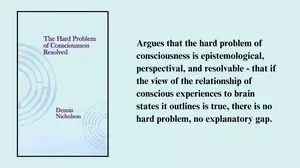 Explore The Hard Problem of Consciousness Resolved by Dennis Nicholson, examining consciousness, brain states and the explanatory gap.
Please help support this website by visiting the All About Psychology Amazon Store to check out an awesome collection of psychology books, gifts and T-shirts.
 |
 |