The Psychology of Stress: Understanding How Your Mind and Body Respond
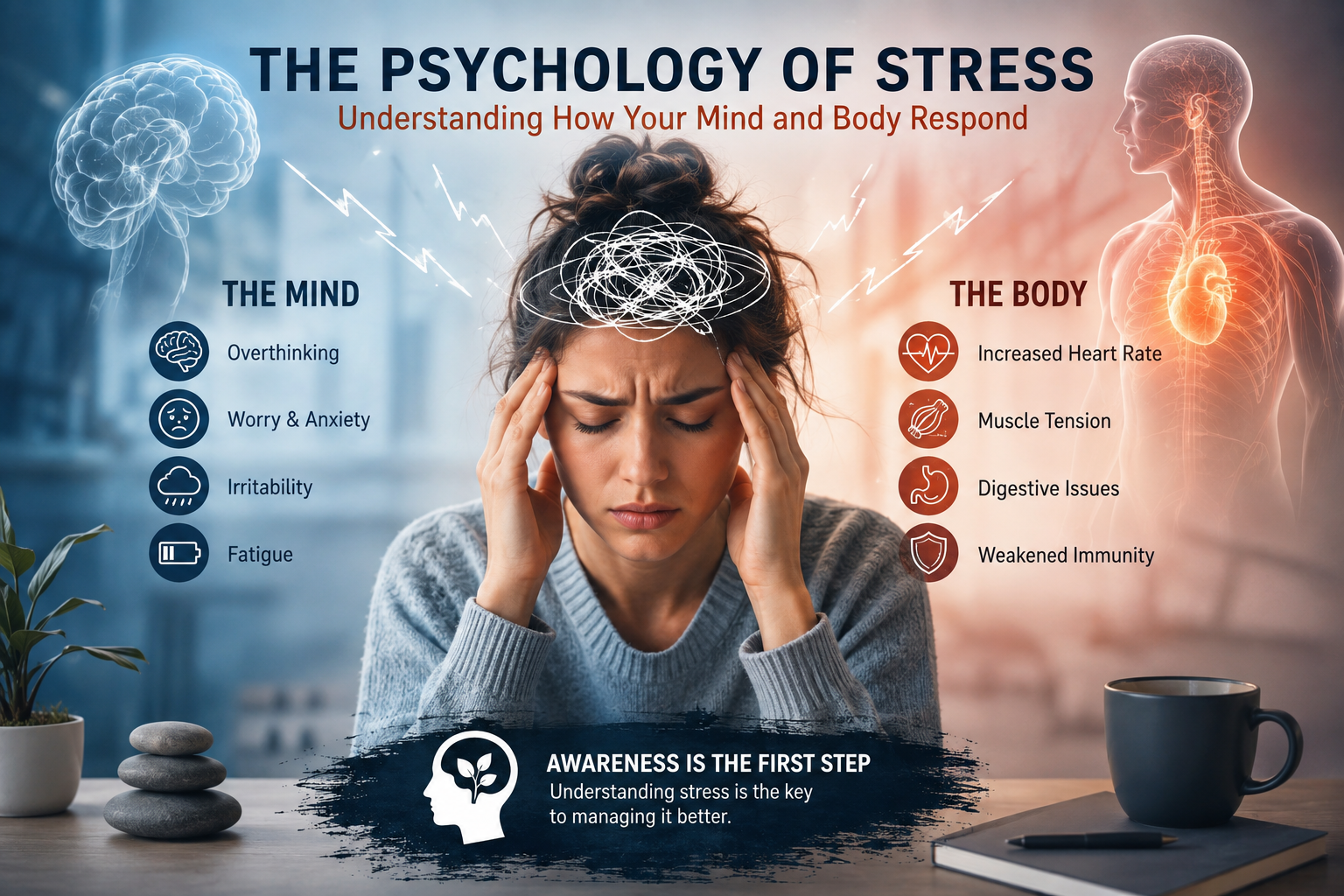
Stress is something almost everyone experiences.
A busy workday, relationship problems, financial pressure, academic demands, health concerns, or simply having too much to do can leave us feeling mentally and physically exhausted. While stress is often treated as a negative experience, psychology tells us that it is more complicated than that.
Stress is part of the body's natural response to challenges. In short bursts, it can help us focus, react quickly, and deal with difficult situations. The problem begins when stress becomes persistent and we don't have enough time or resources to recover.
Understanding how stress affects the mind and body can make it easier to recognize unhealthy patterns and develop better ways of coping.
What Is Stress?
Stress is the psychological and physiological response we experience when we perceive that the demands placed on us exceed our ability to cope.
Importantly, stress isn't caused only by what happens to us. Our interpretation of an event also matters.
Two people can experience exactly the same situation and respond very differently.
For one person, speaking in front of a group might be exciting. For another, it might trigger intense anxiety. The difference isn't necessarily the event itself; it can be the meaning the person attaches to it.
This is one of the reasons psychologists study both external stressors and internal thought patterns.
How Stress Affects the Brain
When we perceive a threat or significant challenge, the body activates systems designed to help us respond.
Heart rate can increase, muscles become more alert, and attention shifts toward the perceived problem. These responses can be useful when we need to react quickly.
However, constantly operating in a heightened state of stress can become exhausting.
Long-term stress may contribute to:
- Difficulty concentrating
- Irritability
- Sleep problems
- Fatigue
- Changes in appetite
- Feeling emotionally overwhelmed
- Reduced motivation
- Difficulty making decisions
The psychological effects can also influence everyday behavior. Someone who feels constantly overwhelmed may begin avoiding responsibilities, withdrawing socially, or relying on short-term distractions to escape uncomfortable feelings.
The Connection Between Thoughts and Stress
One of the most important ideas in psychology is that our thoughts can influence our emotional responses.
Consider someone who receives a short message from their manager saying, "Can we talk tomorrow?"
One person might think:
"I probably made a mistake."
Another might think:
"Maybe we're going to discuss the project."
The situation is identical, but the interpretation is different.
This doesn't mean that people can simply "think positively" and eliminate stress. Rather, becoming aware of automatic thought patterns can help us understand why certain situations produce particularly strong emotional reactions.
This principle is an important part of cognitive behavioral approaches to psychological treatment.
Why We Develop Unhelpful Coping Habits
When something reduces discomfort quickly, we're naturally more likely to repeat it.
For example, someone who feels stressed after work might scroll through social media for hours because it temporarily takes their mind off their problems. Someone else might constantly snack, avoid difficult conversations, stay busy, or turn to substances.
These behaviors can provide temporary relief without addressing the underlying source of stress.
The same psychological principle can apply to many different habits, including behaviors surrounding supplements and substances. People researching alternatives sometimes encounter products such as kratom and may learn more about kratom online. However, information found online shouldn't replace professional medical advice, particularly when someone is experiencing persistent psychological symptoms or taking other medications.
The important psychological question is not simply whether a behavior provides immediate relief.
It is whether that behavior helps us cope effectively over time.
Healthy Ways to Manage Everyday Stress
There isn't one universal solution to stress. Different people respond to different strategies, and what works during a difficult week may not be enough when someone is dealing with chronic stress.
Still, several evidence-based approaches can support psychological well-being.
1. Move Your Body
Physical activity can have significant benefits for mental health. Walking, running, cycling, swimming, strength training, or simply spending more time moving throughout the day can help regulate mood and reduce tension.
Exercise doesn't have to be extreme to be useful. Consistency is often more important than intensity.
2. Protect Your Sleep
Poor sleep can make everyday problems feel much harder to manage.
Creating a consistent bedtime routine, reducing unnecessary screen time before sleep, and keeping a regular sleep schedule can help support better rest.
If sleep problems persist, it's worth exploring the underlying cause rather than simply trying to push through the tiredness.
3. Notice Your Automatic Thoughts
When you feel stressed, pause and ask yourself:
"What am I telling myself about this situation?"
You may discover that your mind is automatically jumping toward the worst possible outcome.
Recognizing these patterns doesn't mean ignoring genuine problems. It gives you an opportunity to evaluate whether your interpretation is accurate or whether there may be another way of looking at the situation.
4. Break Large Problems Into Smaller Ones
A long list of responsibilities can create a sense that everything needs to be solved immediately.
Instead, identify the next small action.
Rather than thinking, "I need to fix my entire career," ask:
"What is one useful thing I can do today?"
Small actions can reduce the feeling of helplessness and create a sense of progress.
5. Stay Connected
Humans are social beings, and supportive relationships can play an important role in psychological well-being.
Talking to a friend, family member, colleague, therapist, or another trusted person can provide emotional support and sometimes help us see a problem from a different perspective.
When Stress Becomes a Bigger Problem
Not all stress requires professional treatment. Feeling nervous before an exam, frustrated after a difficult meeting, or worried about an upcoming event is part of normal life.
However, persistent stress deserves attention when it begins interfering with everyday functioning.
Consider seeking professional support if stress or anxiety is consistently affecting your:
- Sleep
- Work or studies
- Relationships
- Appetite
- Concentration
- Motivation
- Ability to enjoy everyday activities
A psychologist or other qualified mental-health professional can help identify the factors contributing to the problem and recommend appropriate strategies or treatment.
The Goal Isn't to Eliminate All Stress
It may sound surprising, but a completely stress-free life isn't necessarily the goal.
Challenges are unavoidable. Exams, deadlines, disagreements, changes, uncertainty, and unexpected events are all part of being human.
The more realistic goal is to develop psychological flexibility and healthy coping skills so that difficult experiences don't completely control our thoughts and behavior.
Learning how your mind responds to stress is a valuable first step.
Once you understand your triggers, recognize unhelpful thought patterns, and develop healthier coping strategies, stressful situations can become easier to navigate.
Final Thoughts
Stress isn't simply something that happens outside of us. It involves an interaction between our circumstances, thoughts, emotions, physical responses, and behaviors.
That makes psychology particularly useful when trying to understand stress.
Instead of looking for one quick solution, it can be more helpful to understand the patterns behind how we respond to difficult situations. With greater awareness, healthier habits, supportive relationships, and professional help when necessary, it is possible to develop more effective ways of dealing with life's inevitable challenges.