Thinking About Studying Psychology Online?
Explore online psychology degree options, including program types, accreditation, costs, career pathways and what to check before choosing a course.
Read The Online Psychology Degree GuideProcrastination Is Linked to Poor Health New Study
Procrastination Is Linked to Poor Health
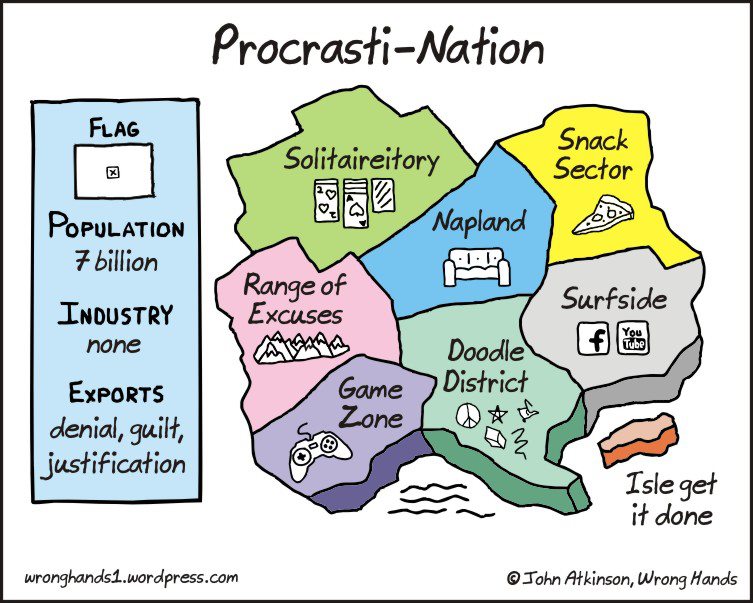
University students have a lot of freedom but not much structure. This can be bad for habitual procrastinators. Studies have shown that at least half of university students procrastinate to a level that is potentially harmful to their education.
But this may not be the only negative result of putting things off until a later date. Studies have found a link between procrastination and poor health. It is associated with higher levels of stress, unhealthier lifestyles and delays in seeing a doctor about health problems.
However, these studies – by the nature of their design – cannot tell us the direction of the relationship. Does procrastination cause poor physical and mental health because people, say, put off starting a new exercise regime or seeing a doctor about a health problem? Or is it the other way around? Does poor physical health, say, lead people to procrastinate because they don’t have the energy to do the task now?
To try to solve this riddle, we conducted a longitudinal study – that is, a study that followed people for a period of time, taking measurements at various points in the study. We recruited 3,525 students from eight universities in and around Stockholm and asked them to complete questionnaires every three months for one year.
Our study, published in JAMA Network Open, aimed to investigate if students who procrastinate have a higher risk of poor mental and physical health. Of the 3,525 students we recruited, 2,587 answered the follow-up questionnaire nine months later, where several health outcomes were measured.
To understand how procrastination relates to later health outcomes, students with a greater tendency to procrastinate (as scored on a procrastination scale) at the start of the study were compared with students with a lower tendency. The results showed that higher levels of procrastination were associated with somewhat higher symptoms of depression, anxiety and stress nine months later.
Students with higher levels of procrastination were also more likely to report disabling pain in the shoulders or arms (or both), worse sleep quality, more loneliness and more financial difficulties. These associations remained even when we took other factors that could affect the association into consideration, such as age, gender, parents’ level of education, and previous physical and psychiatric diagnoses.
Although no specific health outcome was strongly associated with procrastination, the results suggest that procrastination may be of importance for a wide range of health outcomes, including mental health problems, disabling pain and an unhealthy lifestyle.
As mentioned above, in earlier studies, participants were only assessed at one point in time, making it hard to know which of the conditions came first: procrastination or poor health. By getting students to answer questionnaires at several time points, we could be sure that high procrastination levels were present before we measured their health.
But it is still possible that other factors not accounted for in our analysis could explain the associations between procrastination and subsequent poor health outcomes. Our results are not proof of cause and effect, but they suggest it more strongly than earlier “cross-sectional” studies.
It can be treated
There is good news for habitual procrastinators. Clinical trials (the gold standard of medical research) have shown that cognitive behavioural therapy is effective at reducing procrastination.
The treatment helps the person overcome procrastination by breaking up long-term goals into short-term goals, managing distractions (such as turning off mobile phones), and staying focused on a task despite experiencing negative emotions.
This requires some effort, so it is not something a person can do while trying to meet a specific deadline. But even small changes can have a large effect. You can try it yourself. Why not start today by leaving your mobile phone in another room when you need to stay focused on a task.
Eva Skillgate, Associate Professor, Epidemiology, Karolinska Institutet; Alexander Rozental, Adjunct Researcher, Karolinska Institutet, and Fred Johansson, PhD Candidate, Mental Health, Sophiahemmet University
This article is republished from The Conversation under a Creative Commons license. Read the original article.
What Kind of Procrastinator Are You?
(Fab Cartoon images via 20px.com)
Really hope you enjoyed reading
Procrastination is Linked to Poor Health
Want to learn more about procrastination? There is a page dedicated to the subject here on the All About Psychology website, which you can access via the following link.
Quality information and resources on the science of procrastination
Want To Read More Great Psychology Articles?
See following link to check out a fascinating collection of psychology articles by leading academics and researchers.
This Psychology Symbol - Vintage Retro Striped Sunset T-Shirt is available from Amazon (prime eligible) in a range of colors for women and men. Sales help support this website, which has been providing free and comprehensive information and resources for psychology students and educators since 2008.


Recent Articles


-
How to Stay Calm When Everything Changes
Sep 15, 26 09:11 AM
 Uncertainty and sudden life changes don’t have to trigger constant anxiety. Learn simple habits to release control and stay calm through transitions.
 -
What Is Autistic Inertia?
Sep 14, 26 11:38 AM
 A prominent sign of autism, getting stuck on something, now has an official name: “autism inertia.” Discover types, signs, and tips in the article.
 -
Introvert Personality and the 4 Types of Introverts Explained
Sep 12, 26 11:51 AM
 Explore introvert personality through the four STAR domains: social, thinking, anxious and restrained, including how they differ and overlap.
Know someone who would love to read Procrastination Is Linked to Poor Health New Study Share this page with them.
Please help support this website by visiting the All About Psychology Amazon Store to check out an awesome collection of psychology books, gifts and T-shirts.
 |
 |
Go From Procrastination Is Linked to Poor Health New Study Back To The Home Page