Thinking About Studying Psychology Online?
Explore online psychology degree options, including program types, accreditation, costs, career pathways and what to check before choosing a course.
Read The Online Psychology Degree GuideWhy “That Sounds Like Me” Is Such a Powerful Feeling
The Psychology Behind the Forer Effect
David Webb (Founder and Editor of All-About-Psychology.com)
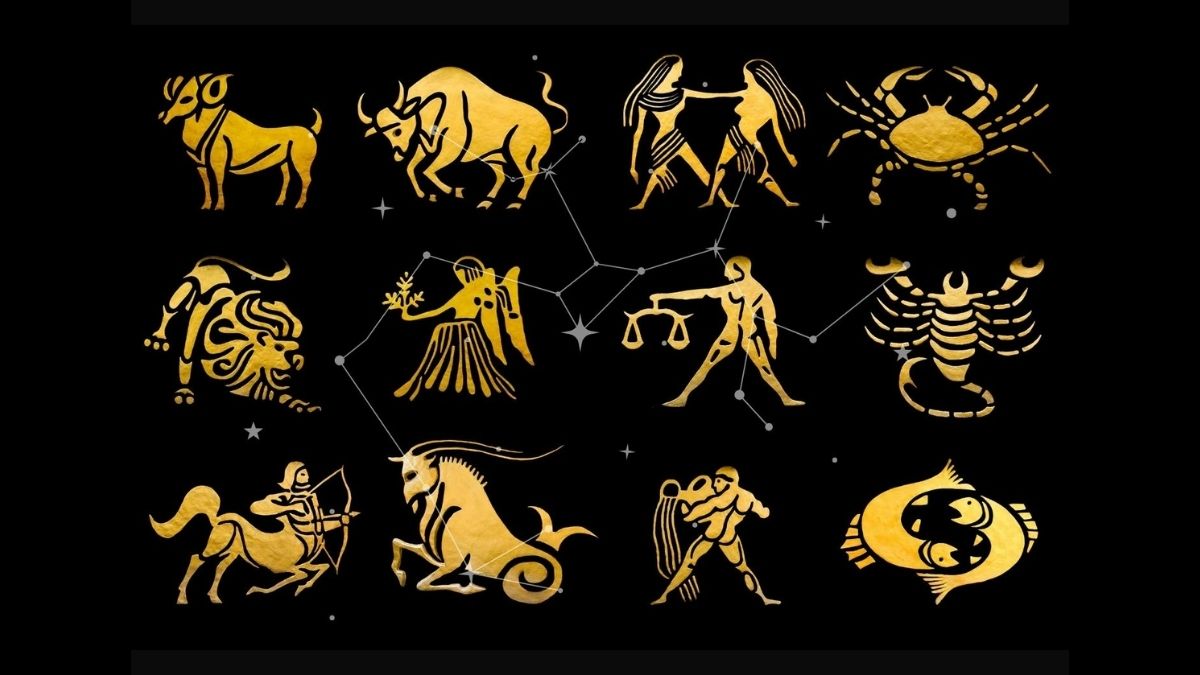
I read my horoscope this morning and I have to say, it was eerily accurate. Here it is:
You’ve been thinking a lot lately about where you’re heading and whether you’re making the most of your time. On the surface, you often appear calm and capable, but internally you can be more self-critical than people realize.
You have a strong desire to do things well, and when things don’t quite live up to your own standards, it can linger with you longer than it should. Even so, you’re more resilient than you give yourself credit for, and past challenges have quietly shaped your judgment and independence.
Right now, there’s a subtle tension between wanting stability and craving something new or more meaningful. You may feel drawn to reflect on recent decisions, not because they were wrong, but because you’re trying to understand what they say about you.
Others tend to see you as thoughtful and reliable, even if you don’t always feel that way yourself. Trust that you’re making progress, even when it doesn’t look dramatic from the inside.
Today is a good day to acknowledge how far you’ve come, rather than focusing on what’s still unresolved.
If you were told that this was your horoscope, there’s a very good chance you’d also find it accurate. You might even feel that it captured something personal. Something specific. Something quietly true.
The thing is, I made it up.
Not in the sense that the words are meaningless, but in the sense that they weren’t written for anyone in particular. They were deliberately broad, carefully balanced, and designed to feel as though they were speaking to us directly.
That feeling of recognition has a name, and it’s remarkably common feeling.
This article isn’t about mocking gullibility, intelligence, or being “taken in.” It’s about how human meaning-making works. Why vague descriptions can feel deeply personal. Why subjective accuracy is such a poor guide to truth. And why understanding this psychological tendency matters, and what we can do to resist its pull.
Why “That’s So Me” Works on All of Us
My small act of duplicity above was intentional. It was designed to illustrate the Forer Effect, also known as the Barnum Effect or the fallacy of personal validation. This is the tendency for people to accept vague, general personality descriptions as uniquely accurate to themselves. The effect doesn’t rely on precision, it relies on flexibility. The key psychological warning follows directly from this: the feeling that something fits is not reliable evidence that it is true. Subjective validation, the sense of recognition or resonance, tells us far more about how human meaning-making works than it does about the actual accuracy of the description.
The Classic Demonstration: Forer’s 1948 Experiment
The clearest demonstration of this effect comes from a deceptively simple classroom exercise.
In 1948, psychologist Bertram Forer gave a group of his students what he described as a personality test. He told them the results would reveal something meaningful about their individual psychological makeup. A week later, he handed each student a sealed envelope containing their “personalized” profile.
What the students didn’t know was that Forer had ignored their test responses entirely. Every single person received the same description.
The psychological profile itself was a collection of 13 vague statements, many lifted directly from a newspaper astrology column. After reading their profile, students were asked to rate how accurate it was on a scale from 0 (poor) to 5 (excellent).
The average rating was about 4.26 out of 5.
This result has been replicated many times since, with scores typically hovering around 4.2. In other words, people consistently judge a one-size-fits-all personality sketch as highly accurate when they believe it was written just for them.
To get a feel for why this works, here are a few examples from the original profile:
“You have a great need for other people to like and admire you.”
“At times you have serious doubts as to whether you have made the right decision or done the right thing.”
“While you have some personality weaknesses, you are generally able to compensate for them.”
“You prefer a certain amount of change and variety and become dissatisfied when hemmed in by restrictions and limitations.”
Most people can recognize themselves in statements like these. That’s not the mistake. The mistake is taking that recognition as evidence that the description is uniquely accurate or diagnostically meaningful.
Forer’s students weren’t foolish, and they weren’t lying. They were doing something entirely human. They were responding to statements that were broad enough to invite personal interpretation, then mistaking that sense of fit for proof.
The experiment didn’t reveal a flaw in personality testing alone. It revealed a much deeper tendency. We are very good at finding ourselves in general descriptions, and much less reliable at judging whether those descriptions tell us anything specific, distinctive, or scientifically valid about who we are.
Why It Works: The Three Psychological Ingredients
Once you know about the Forer effect, it can be tempting to treat it as a clever trick. In reality, it’s better viewed as a cajoling recipe, where several ordinary psychological tendencies combine in a very specific way to produce a “How did this know me?” feeling.
1. Vagueness and Wiggle Room
The first ingredient is linguistic flexibility.
Forer style descriptions rarely make firm claims. Instead, they rely on wording that stretches easily across situations and people. Traits are framed broadly, and opposites are often bundled together. You’re described as someone who values independence, but also appreciates connection. You like structure, yet dislike feeling constrained.
This kind of phrasing is difficult to push back against because it adapts to the reader rather than the other way around. If one part doesn’t resonate, another usually will. The statement survives scrutiny not by being precise, but by being elastic.
Crucially, this isn’t experienced as ambiguity. It feels like nuance.
2. Positivity Bias and the Pull of Flattery
The second ingredient is emotional, not linguistic.
People are far more receptive to information that casts them in a favourable light. Even mild praise lowers our guard. When a description highlights strengths, depth, resilience, or hidden potential, we’re inclined to lean in rather than step back.
What makes Forer/Barnum statements especially effective is that even their criticisms are softened. Weaknesses are reframed as by-products of high standards or sensitivity. Doubt becomes thoughtfulness. Caution becomes discernment. The result feels balanced and honest, while still being easy to accept.
This isn’t vanity. It’s a well-documented tendency to process positive self-relevant information more readily than neutral or negative alternatives.
3. Sensemaking and Memory Search
The final ingredient does most of the work, and it happens inside the reader.
When presented with a vague but emotionally plausible description, the mind doesn’t sit back and evaluate it statistically. It goes searching. Specific memories are pulled forward. Moments, decisions, and experiences are quietly recruited as supporting evidence.
Because this search happens automatically, the conclusion feels earned. The description doesn’t seem generic because it’s now anchored to personal examples, even though those examples were supplied by the reader, not the text.
This is why the same paragraph can feel uncannily accurate to many different people at once. Each person is filling in different details, but experiencing the same sense of recognition.
The profile isn’t specific. Your mind makes it specific.
The Authority and Personalization Amplifier
Even when the wording is broad, presentation can make it feel sharply accurate. Two things in particular act like volume controls: authority and personalization.
Authority: “This comes from an expert (or a machine that sounds like one)”
We’re more likely to accept a personality description when it’s framed as the product of expertise.
Put the same text under a heading like “trained psychologist’s assessment” or “scientifically validated personality profile” and it lands differently. Add clinical-sounding phrasing, reference a “model,” a “battery,” or “validated metrics,” and it gains the aura of measurement, even if nothing measurable is actually happening.
“AI-powered analysis” can have the same effect. Not because readers think AI is magical, but because it signals computation, data, and hidden precision. It implies the conclusion was derived, not merely written.
In other words, credibility isn’t only about what is said. It’s also about what the source seems capable of knowing.
The “for you” trigger: exclusivity changes everything
Personalization is the second amplifier, and it’s remarkably sensitive to one detail: does this feel exclusive to me?
When feedback is framed as tailored, people lean into it and search for fit. But when they’re told, plainly, that everyone received the same description, the spell weakens fast. The content hasn’t changed, but the interpretation does, because the reader no longer treats it as a private mirror.
That’s why “Just for you” language matters so much. It doesn’t need to be dramatic. Even small cues can create the feeling of a custom readout: your name in the header, a progress bar, a “calculating…” animation, a few pseudo-specific inputs (“based on your answers”), or a confident summary statement that implies a personal model has been built.
Why modern interfaces make this easier to believe
This is where the Forer effect fits uncomfortably well with digital life.
A polished interface, scientific styling, data language, and a “made for you” frame can make generic feedback feel earned. The design doesn’t just present the result, it suggests a process happened behind the scenes that justifies certainty.
So the amplifier isn’t only authority in the traditional sense. It’s also the credibility cues of the environment: professional layout, clean charts, official-sounding labels, and the subtle implication that personalization equals accuracy.
That combination is powerful, and it’s exactly why subjective conviction can rise even when the underlying description could apply to almost anyone.
The Big Correction: “True” Isn’t the Same as “Diagnostic”
Here’s the point where confusion often creeps in. Many Forer-style statements are true. Or at least, they’re true for a large proportion of people. That’s precisely why they feel convincing. Statements about self-doubt, wanting to be liked, valuing independence, or feeling torn between stability and change describe broad human tendencies, not rare traits.
The mistake isn’t agreeing with them. The mistake is treating that agreement as evidence of diagnosis.
In psychological assessment, truth alone isn’t enough. A statement only becomes diagnostically useful if it helps distinguish one person from another in a meaningful, measurable way. Broad truths fail that test because they don’t discriminate. If almost everyone can say “yes, that sounds like me,” then the statement tells us very little about who someone is, only that they’re human.
This leads to an important measurement lesson that sits at the heart of the Forer effect:
Personal agreement cannot validate a test.
Feeling understood is not the same thing as being accurately assessed. Subjective accuracy, however compelling it feels, is an unreliable guide to whether a tool actually measures what it claims to measure.
This critical distinction is often described as rational versus irrational acceptance. You can rationally agree with a statement because it reflects a genuine aspect of your experience. The Forer effect appears in the extra step that follows, when that agreement turns into the belief that the statement is uniquely revealing of you, or that it could only have been produced by something that truly “knows” you.
Once you separate those two steps, the illusion weakens. What remains is a clearer understanding of why these descriptions resonate, and why resonance alone should never be mistaken for insight.
Why It Matters in Real Life
The Forer effect wouldn’t be especially interesting if it stayed in classrooms and textbooks. It matters because the same psychological pull shows up repeatedly in everyday settings where people make decisions, form beliefs, and place trust.
Astrology and psychics are the clearest examples. Horoscopes and readings rely on broadly applicable statements that invite personal interpretation. Cold reading techniques then refine the illusion by reacting to subtle cues, nods, or corrections. The result isn’t that people are foolish. It’s that the structure of the interaction encourages meaning to be supplied by the person receiving the message, not by the accuracy of the claims themselves.
Online personality quizzes operate on the same principle, but at scale. They promise self-discovery, deliver flattering generalities, and reward agreement with a sense of recognition. The more a result feels affirming, the more likely it is to be shared, reinforcing a loop where emotional validation stands in for measurement. Engagement rises, even when insight does not.
Workplace typologies, such as the Myers–Briggs Type Indicator (MBTI), feel more respectable because they’re often presented in professional contexts. Their descriptions resonate because they focus on strengths, preferences, and social behaviors most people recognize in themselves. The risk isn’t that they’re meaningless and offer no practical guidance, but that their intuitive appeal can lead organizations to treat them as highly precise tools rather than broad conversation starters. When the feeling of fit is mistaken for diagnostic accuracy, decisions can quietly drift away from evidence. It should be noted that a debate exists within the psychological community as to the utility and validity of the MBTI and I’d encourage you to explore both sides of the argument, for example here vs here.
AI-driven personalization and marketing bring the effect into modern digital life. Labels like “recommended for you” or “based on your personality” trigger the same sense of being understood. Sometimes this personalization is genuinely data-informed. Other times, it relies on familiar aspirations and loosely inferred traits. Either way, the emotional response can outpace the system’s actual insight, creating trust that feels earned even when it isn’t.
The ethical issue isn’t personalization itself. It’s that the feeling of being known is easy to manufacture. When that feeling becomes the basis for belief, loyalty, or decision-making, the line between understanding and illusion can blur without anyone noticing.
This is why the Forer effect matters for all of us in everyday life. It shapes how we evaluate claims about ourselves, how readily we trust systems that speak in personal language, and how easily comfort can be mistaken for clarity.
What Makes Some People More Susceptible
One of the most important research findings is that susceptibility to the Forer effect isn’t a fixed personality flaw. Context typically matters more than character.
Situational factors have a strong influence. People are more likely to accept vague personal feedback when it comes from a source presented as authoritative, when it’s delivered in a socially meaningful setting, or when they’re feeling uncertain about themselves. Emotional states matter too. Periods of stress, transition, or social disconnection can quietly increase the appeal of messages that offer reassurance, coherence, or a sense of being understood. In those moments, personal meaning can feel especially valuable, regardless of where it comes from.
There’s also evidence that social context plays a role. When people feel excluded or unsure about their social standing, they tend to gravitate toward positive, affirming interpretations of themselves. Broad personality feedback can serve a psychological function here, helping to stabilize self-concept rather than providing accurate information.
That said, some individual differences show modest associations with greater susceptibility. An external locus of control, where outcomes are attributed more to fate, luck, or outside forces than to personal agency, is linked to stronger acceptance of generalized explanations. Traits associated with narcissism have also been connected to increased responsiveness to flattering, identity-relevant feedback, particularly when it reinforces a sense of uniqueness or special insight. Importantly, these are correlations, not diagnoses, and they explain only a small portion of the effect.
Belief in paranormal or pseudoscientific ideas shows a similar pattern. People who already see the world as guided by hidden forces or special meanings are slightly more likely to find Forer-style descriptions compelling. Again, the effect sizes are small, and none of this overrides the much larger role played by how information is framed and delivered.
The broader takeaway is this. Most people, in the right circumstances, can find these descriptions persuasive. Susceptibility rises and falls with context, emotion, and presentation far more than with stable traits. That’s precisely why the Forer effect is so widespread, and why none of us should assume we’re immune.
The Role of Cognitive Reflection
If there’s one reliable way to loosen the grip of the Forer effect, it’s cognitive reflection. Put simply, this means slowing down just enough to question your first, automatic reaction. Instead of moving straight from “that’s me” to acceptance, you pause and ask whether that reaction is doing the work for you.
This pause matters because the Forer effect thrives on speed. The initial feeling of recognition arrives quickly and effortlessly, and once it does, the mind tends to move forward as if accuracy has already been established. Cognitive reflection interrupts that sequence. It creates a brief gap between recognition and belief, and that gap is often enough to weaken the illusion.
There’s an important nuance here. Education on its own isn’t a safeguard. People can be highly educated, well read, and still respond intuitively to vague personal feedback. What seems to matter more is the habit of reflective checking. Research on related forms of misinformation consistently shows that individuals who are more willing to question their first impressions are less likely to accept claims simply because they feel right.
This doesn’t require cynicism or constant suspicion. It’s a small mental move rather than a mindset shift. When a description feels uncannily accurate, the reflective question is simple: is this genuinely specific, or could it apply to most people in roughly the same way?
That single question doesn’t eliminate the feeling of recognition, but it does put it in its proper place. Recognition becomes something to examine rather than something to trust.
Final Thoughts: Skepticism Without Cynicism
At the heart of all this is something very ordinary. We want to feel understood. We want to feel seen in ways that make sense of who we are and where we’re going. There’s nothing foolish about that impulse. It’s part of how we connect, reflect, and build a sense of self.
The skill isn’t learning to distrust every moment of recognition. It’s learning to separate how something makes us feel from what it actually demonstrates. Emotional resonance can be meaningful without being informative. A description can feel comforting, affirming, or insightful and still tell us very little about what distinguishes one person from another.
Seen this way, psychological skepticism isn’t about shutting things down. It’s about staying curious. It’s about holding space for insight while still asking whether the evidence supports the story being told.
So the next time something seems to capture you perfectly, it might be worth trying a different kind of question. Not “How did this know me so well?” but “In what ways could this be mistaken?” And just as importantly, “What would it take for this to genuinely earn my trust?”
Those questions don’t take anything away from the experience. They simply put you back in charge of what you choose to believe.
If You Enjoyed This Article…
I’m very happy to share that my new book, Why We Are the Way We Are: Psychology for the Curious, is now available on Amazon in both paperback and eBook format.
📘 Paperback: www.amazon.com/Why-We-Are-Way-Psychology/dp/B0G4D1WJCW
📱 Kindle eBook: www.amazon.com/Why-We-Are-Way-Psychology-ebook/dp/B0G4BGR9T3
The book is a carefully curated collection of the most popular articles from this website and my Psychology Substack. If you’ve enjoyed this piece and the exploration of why we think, feel, and behave the way we do, the book brings these ideas together in one place. It also makes a thoughtful gift for anyone who loves psychology or is simply curious about what makes us tick.
If you do pick up a copy, I’d be incredibly grateful if you could leave a rating or review on Amazon. Even a short line makes a real difference. Reviews help raise the profile of the book and allow more people to discover it.
Any profit from sales goes directly toward the hosting and running costs of the All About Psychology website, which helps ensure that:
- Students and educators can continue accessing the most important and influential journal articles in psychology completely free.
- Readers everywhere can hear directly from world-class psychologists and leading experts.
- High-quality psychology content remains freely available to the public.
Thank you, as always, for reading, supporting, and being part of this community. It’s very much appreciated.
All the very best,
David Webb
Founder, All-About-Psychology.com
Author | Psychology Educator | Psychology Content Marketing Specialist
Know someone who’d enjoy reading this?
Share this page with them.
Go From "Why “That Sounds Like Me” Is Such a Powerful Feeling” Back To The Home Page