Thinking About Studying Psychology Online?
Explore online psychology degree options, including program types, accreditation, costs, career pathways and what to check before choosing a course.
Read The Online Psychology Degree GuideAre You A Perfectionist? Three Changes To Make Today
Dr. Shannon Kolakowski
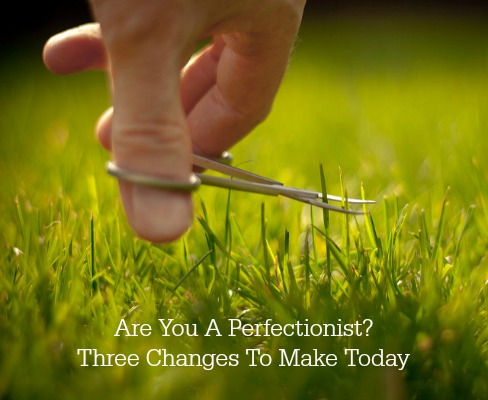
(Image by Jeremy Page)
Want To Study Psychology?

Dr. Shannon Kolakowski is a psychologist in private practice in Seattle, helping people with depression, anxiety, and relationship issues. She is the author of When Depression Hurts Your Relationship: How to Regain Intimacy and Reconnect with Your Partner When You're Depressed and Single, Shy and Looking For Love: A Dating Guide for the Shy and Socially Anxious. Dr. Kolakowski writes a blog for the Huffington Post and has been interviewed for publications such as Redbook, Men's Health Magazine, Shape, eHarmony, and ParentMap.
As a perfectionist, you set standards for yourself that are far beyond reach or reason. You work endlessly to accomplish a goal and then measure your self-worth based on your level of success. You may see your perfectionism as a motivator that propels you to do your best. But it’s impossible to feel fulfilled when nothing ever feels good enough. You can probably relate to these common perfectionistic thoughts:
- I like to anticipate all things before they happen.
- I criticize myself often for mistakes or small faults.
- I work hard to maintain a flawless image for others and care a great deal about how others perceive me.
- I find that I am second-guessing myself constantly.
- I feel embarrassed or ashamed by any weaknesses and want to hide my flaws from others.
- I sometimes feel that if people knew the real me, they would be disappointed.
- I easily dismiss my own achievements and concentrate on the flaws I see in myself.
- I become defensive when co-workers, friends, or employers give me feedback.
- I am fearful of making mistakes because of not wanting to disappoint others or worrying that I won’t do a good job.
- I find myself procrastinating.
- My feelings of being overwhelmed get in the way of my performance.
- I am envious of other people’s attractiveness, accomplishments, or success.
- I have the desire to always have the right answer and be perfectly knowledgeable.
- I avoid new social situations for fear others will be critical or judgmental of me.
- I tend to be rigid or inflexible with expectations of others and myself.
The thought of letting go of your perfectionism might make you uneasy. After all, it is part of your identity. However, there is a very high likelihood that your drive for perfection is pushing your chances of happiness right out the door. Here are three ways to start thinking differently about your high standards:
1. Never Underestimate The Power of Your Surroundings
|
Be aware of how your friends and co-workers impact you. If the people in your life frown upon anything less than perfect, it’s going to impact your feelings of value and self-worth. Do you feel judged by your friends? Do you feel your partner will only love you if you act a certain way? These people may be contributing to your need to please. If your circle of friends or co-workers is super-competitive and judgmental, it can be contagious. We all have had conversations with certain friends who leave us feeling empty or not good enough. Instead, focus on spending time with people who are positive, fun and supportive. |
|
2. Think About Someone You Greatly Admire in Your Life
What do you admire about them? What mistakes or missteps have they taken? What hardships have they endured? Did they always have the right answer the first time or perform flawlessly? Likely, the answer is no. The people we admire most in life are often not those who are perfect or placed upon a pedestal, but rather those of us who have overcome adversity.
Applying those same questions to yourself, think about the times when you’ve struggled the most. What did you learn about yourself? How did you grow? During difficult times, it is helpful to ask yourself these questions. Learn to recognize imperfection as part of what makes you an appealing, complex individual.
3. What Are The Areas of Your Life That You Feel Are in Your Control?
What are the areas you feel you have the least control over? Sometimes we try to do things perfectly in order to master our environment. And, sometimes, your desire to do things “just right” can stunt your ability to try new things. Challenge yourself instead to try something new, with an expectation that it will be difficult and you won’t be the best at it. You may even feel a little out of control. But that’s the goal! Focus on being present and enjoy the fun of doing something outside of your comfort zone. One client decided to try surfing with her spouse - a hobby she never would have deemed worthwhile or fun - and found it exhilarating! There is great freedom that comes from being able to let go and accept yourself simply as you are in the moment.
 |
 |
Recent Articles


-
How to stop overthinking and break the cycle
Sep 24, 26 11:06 AM
 Learn how to stop overthinking, handle repetitive thoughts, ease self-criticism, and make decisions without getting stuck in endless analysis.
 -
The Hard Problem of Consciousness Resolved by Dennis Nicholson
Sep 24, 26 07:50 AM
 Explore The Hard Problem of Consciousness Resolved by Dennis Nicholson, examining consciousness, brain states and the explanatory gap.
 -
What Holds People Back From Starting a Business
Sep 23, 26 04:54 AM
 Learn what holds people back from starting a business, including loss aversion, financial uncertainty, perfectionism, comparison, and fear of risk.
Go To The Dr. Shannon Kolakowski Interview Page