An Interview With Dr. Allen Frances on Mental Health Chatbots and the Future of Therapy
Interview by David Webb
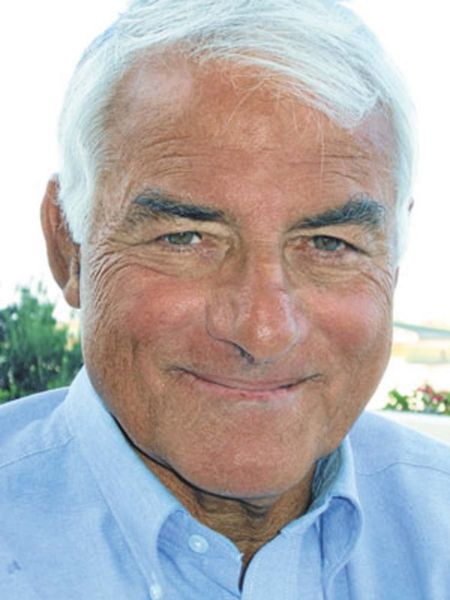
Dr. Allen Frances has spent much of his career examining how we understand, diagnose, and respond to mental health problems. Professor and Chair Emeritus of Psychiatry and Behavioral Sciences at Duke University and former chair of the DSM-IV Task Force, he now brings that experience to the growing use of AI chatbots for mental health support.
In this interview, we discuss why people turn to chatbots, what these tools can and cannot offer, and how clinicians can recognize helpful or harmful use. We also explore ideas from his forthcoming book, The Clinician’s Survival Guide to the Chatbot Revolution, including how chatbots might support therapy while preserving human judgment and connection.
The interview
What first convinced you that mental health chatbots deserved your attention, and how has your assessment of their potential benefits and dangers changed as you’ve explored them?
I was invited to do a piece on whether chatbots would replace human therapists. After many hours of research and writing and editing, I turned out a pretty good piece. My granddaughter suggested it would be interesting to give a chatbot the same prompt. It took just seconds for it to produce a summary almost as good as mine. I was intrigued and terrified. The more I learn about chatbots, the more fascinating they are to me and also the more terrifying.
Beyond cost and availability, what draws people to confide in chatbots, and what should human therapists learn from that appeal?
Don't underestimate cost and convenience. WHO estimates that there are a billion people in the world in need of mental health help and only one million human clinicians available to provide it. Chatbots are so popular precisely because they scale up so easily to fulfill a great human need that our small number of humans can't possibly meet.
And many patients in human therapy already consult chatbots between sessions, often without telling their therapist. It is much safer and more effective to bring chatbots into the therapeutic alliance as assistants than to allow them to work autonomously as rivals working outside the treatment and, potentially, at cross purposes with it. Clinicians must not ignore chatbots or be complacent about their risks. Much better to work together with your patients to develop customized instructions that will guide their chatbot in the do's and don'ts of its work with that specific patient. Programming a useful and safe chatbot assistant takes little time and no technical skill. I think that this kind of hybrid therapy will soon be the norm. Patients will drive this emerging trend. They are already far more literate than clinicians.
Someone may feel deeply understood by a chatbot while knowing that it has no human experience of suffering or caring. Where might that feeling offer meaningful help, and where does it fall short of what a person needs from mental health care?
Chatbots can convincingly fake empathy, but they can't really feel it. For some people the performance is enough, but for many others it comes to feel stilted and stereotyped. And there is just a very fine line separating potentially helpful chatbot "empathy" from potentially dangerous chatbot "sycophancy". Chatbot companies have made user engagement their highest programming priority: keeping eyes glued to the screen is key to their business model and enormous valuations. But the compulsive engagement and fake empathy of chatbots can validate dangerous thoughts, feelings, and behaviors. There are many reported cases of folie-à-chatbot, i.e., chatbot-induced or accelerated psychosis, conspiracy theories, suicidal impulses, violent behaviors, addictions, and eating disorders. We must protect patients with severe psychiatric disorders from the awful harms caused by fake chatbot empathy.
In your article with Laura Batstra, “Diagnosing the context is as important as diagnosing the individual,” you emphasize the importance of understanding someone’s circumstances. How does that perspective inform your assessment of chatbots as a source of diagnostic advice?
Chatbots are great at modeling and mimicking the human world, but they lack human intuition and common sense in how best to live in it. Human evolution has made us exquisitely good at sizing up people and responding to new and unfamiliar situations. Chatbot evolution has made them wonderful at seeing patterns in enormous past data sets, but awful at figuring out what to do in a fast-evolving human crisis. Chatbot brains work a million times faster than ours and have a million times more memory, but a chatbot can make the dumbest real-life mistakes: telling a suicidal patient how to find the nearest bridge, a violent patient how to achieve a mass murder, an anorexic patient how to lose more weight.
“I was intrigued and terrified. The more I learn about chatbots, the more fascinating they are to me and also the more terrifying.”
How can a clinician tell whether a patient’s chatbot use is helping or harming them, and how would you raise the subject with the patient?
Always ask patients about the frequency, timing, content, triggers, and results of their chatbot use. For most patients, making the chatbot an integral part of the treatment is much safer than having it be a furtive, often midnight, advisor.
Autonomous chatbots are much more dangerous than chatbot assistants. And there are some people who should not use chatbot therapists at all until they have proven themselves much safer than they are now. These include everyone with severe mental illness, chronic social isolation, addictive tendencies or dementia, and religious and political extremists. Many states and countries are appropriately trying to restrict use in children and teenagers, but so far many kids seem able to outsmart the systems developed to block their use.
What should people understand about privacy before sharing intimate details with a chatbot, and what should clinicians establish about a tool’s privacy practices before recommending it to a patient?
Many people are more comfortable telling their deepest secrets to a machine than to a therapist. It feels more private and less embarrassing and the chatbots always aim to please, rarely disagree, and never judge (even when they should be bringing reality testing into the situation). But in fact, there is often little or no chatbot privacy. Companies routinely store data for training; use it as triggers for advertising and to bias the information you get from searches; and as a commodity for sale or sharing. And unlike the legal status of patient/therapist communication, there is also no chatbot therapist/user privilege: stored information about you can be subpoenaed in court or in custody proceedings. Always read the fine print disclaimers before signing away any privacy rights to the chatbot company. And be extremely cautious about saying anything that might come back to haunt you.
If a patient says their chatbot understands them better than their therapist, or offers advice that contradicts their therapist’s view, how can the therapist explore this without becoming defensive or assuming their own interpretation must be correct?
Being defensive about a patient's chatbot use or competing in a rivalry with a chatbot is the best way to lose the patient. It is far wiser to inquire how the chatbot is helping and to program it to be an assistant working harmoniously as part of the therapy team. And again, this is remarkably easy to do: quick, no technical skill required, and a great way to improve the therapeutic alliance.
“Chatbots can convincingly fake empathy, but they can't really feel it.”
In The Clinician’s Survival Guide to the Chatbot Revolution, you describe a partnership in which the therapist and patient agree on specific ways a chatbot might assist between sessions. Could you give an example of how this could work in practice?
The book provides a detailed list of general instructions that all patients can use in taming their chatbot re what to do and what not to do. Then I provide sample specific instructions that may be useful for the most common problems encountered in clinical practice. Patients and clinicians can use these as a starting point to develop even more specific instructions that best meet each patient's goals, needs, and preferences.
In the book, you recommend using chatbots “more for skill building, less for soul searching.” Could you explain what you mean by that?
Chatbots are at their best as therapy assistants following detailed instructions for helping patients deal with real-life problems occurring between sessions. They are at their worst and most likely to make dangerous mistakes when freelancing for hours, in the middle of the night, on the meaning of the patient's life.
As AI becomes more capable and more available, which clinical and interpersonal skills should people entering the mental health professions make a particular effort to develop, and what gives you confidence that their contribution will continue to matter?
Humans can't compete with chatbots on knowledge or memory. Chatbots can't compete with us in being human; on having human intuition and common sense; in dealing with crises and novel situations; and in treating people with severe mental illness. In the future, we should select for clinicians more on their being people smart, less on their being book smart. Having a high IQ is a necessary, but far from sufficient, requirement for being a good therapist. Most important is having a high EQ. Therapists of the future will also need to be much more chatbot literate than therapists of the present. They must catch up with their patients who are already chatbot literate. And training programs will have to modernize in the direction of integrating therapy techniques and teaching trainees how best to work with chatbots. Working with patient simulations will become the first step in therapy training because it provides wider experience and protects real patients from rookie mistakes.
“Being defensive about a patient's chatbot use or competing in a rivalry with a chatbot is the best way to lose the patient.”
Where can readers find and follow your work on chatbots, psychiatric diagnosis, and the future of mental health care?
The book, lots of blogs and interviews, and @AllenFrancesMD on X. Thanks for this interesting interview. You asked the most pertinent questions and I hope my answers will help clinicians and patients get the most out of chatbots and avoid the risks.
Explore more of Dr. Frances’s work in Psychology Today, Psychiatric Times, and The New York Times.
My thanks to Dr. Allen Frances for sharing his insights on mental health chatbots, their benefits and risks, and the role of human judgment and connection in therapy.