Psychology Classics On Amazon

The Importance of “Meaning” in Life
by Yogita Aggarwal
(New Delhi, India)
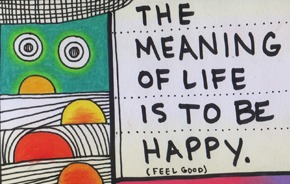

Photo Credit: Kelly Cree
Do we really need to have meaning in life or can we just live our life without even pondering on these questions? How does it matter to know the essence of life when we can actually live without even wondering about such questions?
Human beings are the only beings that can put their own existence into question and the biggest quest in an individual’s life is to find meaning and purpose and the questions about meaning of human life are age old.
Meanings are at the core of our experience and also at the core of whatever we do. It is only through meanings that we make sense of our existence. In life we find meaning through a sense of purpose which makes life worthwhile. Frankl (1978) aptly pointed out, a firm sense of meaning is essential for optimal human development. Bruner (1990) put it more bluntly, noting that without meaning systems “we would be lost in murk of chaotic experience and probably would not have survived as a species in any case” (p. 56).
Meaning in life is not just a theoretical or philosophical construct, but it has a bearing on human health and well being (e.g., Jung, as cited in Jaffe, 1970) asserted that absence of meaning is related to psychopathology. Yalom (1980), in an empirical research confirmed earlier clinical observations that to live without meaning, goals, or values provokes considerable distress (Yalom, 1980).
While pondering about what makes life meaningful, several perspectives in the literature could be found, especially in the literature covering philosophy and existential psychology. In an attempt to formulate a single definition of meaning, one may ask what the essence of meaning is? But a single generic answer to this question is not possible to find. For the meaning of life differs from man to man, from day to day and from hour to hour. What matters, therefore, is not the meaning of life in general but rather the specific meaning of a person's life at a given moment (Frankl, 1970). Frankl speaks of the uniqueness of meanings; a quality not only of a situation, but even of life as a whole since life is a string of unique situations (Frankl, 1970). Frankl postulated that man's search for meaning is the primary motivation in his life and not a "secondary rationalization" of instinctual drives (Frankl, 1970).
Meaning serves a number of important functions in human lives (Frankl, 1992). Firstly, meaning provides a purpose for our lives. Secondly, it furnishes values or standards by which to judge our actions. Thirdly, it gives us a sense of control over the events in our life. Lastly, it provides us with self-worth. When people are unable to find meaning for any of these functions or when they lose or outgrow the meanings that they once had, they become distressed. Many emotional problems result from a failure to find meaning in life and can be resolved only through finding something to make life worth living (Frankl, 1992).
References:
Bruner, J. (1990). Acts of meaning. Cambridge, MA: Harvard University Press.
Frankl, V. (1978). The unheard cry for meaning. New York: Simon & Schuster.
Frankl, Victor (1992). Man’s Search for Meaning. (4th ed.). Boston, MA: Beacon Press.
Jaffe, A. (1970). The myth of meaning in the work of C. J. Jung. London: Hodden & Stoughton.
Solomon, J. L. (2004). Modes of Thought and Meaning Making: The Aftermath of Trauma. Journal of Humanistic Psychology, 44; 299
Yalom, I. D. (1980). Existential psychotherapy. New York: Basic Books.
Comments for The Importance of “Meaning” in Life
|
||
|
||
|
||
|
||

