Home
Welcome
ABOUT PSYCHOLOGY Psychology is?
Types of Psych
Psych Symbol
History
HALL OF FAME Sigmund Freud
William James
Carl Jung
Carl Rogers
PSYCH RESOURCES Apps
Audio
Associations
Blogs
Images
Lectures
Links
Podcasts
Psychology 2.0
Q & A
Quotes
Software
Terminology
STUDENT RESOURCES Student Guide
Study Skills
Dictionary
Referencing
Mnemonics
A Level
AP Psychology
RESEARCH METHODS Overview
Exp Design
Participate
Project Help
Q'nn Measures
DEGREE FINDER Online Degrees
Degrees (UK)
Degrees (USA)
CAREER INFO Psych Jobs
Psychologists
MUST READ Bestsellers
Book O.T Month
Psych E-Books
Expert Articles
Interviews
Mag Articles
Psych Articles
Newsletter
PSYCH ON KINDLE Psych Classics
Psychoanalysis
Psych History
Psychotherapy
Full Collection
RELATED TOPICS Body Language
Dreams
Human Mind
Mental Health
Optical Illusions
Pareidolia
Psychoanalysis
Psych Movies
Psych Testing
Psychotherapy
Self-Help
JUST FOR FUN 10 Things
Psych Ecards
Psych Fiction
Psych Light
Sex on The Brain
BEFORE YOU GO Sign Guestbook
Join Mailing List
MISCELLANEOUS Mentalism
Real World Psy
Psychology OF...
Top Psych Movies
Francis Galton
Press Releases
Advertise Here
Terms of Use
Contact Me
[?] Subscribe To This Site

XML RSS
Add to Google
Add to My Yahoo!
Add to My MSN
Subscribe with Bloglines

Classic Condtioning and Operant Condtioning
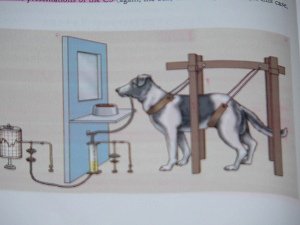
Photo Credit: Rand Lemley

Photo Credit: Rand Lemley

Can someone please explain these two learning methods in a very basic form. I am having a challenging time internalizing classical conditioning. Thanks.

Comments for
Classic Condtioning and Operant Condtioning

Average Rating starstarstarstarstar

Click here to add your own comments

Mar 16, 2011
Rating
starstarstarstarstar
Classical and Operant Conditioning
by: Anonymous

Classical conditioning is where, through repeated instances of exposure to an object, sound, smell, or something else neutral, combined with exposure to a an organism to an either pleasurable or disagreeable stimulus (such as a food reward or a painfully loud noise), an organism 'learns,' subconsciously and unintentionally, to associate something neutral with either positive or negative feelings.

Operant conditioning, however, deals with voluntary behavior as a result of repeated rewards or punishments, rather than subconscious associations. For example, training a dog to fetch something in return for a treat is an example of operant conditioning. As is punishing someone for doing something wrong.

Hope this clears it up, ended up a bit longer than I intended. :)

Click here to add your own comments

Join in and write your own page! It's easy to do. How?
Simply click here to return to Psychology Q & A