Psychology Classics On Amazon

'Abnormal Psychology'
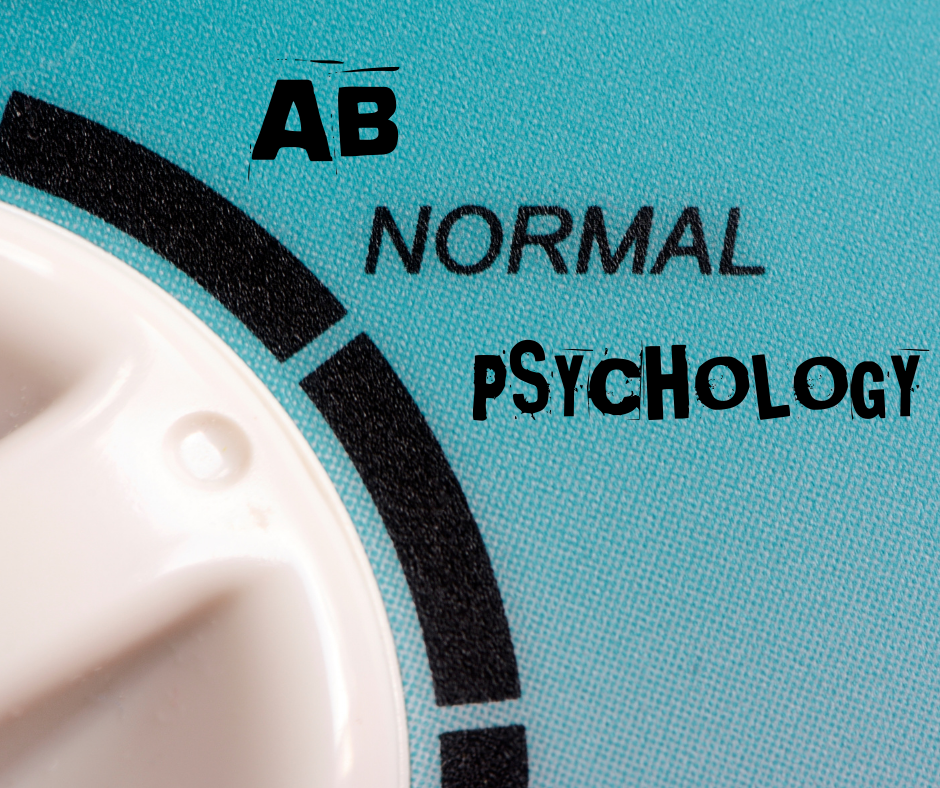
If you have an interest in 'abnormal psychology' the first thing you should consider as a matter of course is whether the term abnormal psychology is actually fit for purpose.
Historically, the study of 'abnormal mental phenomena' can be traced back towards the end of the 19th century and in particular to the pioneering work of Morton Prince. Prince famously documented the first widely reported case of 'multiple personality' following a series of clinical hypnosis sessions with 'Sally Beauchamp,' who according to Prince had three distinct personalities.
In 1905 Prince published his landmark book 'The Dissociation of a Personality: A Biographical Study in Abnormal Psychology' and the following year he founded and edited the Journal of Abnormal Psychology; the first volume of which included original articles from such luminaries as Pierre Janet and Carl Jung.
The medicalization of 'abnormal behavior' was born and with it the notion that one could identify, classify and psychopathologize such behavior.
"Abnormal psychology is devoted to the study of mental, emotional, and behavioural aberrations. It is the branch of psychology concerned with research into the classification, causation, diagnosis, prevention, and treatment of psychological disorders or psychopathology." (Arnold Lazarus and Andrew Colman.)
What's in A Name?
In their award winning book 'Psychology, Mental Health and Distress,' John Cromby, David Harper, Paula Reavey outline a number of compelling reasons why they chose not to state that their book was about 'abnormal psychology.' For instance, the authors note that:
- "There is no objective way to distinguish abnormal behaviours and experiences from normal ones."
- "Abnormal psychology is not consistently psychological...Frequently, abnormal psychology entirely abandons psychology and turns instead to psychiatry."
- "It is hard to engage constructively with teaching that labels you, or the people you love and care for, as abnormal."
'Kinda sucks if the experiences you live are deemed 'abnormal'
(quote from a discussion on twitter by on whether 'abnormal psychology' courses should change their name.)
There is No Such Thing As 'Abnormal Psychology'
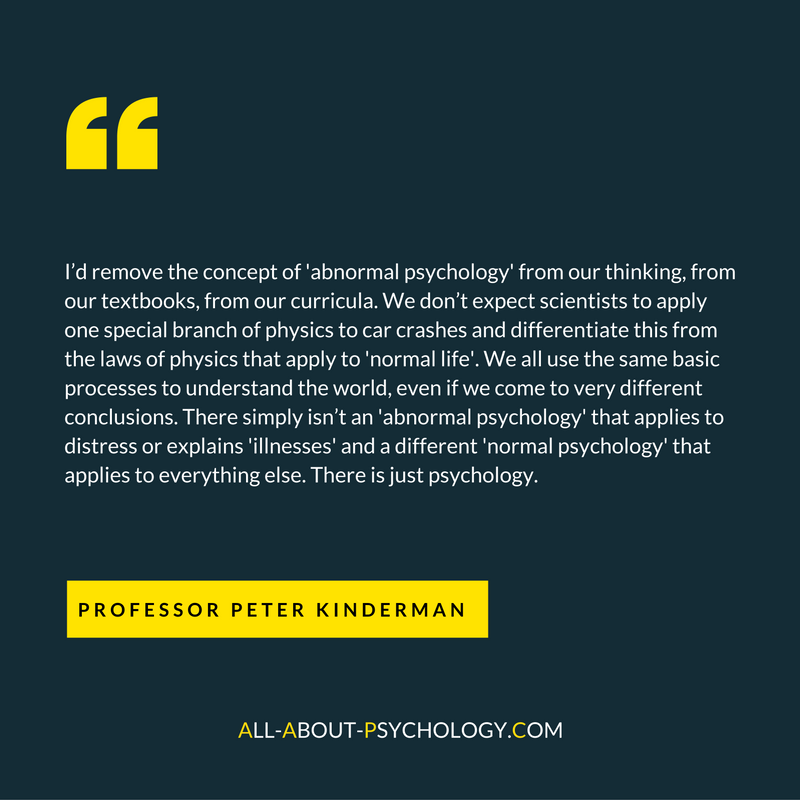
British Psychological Society President Peter Kinderman, Ph.D., is Professor of Clinical Psychology at the University of Liverpool and an honorary Consultant Clinical Psychologist with Mersey Care NHS Trust. He is also Head of the Institute of Psychology, Health and Society at the University of Liverpool, with over 220 academic staff (32 of them professors) comprising psychiatrists, GPs, clinical and other applied psychologists, sociologists, public health physicians, nurses, sociologists and academics.
Professor Kinderman's research interests include the psychopathology of schizophrenia, bipolar disorder and personality disorder and he has been instrumental in developing internationally renowned models of paranoid thought and mania which form the basis of recognised therapeutic interventions. A highly sought-after expert within broadcast media, Professor Kinderman has contributed to several productions in the field of mental health, most notably hosting a two-episode BBC Horizon show exploring the role of diagnosis in mental health.
If you would like to read a more detailed account of why Professor Kinderman does not believe that such a thing as 'abnormal psychology' exists, you can do so by clicking HERE.
Understanding Psychosis and Schizophrenia
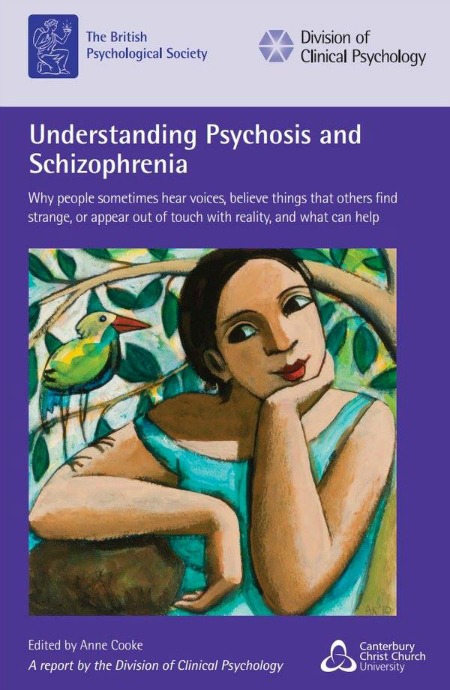
Edited by Anne Cooke, 'Understanding Psychosis and Schizophrenia' is an outstanding free resource that you can download for free along with another must read public information document 'Understanding Bipolar Disorder.' You can access both publications by clicking HERE.
Excellent presentation by Anne Cooke & Peter Kinderman at the Driving Us Crazy Film Festival 2015
Essential Reading
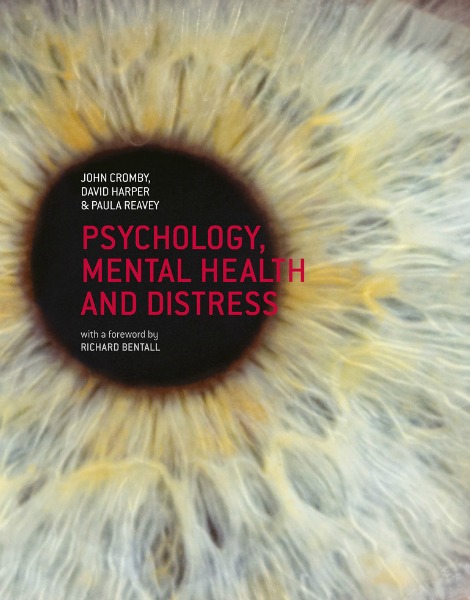
What does the word 'schizophrenia' mean to you? Perhaps your first thought is of someone with a medical condition that involves some kind of brain disease? But what if you knew that the person in question had been through a traumatic childhood? Would that change how you thought about their mental health? And what impact does this have on how we as a society interact with people with mental distress?
The first mainstream text to reconsider the traditional emphasis for what is commonly known as 'abnormal psychology'. Providing a comprehensive account of mental distress, this text challenges your preconceptions about what you think you know about mental health. Includes a foreword by award winning Richard Bentall and a chapter from service users.
See following link for full details.
Psychology, Mental Health and Distress
This It's Not Normal To Be Normal T-Shirt is perfect for anybody who thinks that the assumptions surrounding abnormality need to be challenged. Also ideal for psych majors, psychology teachers, psychologists and psychotherapists, who question whether the term abnormal psychology is actually fit for purpose. Sales help support this website, which has been providing free and comprehensive information and resources for psychology students and educators since 2008.
Available from Amazon (prime eligible) in a range of colors for women and men.

Recent Articles


-
5 Tips for Keeping Your Elderly Loved Ones Safe
Apr 15, 24 10:30 AM
 Insightful article outlining 5 tips for keeping your elderly loved ones safe
 -
Unlocking the Mental Health Benefits of Cold Plunge
Apr 14, 24 09:52 AM
 Great article exploring the mental health benefits of benefits of cold plunge water immersion.
 -
The Hidden Meanings Behind Colors A Guide to Color Psychology
Apr 13, 24 08:23 AM
 The Hidden Meanings Behind Colors A Guide to Color Psychology. Learn the psychological effects of colors and how they impact your daily life. Discover the hidden meanings behind the colors you see.


Go Back To The Types of Psychology Page
Go From Abnormal Psychology Back To The Home Page
New! Comments
Have your say about what you just read! Leave me a comment in the box below.